
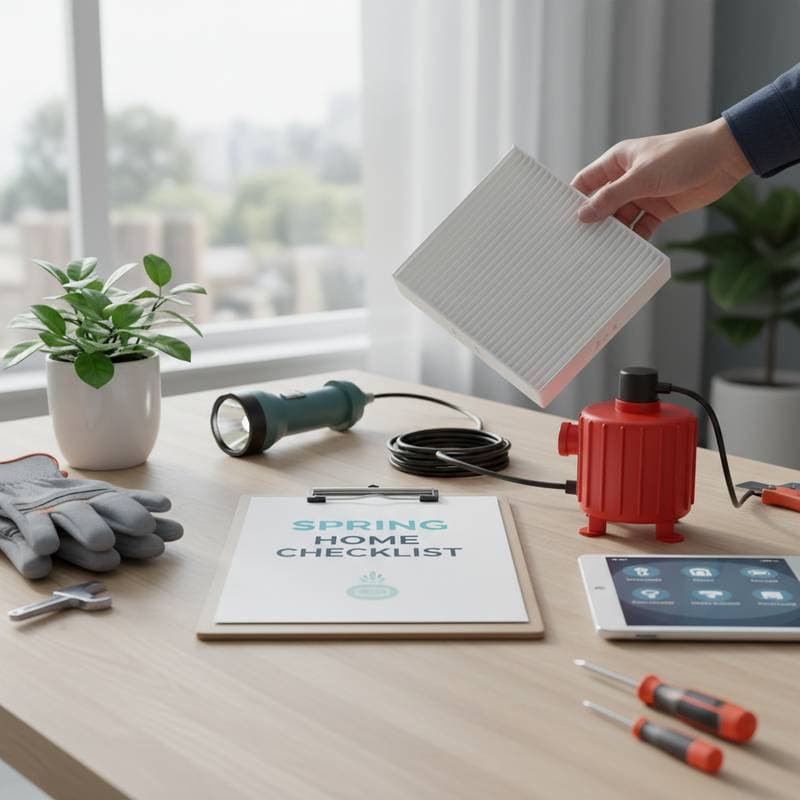
Essential Spring Home Checks to Prevent Costly Repairs
Homeowners often face unexpected energy bills or repair costs after winter. Small issues can escalate into major problems without timely attention. Spring provides an ideal season to identify and address these concerns. Professional skills or large budgets prove unnecessary; a free weekend and basic tools suffice to safeguard the home.
These inspections may lack excitement, yet they serve as vital maintenance that ensures smooth operation year-round. View them as routine tune-ups that eliminate emergency service calls and reduce financial burdens.
Indoor Preventive Maintenance
Spring cleaning typically addresses visible clutter, yet the home's internal systems require equal focus. These checks promote a healthier, more efficient living environment.
1. HVAC Filters and System Inspection
Inspect and replace air filters in the heating, ventilation, and air conditioning system. Clogged filters force the unit to work harder, increasing energy use by up to 15 percent. A new filter costs 10 to 20 dollars and installs in minutes. While accessing the system, clean vents and ensure the thermostat functions correctly to optimize performance.
2. Roof and Attic Inspection
Climb a ladder to examine shingles for missing pieces, cracks, or loose granules. Check the attic for signs of leaks, such as water stains or mold growth. Minor roof repairs cost 50 to 100 dollars in materials, far less than a full replacement that exceeds thousands. Clear debris from gutters to direct water away from the structure.
3. Sump Pump Testing
Locate the sump pump in the basement and fill the pit with water to test operation. A faulty pump can lead to flooding and water damage costing thousands to repair. Annual testing takes 10 minutes; replacement units range from 100 to 300 dollars. Ensure the battery backup activates if the home experiences power outages.
4. Plumbing Leaks and Water Pressure
Examine areas under sinks and around toilets for signs of moisture or discoloration. A slow drip wastes hundreds of gallons monthly. Repair a leaky faucet with parts costing 20 dollars to save up to 100 dollars annually on water bills. Low pressure often results from mineral buildup; soak aerators in vinegar overnight to restore flow.
5. Smoke and Carbon Monoxide Detectors
Test these safety devices monthly, though spring serves as a key reminder. Replace batteries and verify expiration dates on the units. New detectors cost 15 to 50 dollars each. Smart models connect to smartphones for remote alerts, ideal for frequent travelers.
6. Window and Door Seals
Feel for drafts around windows and doors to identify energy loss. Inspect weatherstripping and caulk for wear. Replace seals to enhance comfort and cut energy costs by up to 10 percent. A tube of caulk costs under 10 dollars and applies in less than an hour. Prioritize areas near heating or cooling vents for maximum impact.
Outdoor Systems Inspection
The home's exterior endures significant exposure, making targeted checks essential to avoid major repairs.
7. Foundation and Exterior Walls
Circumambulate the property to spot cracks, leaning elements, or water accumulation at the base. Seal small hairline cracks with masonry caulk for under 20 dollars. Wider fissures require professional evaluation. Extend downspouts at least five feet from the foundation to prevent soil erosion and structural shifts.
8. Decks, Patios, and Fences
Winter dampness weakens wood, promoting rot. Probe deck boards and posts with a screwdriver; easy penetration signals replacement needs. Clean and reseal surfaces with materials costing 100 to 200 dollars to extend lifespan by years. Full replacement incurs thousands in expenses.
9. Irrigation System Check
Activate the sprinkler system to observe spray patterns and detect leaks. Clogged or broken heads waste water and damage lawns. Clean or replace heads for under 10 dollars each. Recalibrate smart controllers for spring conditions to prevent overwatering. Verify backflow preventer function to comply with local regulations.
Integrating Smart Technology for Maintenance
Smart devices simplify monitoring without daily effort. These tools extend beyond convenience to detect issues early and avert damage.
10. Smart Leak Sensors
Position sensors near water heaters, washing machines, and sinks. Units cost 30 to 70 dollars and notify smartphones of moisture detection. Early alerts prevent extensive repairs to floors or walls from undetected leaks.
11. Smart Thermostats
These units adapt to schedules and automate temperature control. Expect energy savings of about 10 percent with maintained comfort. Utility rebates often offset initial costs; research local incentives prior to purchase.
12. Smart Security Cameras and Doorbells
These systems provide oversight of deliveries, weather, and visitors. Motion detection and instant alerts enhance security. Setup involves Wi-Fi connection and hardware mounting, typically straightforward.
Adapting Checks to Location and Schedule
Regional factors influence priority tasks. Humid areas demand attention to ventilation and dehumidifiers to combat mold. Dry climates require frequent irrigation checks and wood sealing. Coastal properties face salt corrosion; inspect and repaint metal fixtures regularly.
Spread inspections over multiple weekends for feasibility. Most homeowners complete these tasks for 300 to 600 dollars in basic materials when performing work independently.
Practical Strategies for Effective Maintenance
Maintain a log of inspections, replacements, and observations. This record tracks trends and appeals to potential buyers during resale.
Group related tasks by area. Inspect siding while cleaning gutters; test detectors near vent cleaning.
Allocate budget for recurring items like filters, batteries, and caulk. These expenses pale against major repair costs.
Seek professional help for electrical problems, roof damage, or foundation concerns. Licensed experts ensure safe resolutions.
Sustaining Home Value Through Routine Care
Consistent spring checks protect investments and foster peace of mind. These proactive steps minimize disruptions and optimize performance. Homeowners who prioritize maintenance enjoy lower costs and greater reliability over time.