
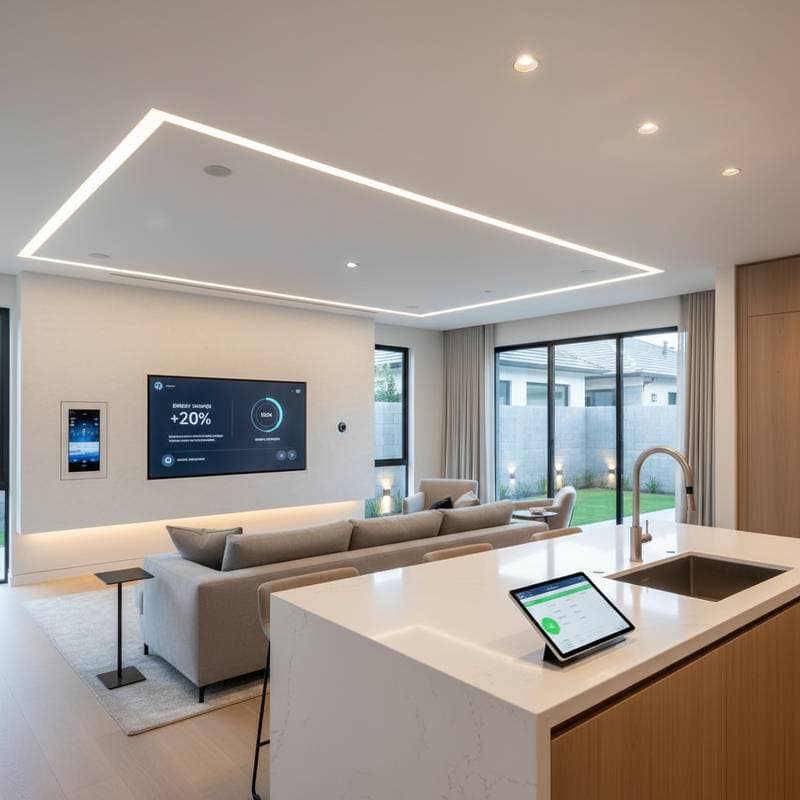
Smart Upgrades That Maximize Home ROI in 2025
Homeowners often evaluate upgrades to determine their potential impact on daily living and property value. Amid numerous smart devices that promise enhanced convenience and efficiency, selecting the most beneficial options requires careful consideration. The most effective upgrades not only simplify routines but also contribute to long-term financial returns upon selling the property.
The following sections detail targeted, budget-friendly enhancements that integrate advanced technology with enduring benefits. These selections extend beyond novelty to provide practical advantages, including utility savings and increased attractiveness to prospective buyers.
1. Smart Thermostats: Precision Control for Energy Savings
Smart thermostats learn household patterns and adjust temperatures automatically to optimize comfort while minimizing energy use. Users access remote control via smartphone applications, enabling adjustments from anywhere. Integration with voice assistants further streamlines operation, ensuring consistent indoor climates without manual intervention.
Estimated cost: $150 to $300 per unit, often with rebates from utility providers.
Installation proves straightforward for most models, typically requiring only basic wiring connections. Homeowners recoup investments through reduced heating and cooling bills, often within one to two years. Prospective buyers value this feature for its contribution to lower ongoing expenses and environmental responsibility.
2. Smart Lighting Systems: Ambiance Meets Efficiency
Conventional lighting often leads to overlooked energy waste, such as lights left on in unoccupied rooms. Smart bulbs and switches address this through motion detection and programmable schedules, allowing remote management via mobile devices or voice commands. Advanced models adapt illumination levels to ambient daylight, further conserving power.
Estimated cost: $20 to $60 per bulb, or $100 to $250 for systems covering multiple rooms.
Begin implementation in frequently used spaces to realize immediate benefits, then scale according to financial plans. Opt for energy-efficient LED variants with extended durability. This combination of aesthetic enhancement and functional savings appeals strongly to buyers seeking modern, practical homes.
3. Smart Security Systems: Peace of Mind with Added Value
Home security extends beyond traditional locks with smart systems that include cameras, doorbells, and sensors for comprehensive monitoring. Real-time alerts notify owners of unusual activity, while remote viewing capabilities enable oversight from distant locations. Integration with other devices creates automated responses, such as activating lights upon detecting motion.
Estimated cost: $200 to $500 for basic setups, scaling with additional cameras and professional monitoring subscriptions.
These systems deter potential intruders and provide evidentiary recordings, enhancing overall safety. Buyers prioritize such features in today's market, often citing them as key factors in purchase decisions. The perceived security boost translates directly to higher property appraisals.
4. Smart Irrigation Controllers: Save Water and Money
Manual sprinkler systems frequently overwater landscapes, inflating utility costs and straining local resources. Smart controllers analyze weather forecasts and soil moisture to deliver precise irrigation amounts, adjusting schedules dynamically. This technology prevents unnecessary usage during rainy periods or high-humidity conditions.
Estimated cost: $120 to $300, with rapid payback through seasonal water bill reductions.
Particularly beneficial in regions enforcing conservation measures, these devices demonstrate a commitment to sustainability. Reduced manual oversight frees time for other tasks, appealing to buyers who prioritize low-maintenance properties. Long-term savings and ecological benefits solidify their role in elevating home value.
Balancing Budget and ROI
Implementing smart upgrades demands strategic planning to align expenditures with expected returns. A phased strategy allows gradual integration without overwhelming finances, ensuring each addition builds upon the previous for cumulative impact.
Prioritize by ROI and comfort:
- Initiate with energy-focused solutions such as thermostats and lighting to achieve quick savings.
- Incorporate convenience elements like security and irrigation to enhance usability.
- Conclude with premium features, including connected appliances or centralized hubs, for refined functionality.
Homeowners typically invest $2,000 to $3,000 across these categories, resulting in measurable resale value increases. Pairing with foundational efficiencies, like energy-efficient windows or enhanced insulation, amplifies overall gains. This approach maximizes benefits while maintaining fiscal discipline.
Safety and Installation Tips
Although many smart devices offer simple setup, prioritizing safety remains essential. Disconnect power sources before any electrical modifications and verify device specifications match existing infrastructure. Professional assistance from certified electricians or specialists ensures compliance and reliability when complexity arises.
Regular firmware updates safeguard against emerging threats, while immediate password changes from defaults fortify network defenses. A robust, protected setup preserves privacy and functionality across all connected elements. These precautions underpin the longevity and trustworthiness of smart home investments.
Seasonal Timing and Maintenance
Optimal installation periods minimize disruptions to daily routines and system performance. Schedule indoor upgrades like thermostats during transitional seasons, such as spring or fall, to avoid peak reliance on climate control. Outdoor installations, including irrigation systems, align best with pre-growing season preparations for seamless integration.
Routine upkeep involves periodic sensor cleaning, battery replacements, and application updates. Allocate brief monthly sessions to these tasks, preventing inefficiencies or failures. Consistent attention sustains peak operation and averts expensive repairs over time.
Achieving Lasting Smart Home Value
Embark on smart home enhancements with targeted selections that address immediate needs and future aspirations. Focus on technologies that deliver tangible savings, streamline operations, and attract discerning buyers. Progressive implementation, one initiative per season, fosters a cohesive, intelligent environment.
These upgrades transcend mere convenience to create homes that adapt intuitively to occupants' lives. Efficiency gains, security enhancements, and modern appeal culminate in substantial financial advantages at sale. Thoughtful integration positions the property as forward-thinking, yielding enduring returns on every investment.