
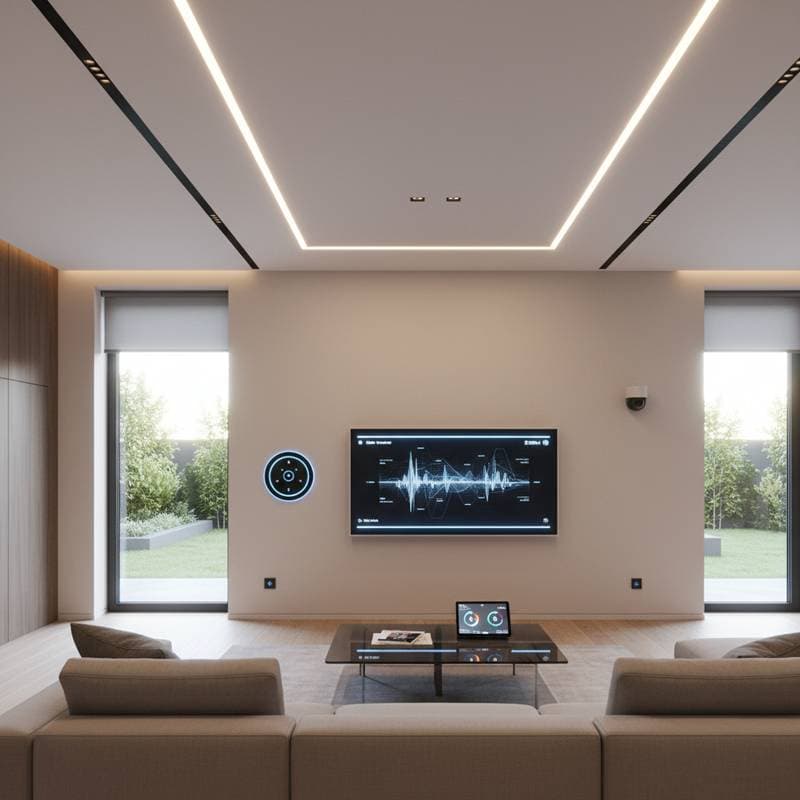
Introduction to Cost-Effective Smart Home Investments
Smart home advancements in 2025 offer homeowners tangible benefits beyond convenience. These technologies address rising energy costs, security vulnerabilities, and maintenance challenges with precision. By selecting upgrades that align with daily routines, individuals can achieve measurable savings while elevating living standards.
The appeal lies in their ability to automate routine tasks and optimize resource use. For instance, devices that monitor and adjust usage patterns prevent waste and alert users to potential issues early. This approach transforms homes into proactive environments that safeguard finances and well-being.
Homeowners often overlook the cumulative impact of small efficiencies. Over time, these additions compound into significant returns, making the initial outlay worthwhile. The following sections detail specific upgrades proven to recoup costs through practical applications.
Energy-Saving Thermostats: Precision Climate Control
Programmable thermostats have evolved into intelligent systems that learn household patterns. Models equipped with geofencing technology detect when occupants leave and adjust temperatures accordingly. This feature alone can lower heating and cooling bills by up to 10 percent annually.
Advanced versions integrate with weather forecasts to preemptively optimize settings. Users receive notifications for manual overrides if needed, ensuring comfort without excess energy consumption. Installation typically requires minimal wiring, often completed in under an hour.
Consider a family in a moderate climate: automated adjustments during work hours save approximately 15 dollars monthly on utilities. Over five years, this equates to hundreds in recovered investment, factoring in the device's 200-dollar price point.
Intelligent Lighting Systems: Reducing Unnecessary Usage
Smart bulbs and fixtures replace traditional options with tunable brightness and color options. Motion sensors activate lights only when presence is detected, eliminating forgotten switches. Scheduling capabilities align illumination with natural daylight cycles.
These systems connect via apps for remote control, allowing users to turn off lights from afar. Integration with voice assistants simplifies operation, reducing reliance on manual habits. Energy-efficient LEDs within these bulbs extend lifespan while cutting electricity draw by 75 percent compared to incandescents.
A household with multiple rooms benefits from zoned controls, where different areas operate independently. Monthly savings of 5 to 10 dollars accumulate quickly, often offsetting the 50-dollar per bulb cost within a year. Long-term, reduced replacement needs further enhance value.
AI-Powered Security Cameras: Preventing Losses
Modern security setups feature cameras with facial recognition and real-time alerts. These devices monitor entry points and detect unusual activity, notifying owners instantly via mobile apps. Night vision and weatherproof designs ensure reliable performance year-round.
Beyond deterrence, recorded footage aids insurance claims, potentially lowering premiums by 5 to 20 percent for monitored homes. Integration with smart locks adds layers of access control, restricting entry to authorized individuals only.
For a typical urban residence, the peace of mind translates to avoided theft costs averaging 2,000 dollars per incident. With systems starting at 150 dollars, payback occurs through premium reductions and incident prevention, often within two years.
Leak Detection Sensors: Avoiding Water Damage
Water sensors placed in basements, bathrooms, and under sinks alert users to moisture buildup. Connected to main shutoff valves, they automatically close water lines upon detection, minimizing flood risks. This proactive measure prevents extensive repairs that can exceed 5,000 dollars.
Installation involves simple adhesive placement and app pairing, suitable for non-experts. Regular firmware updates improve sensitivity to subtle leaks from appliances like washers or water heaters.
In regions prone to plumbing issues, annual savings from averted damages justify the 100-dollar setup cost. Insurance discounts for such preventive tech add another layer of financial protection, accelerating return on investment.
Smart Plugs and Appliances: Streamlining Power Management
These devices turn ordinary outlets into controllable points for appliances. Users monitor energy draw in real-time and set schedules to power down idle devices. Standby power consumption, often overlooked, drops significantly with automated shutoffs.
Compatible with major brands, plugs support voice commands for hands-free operation. Data analytics reveal usage trends, helping refine habits for optimal efficiency.
A home with electronics like TVs and chargers sees 20-dollar monthly reductions. At 20 dollars each, multiple units pay for themselves through eliminated phantom loads, with full recovery in under a year.
Central Hubs for Seamless Integration
Hubs serve as the nervous system, linking disparate devices into a unified network. Compatible with protocols like Zigbee or Z-Wave, they enable cross-device communication without constant app switching. Voice control expands to entire ecosystems.
Setup involves central placement for strong signal coverage, followed by device pairing. Future-proof designs accommodate expansions, avoiding obsolescence.
The 150-dollar hub investment amplifies other upgrades' effectiveness, potentially doubling energy savings through coordinated actions. This connectivity ensures the system evolves with needs, maximizing long-term value.
Maximizing Returns Through Strategic Implementation
To realize full benefits, assess current home layout and priorities before purchasing. Start with high-impact areas like climate control and security for quickest payoffs. Professional consultation ensures compatibility and optimal placement.
Regular maintenance, such as software updates, sustains performance. Track savings via built-in reports to quantify progress and adjust as necessary.
Ultimately, these upgrades foster resilient homes that adapt to lifestyle changes. The financial gains, coupled with enhanced daily living, position smart technology as a cornerstone of modern homeownership.