
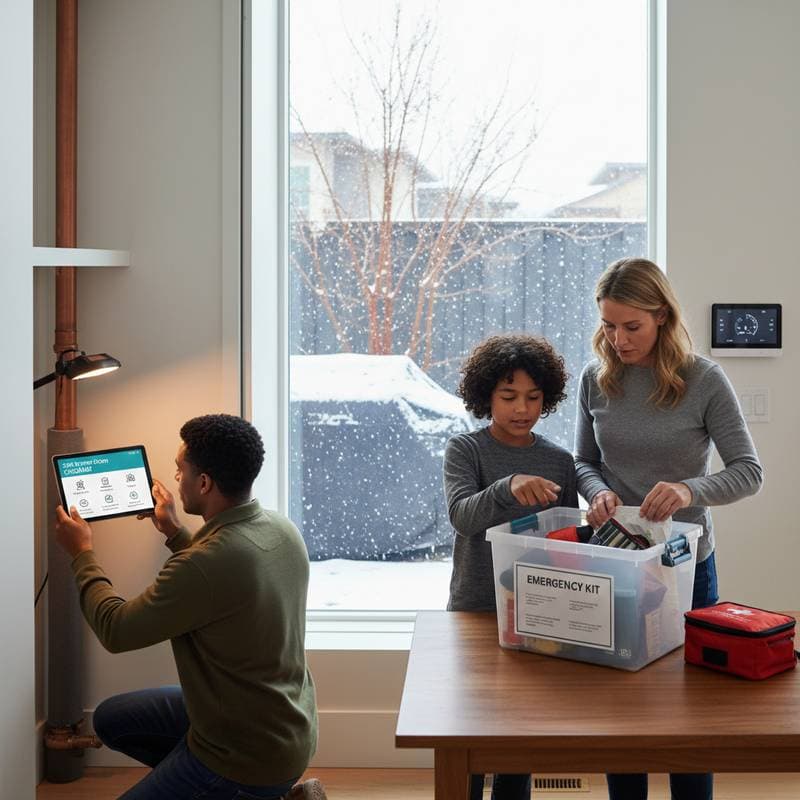
2026 Winter Storm Home Preparation Checklist
Winter storms can leave homes without power and vulnerable to damage from freezing temperatures. Preparation allows homeowners to maintain safety and comfort throughout severe weather events. This checklist provides clear steps for protecting a property before, during, and after storms.
Perform a Thorough Home Inspection
Walk through the house to identify drafts, leaks, and other weak points that worsen in cold conditions. Focus first on the roof and gutters. Remove debris from gutters so water flows away from the foundation. Repair loose shingles promptly, as snow and ice can expand small problems.
Basic gutter cleaning requires only a ladder and gloves for those comfortable with the task. Professional service typically ranges from 100 to 250 dollars based on home size. Next, check doors and windows for air leaks by testing with a lit candle near frames. Seal gaps with weatherstripping or caulk, and apply plastic film kits to older windows for added insulation at low cost.
Schedule a professional tune up for the furnace or boiler. This service costs between 100 and 150 dollars and can raise efficiency by as much as 15 percent. Replace filters regularly and clear dust from vents to support steady operation.
Assemble an Emergency Supply Kit
Stock supplies to last several days without leaving the house. Include one gallon of water per person daily for at least three days. Add nonperishable foods such as canned soups, peanut butter, granola bars, and nuts along with a manual can opener.
Prepare flashlights with extra batteries or LED lanterns. Gather blankets, warm layers of clothing, a first aid kit with medications, and portable chargers that operate by solar or hand crank power. A generator provides backup electricity for essentials like the refrigerator and furnace fan. Portable units begin around 400 dollars. Operate all generators outside in ventilated spaces to avoid carbon monoxide risks. Stock dry firewood for wood stoves or fireplaces and schedule chimney cleaning.
Ready the Vehicle and Garage
Test the car battery and replace it if weak. Maintain the fuel tank at least half full to reduce the chance of frozen lines. Place jumper cables, a shovel, and an ice scraper in the trunk. Verify tire tread depth and pressure for better traction on snow.
Store a snow shovel, roof rake, rock salt, and sand in the garage. Purchase these items early because they often disappear from shelves before storms arrive.
Follow Essential Safety Practices
Install carbon monoxide detectors near bedrooms and fuel burning appliances. Replace detector batteries each year. Never operate generators or grills indoors. Position space heaters at least three feet from flammable objects and plug them directly into outlets. Turn heaters off before sleeping or leaving the room.
Remove snow from the roof edge with a roof rake if icicles appear, which signals heat loss from the attic. Plan to add insulation later if needed.
Care for Pets and Indoor Plants
Keep pets inside during storms. Limit outdoor time when necessary and clean paws to remove salt after walks. Maintain extra pet food, water, and medications. Move houseplants away from drafty windows and use grow lights during periods of low sunlight. Apply mulch around outdoor plants to protect roots from freezing.
Establish a Seasonal Maintenance Routine
Label storage bins for winter supplies to locate items quickly. Keep a basic tool kit near emergency supplies. Rotate canned goods every few months to maintain freshness. Practice shutting off utilities in advance. Confirm that insurance covers winter related damage. Set annual reminders to repeat key inspections at the start of each cold season.