
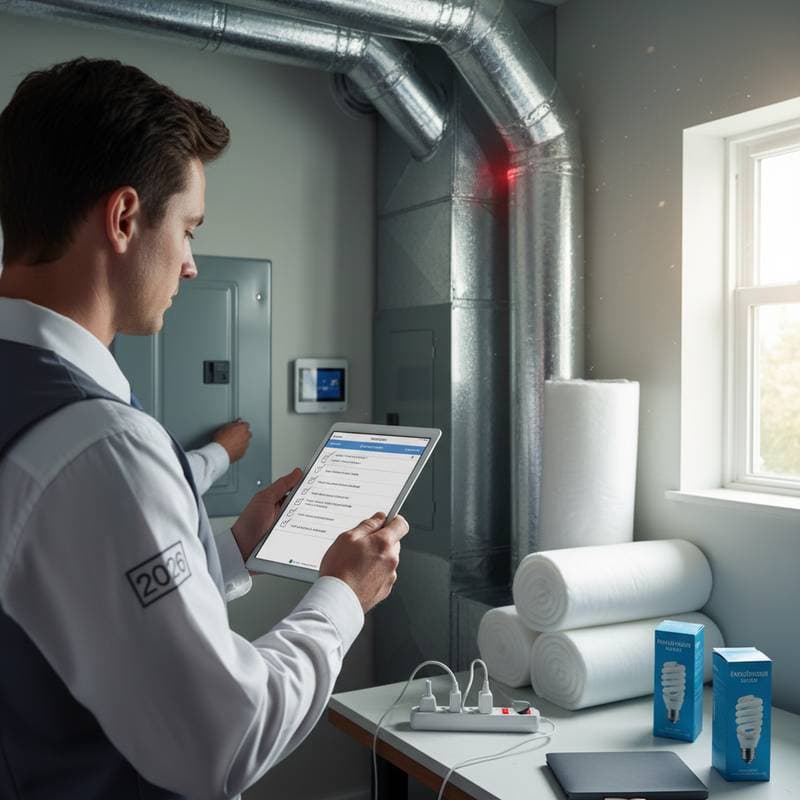
Spring Checklist to Minimize Home Energy Waste
High energy bills can strain household budgets, yet spring provides a favorable time for corrective action. Mild temperatures allow for open windows during inspections, and the season encourages completion of deferred maintenance from winter. A spring energy audit involves a systematic review to identify power and fuel inefficiencies. Through targeted weekend efforts and basic checks, homeowners achieve reduced waste, lower costs, and enhanced living comfort.
Key Focus Areas
- Inspect and maintain the HVAC system
- Seal air leaks and evaluate insulation
- Test and upgrade inefficient lighting
- Assess appliance performance and configurations
- Optimize water heating efficiency
- Examine outdoor elements for energy loss
These activities require thirty minutes to several hours each. Most incur costs under one hundred dollars, yet yield annual utility savings in the hundreds.
1. Perform a Mini Energy Audit
Basic tools suffice for an initial assessment. Move through each room with a notepad, detecting drafts at windows, outlets, and baseboards by hand or with incense smoke to visualize air movement. Note sunlight penetrating door edges or misaligned vents. Such minor gaps collectively account for up to thirty percent loss of conditioned air.
For comprehensive analysis, engage a certified energy auditor. Fees range from one hundred to three hundred dollars for reports featuring infrared scans and blower door tests. These insights enable precise fixes that recoup expenses swiftly.
2. Refresh the HVAC System for Spring
Seasonal transitions demand peak performance from heating and cooling units, making now the time for maintenance. Change air filters, vacuum surrounding vents, and clean return registers with a soft brush. A fresh filter enhances circulation and cuts energy demands by fifteen percent.
Schedule a professional service if the last occurred over a year ago. Experts verify refrigerant charges, secure wiring, and adjust controls. Costs fall between seventy-five and one hundred fifty dollars, delivering reliability and operational gains.
Programmable or smart thermostats replace outdated models to automate temperature management, potentially saving ten percent on heating and cooling expenses annually. Utility providers frequently rebate these installations, easing the transition.
3. Seal Air Leaks to Prevent Heat Loss
Mild spring conditions facilitate draft detection and repair before summer demands intensify. Apply caulk and weatherstripping to door and window frames. One tube of silicone caulk, priced at five dollars, suffices for multiple seals.
Install foam gaskets behind wall plates for switches and outlets on exterior surfaces to halt infiltration. Spray foam addresses larger penetrations near pipes or cables. Persistent temperature variations signal insulation shortfalls in attics or crawl spaces; supplemental fiberglass or blown-in materials boost uniformity and may attract rebate incentives.
4. Upgrade to Efficient Lighting Solutions
Incandescent bulbs represent outdated technology ripe for replacement. LEDs consume seventy-five percent less power and endure twenty times longer. Swapping ten high-use fixtures yields approximately fifty dollars in yearly savings, based on regional rates.
Select ENERGY STAR-rated products for superior performance. Outdoor applications benefit from motion-activated or photocell-equipped options to activate only as required. This upgrade delivers immediate indoor and exterior enhancements with minimal effort.
5. Optimize Appliances for Maximum Efficiency
Household appliances contribute substantially to energy profiles. Vacuum condenser coils on refrigerators, inspect gasket integrity, and maintain internal temperatures at thirty-seven degrees Fahrenheit. For dryers, clear lint screens and exhaust ducts to accelerate cycles and reduce runtime.
Units over ten years old often double the energy draw of contemporaries. ENERGY STAR alternatives lower usage by twenty to forty percent. Initial investments of several hundred dollars offset through rebates and sustained reductions.
6. Enhance Water Heating Performance
Water heaters operate continuously, so minor tweaks yield consistent benefits. Adjust settings to one hundred twenty degrees Fahrenheit to avoid excess heating and curb consumption. Drain the tank annually to clear mineral deposits, preserving heat transfer and unit longevity.
Traditional tank models gain from foam insulation wraps, particularly in unheated areas, at a cost of ten to twenty dollars for up to ten percent savings. Tankless variants require periodic descaling of sensors and elements to sustain responsiveness.
7. Inspect Outdoor Areas for Energy Inefficiencies
Exterior features often harbor overlooked waste sources. Examine window and door frames for warping or gaps, applying fresh seals as needed to maintain barriers against elements. Check attic vents and dryer exhausts for blockages from debris or animal nests, ensuring unobstructed flow.
Evaluate outdoor faucets and hoses for leaks, which inflate water and heating bills; tighten connections or replace washers promptly. Solar exposure on south-facing walls may warrant reflective barriers or shade structures to minimize cooling loads in upcoming months. These checks prevent subtle losses that accumulate over time.
Pro Tips for Effective Implementation
- Begin with manageable tasks. Sealing a single entry or replacing select bulbs builds confidence and quick wins.
- Monitor usage patterns. Record baseline bills, then measure post-improvement declines to quantify impact.
- Prioritize safety measures. Wear gloves, respirators, and eyewear during insulation handling or component cleaning.
- Delegate complex work. Licensed professionals manage electrical, gas, or structural modifications.
- Establish routine reviews. Annual spring assessments sustain gains and preempt escalating problems.
Sustain Efficiency and Savings Throughout the Year
Implementing these steps transforms routine home maintenance into a strategic advantage. Reduced utility demands not only lighten financial loads but also promote environmental stewardship. Comfortable, efficient spaces result from consistent attention, ensuring benefits endure across seasons.