
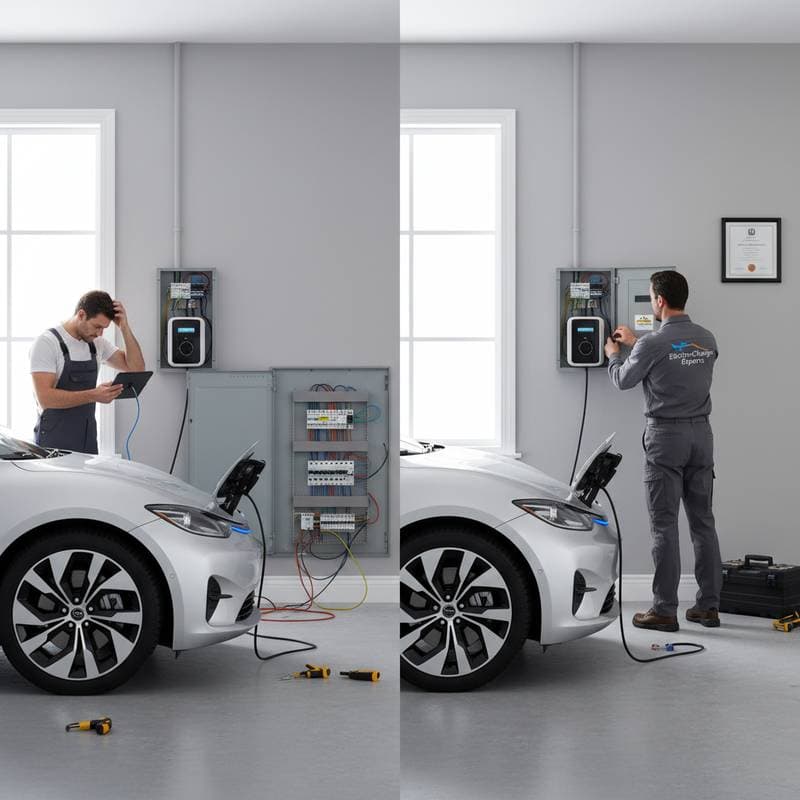
Why Professional EV Charger Installation Protects Your Home Warranty
Installing an electric vehicle charger appears straightforward, yet it demands precise electrical work to ensure safety and compliance. Professional electricians perform essential load calculations, secure permits, and conduct inspections that DIY efforts frequently miss. This expertise not only prevents hazards but also preserves your home warranty, insurance coverage, and long-term investment.
The Complexity Behind EV Charger Installations
EV chargers require more than simple plugging in. A Level 2 charger typically needs a dedicated 240-volt circuit capable of handling 30 to 50 amps, comparable to high-demand appliances like dryers or ovens. Your home's electrical panel must accommodate this added load without risking overloads that could lead to tripped breakers or fires.
Electricians start with a detailed load calculation to assess your panel's capacity. If upgrades are necessary, they recommend options such as subpanels or service expansions. Attempting this without expertise might result in immediate failures or gradual damage, turning a cost-saving attempt into a major expense.
The Value of Professional Services
Professional installation costs range from $800 to $2,000 for basic setups, covering labor, materials, permits, and testing. Complex projects involving panel upgrades or extended wiring may exceed $3,000. These fees reflect access to specialized tools, in-depth code knowledge, and insurance against errors.
Electricians manage local permitting requirements, which vary by jurisdiction and are crucial for insurability. Unpermitted work often leads to claim denials from insurers. By handling these details, professionals ensure your installation remains compliant and protected.
Essential Safety and Code Standards
Electrical codes exist to mitigate risks like arc faults, ground faults, and overheating. The National Electrical Code outlines requirements for grounding, wire sizing, and breaker selection, with local variations adding further specificity. Licensed electricians adhere to these standards during every step.
For instance, wire gauge must match the charger's amperage to prevent heat buildup. Installations in garages or outdoors demand ground fault circuit interrupter protection to counter moisture-related hazards. DIY approaches risk non-compliance, exposing your home to dangers and potential liabilities.
Navigating Permits and Inspections
Most municipalities mandate permits for new high-amperage circuits. After installation, a certified inspector reviews the work to confirm code adherence. This process safeguards your property and appeals to future buyers during resale.
Professionals streamline permitting and scheduling, integrating these into their service. Bypassing them as a DIYer can complicate home sales or invalidate insurance in case of incidents. Proper documentation from inspections provides lasting proof of quality workmanship.
Safeguarding Warranties and Insurance
Many EV charger manufacturers stipulate professional installation to validate warranties. Self-installation voids this coverage if issues arise. Homeowner insurance policies similarly exclude claims tied to unprofessional electrical modifications.
Electricians supply verifiable records, including permits and inspection approvals. These documents reinforce your warranty claims and satisfy insurers. In the event of a problem, this paperwork serves as critical evidence of due diligence.
Expert Evaluations Beyond Basic Instructions
Electricians assess site-specific factors, such as optimal placement to avoid weather exposure or physical damage. They verify grounding and bonding to eliminate stray voltages that could harm your vehicle's electronics. This thorough approach enhances system reliability.
Forward-thinking professionals design installations for scalability. If you plan to incorporate solar panels or additional vehicles, they can integrate compatible wiring from the outset. Such planning avoids costly retrofits down the line.
Common Pitfalls in DIY EV Charger Efforts
DIY projects falter due to overlooked load assessments or incorrect breaker choices. Errors like improper conduit routing, undersized wiring, or inadequate grounding create latent risks that emerge over time. These issues compromise safety and efficiency.
Long wire runs introduce voltage drop, reducing charging speed and increasing heat. Experts mitigate this by selecting appropriate wire sizes. Without this adjustment, your system operates suboptimally, potentially shortening equipment lifespan.
Steps for a Successful Installation
- Evaluate your electrical panel's current capacity prior to purchasing a charger.
- Obtain quotes from several licensed electricians experienced in EV systems.
- Verify that quotes encompass local permits and inspections.
- Select chargers from established brands offering robust warranties.
- Consider future needs, such as multiple vehicles or renewable energy integration.
Ensuring Long-Term Reliability
After installation, maintain your charger by cleaning it regularly and inspecting connections for corrosion or wear. Address any tripped breakers, odd sounds, or charging inconsistencies promptly with a professional. Routine checks preserve performance and prevent minor issues from escalating.
Investing in expert installation yields a secure, compliant system that supports your EV ownership without complications. This choice protects your home, vehicle, and financial interests for years to come.