
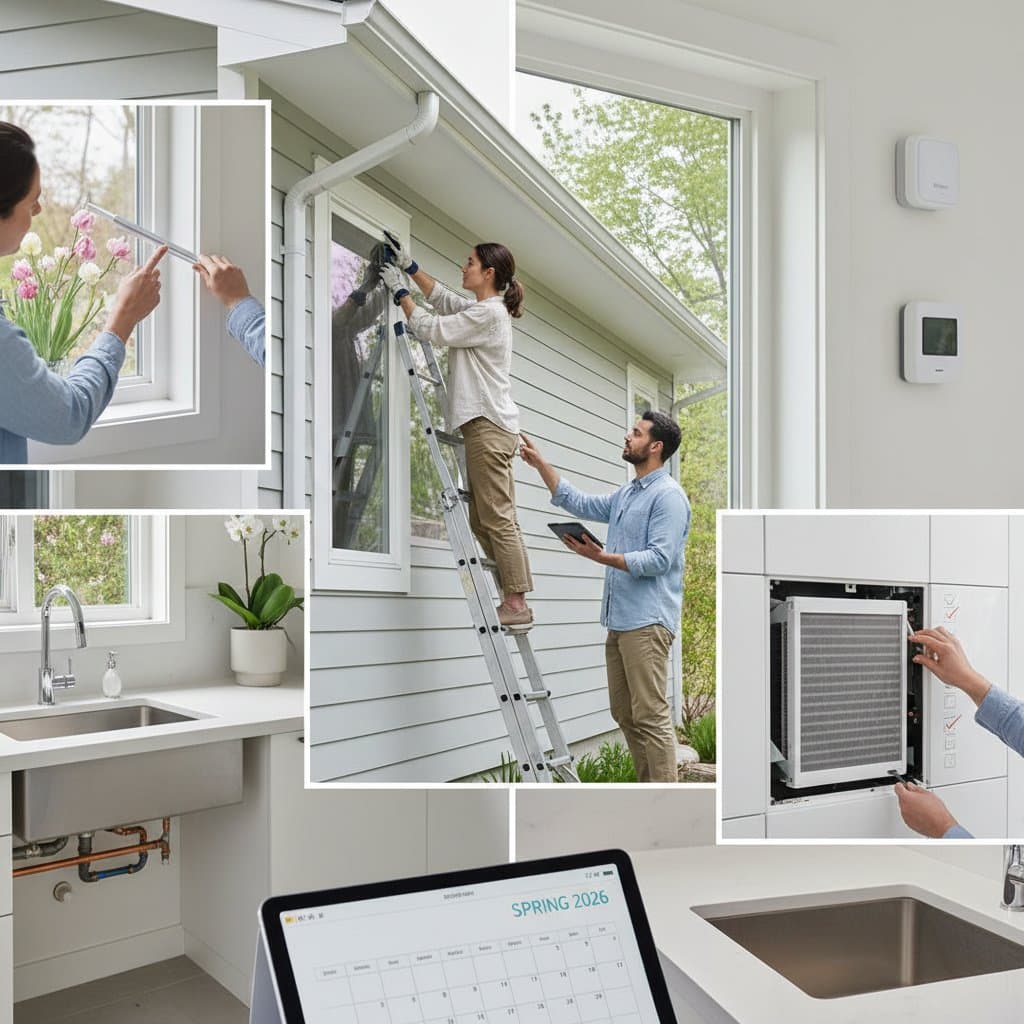
Introduction to Spring Home Maintenance
Spring marks a time of renewal, and this season offers an ideal window to assess and fortify your home. Proactive inspections reveal potential issues before they escalate into major problems. By addressing key areas now, homeowners save significant expenses and maintain a safe environment.
Focus on critical systems exposed to winter wear and summer demands. This guide outlines seven essential checks, each with specific steps and benefits. Implement them systematically to achieve lasting protection.
1. Inspect Roof and Gutters for Weather Damage
Roofs endure harsh winter conditions, and gutters manage water runoff effectively. Begin by scanning the roof for missing shingles, cracks, or loose flashing. Hire a professional if you spot damage exceeding minor wear.
Clear gutters of debris to prevent overflow, which can erode foundations. Ensure downspouts direct water at least five feet from the house. These actions mitigate leaks and water intrusion, potentially saving thousands in repair costs.
- Visual Scan: Look for signs of ice dam residue or granule loss on shingles.
- Gutter Cleaning: Remove leaves and twigs; flush with a hose to test flow.
- Professional Assessment: Schedule an inspection if the roof is over 15 years old, costing $200 to $500.
Regular attention here extends roof life and preserves structural integrity.
2. Seal Windows and Doors Against Drafts
Windows and doors often develop gaps after winter expansion and contraction. Inspect frames for cracks or deteriorated caulk, which allow air infiltration. Apply fresh sealant to restore barriers against moisture and energy loss.
Test seals by holding a lit incense stick near edges; smoke movement indicates leaks. Replace weatherstripping on doors if it compresses unevenly. These steps enhance insulation and reduce utility bills by up to 20 percent.
- Caulking Application: Use silicone-based sealant for exterior gaps; apply in dry weather.
- Weatherstripping Replacement: Opt for foam or vinyl strips, available for $10 to $30 per door.
- Energy Audit Tip: Consider adding storm windows for older homes, at $150 to $400 each.
Sealed openings maintain indoor comfort and prevent mold growth from condensation.
3. Examine Plumbing Systems for Leaks and Freezes
Winter freezes can crack pipes, leading to hidden leaks that surface in spring. Check exposed pipes in basements, crawl spaces, and exteriors for signs of dampness or corrosion. Tighten fittings and insulate vulnerable sections with foam sleeves.
Flush water heaters annually to remove sediment buildup, which affects efficiency. Inspect faucets and toilets for drips that waste water and inflate bills. Addressing these issues early avoids flooding and water damage claims.
- Leak Detection: Use a moisture meter or listen for hissing sounds in walls.
- Insulation Wrap: Cover pipes near exterior walls; kits cost $20 to $50.
- Professional Service: Plumbers charge $100 to $300 for full system checks.
Vigilant plumbing care ensures reliable water flow and safeguards against burst pipes.
4. Refresh HVAC Systems for Optimal Performance
HVAC units work overtime during seasonal transitions, accumulating dust and strain. Replace air filters monthly and clean vents to improve airflow. Schedule a technician tune-up to calibrate thermostats and recharge refrigerants if needed.
Inspect outdoor units for debris or bent fins, which hinder operation. Lubricate moving parts to reduce wear. These maintenance routines extend equipment life by five to ten years and lower energy consumption.
- Filter Swap: Choose high-efficiency filters rated MERV 8 to 13, priced at $10 to $25 each.
- Duct Cleaning: Vacuum accessible vents; professional services run $300 to $600.
- Thermostat Check: Upgrade to programmable models for $100 to $250 to automate savings.
A well-maintained HVAC system delivers consistent temperatures and cleaner air quality.
5. Update Smoke and Carbon Monoxide Detectors
Safety devices degrade over time, and batteries fail without notice. Test all detectors by pressing the button; replace units over ten years old. Install additional detectors in bedrooms and hallways per local codes.
Interconnect units so one alarm triggers all others. Change batteries twice yearly, ideally during time changes. This simple protocol provides early warnings against fires and gas leaks, protecting occupants effectively.
- Testing Routine: Verify chirps and lights function; replace 9V batteries as needed.
- Placement Guide: Mount on ceilings, at least 10 feet from kitchens to avoid false alarms.
- Budget Item: New detectors cost $15 to $40 each; installation is often DIY.
Updated detectors form the cornerstone of home fire safety.
6. Maintain Exterior Siding and Trim
Siding shields the home from elements, but neglect leads to peeling paint and wood rot. Power wash surfaces to remove mildew and dirt buildup. Repaint or restain faded areas to restore protection.
Check trim for gaps where water can enter. Secure loose panels with nails or screws. Regular upkeep protects siding materials from rot and preserves curb appeal, which supports resale value.
- Cleaning Method: Use a low-pressure washer with mild detergent; avoid high settings on vinyl.
- Repainting Prep: Scrape loose paint; prime bare wood before applying two coats.
- Cost Estimate: DIY supplies total $50 to $200; pros charge $2,000 to $5,000 for full exteriors.
Consistent care keeps the facade durable and visually appealing.
7. Prepare Landscaping for Drainage and Pest Control
Healthy landscaping enhances aesthetics while managing water and deterring pests. Verify soil grading slopes away from the foundation by at least six inches over ten feet. Adjust as necessary to channel rainwater effectively.
Maintain mulch beds two inches from siding to block termite paths. Trim tree branches that contact the roof or walls, eliminating moisture traps and animal highways. These practices prevent erosion and infestations proactively.
- Grading Adjustment: Use a level to check slopes; add topsoil if needed.
- Mulch Refresh: Apply two to three inches deep, avoiding overpiling against structures.
- Pruning Tools: Invest in loppers for $20 to $50; hire arborists for large jobs at $200 to $500.
- Budget Snapshot: Routine landscaping cleanup costs $150 to $400, while grading adjustments range from $1,000 to $2,000 based on yard size.
Attentive landscaping fosters a resilient outdoor environment.
Cost Planning for Spring Home Protection
A full spring maintenance plan typically ranges from $800 to $2,500, varying by home size and condition. Divide efforts into phases for better management. This approach spreads expenses and maintains momentum.
- Safety Essentials: Allocate $200 to $400 for detectors, filters, and basic seals.
- Preventive Checks: Budget $300 to $800 for roof, gutters, and drainage.
- Efficiency Improvements: Set aside $600 to $1,200 for HVAC servicing and window treatments.
Tailor priorities to immediate needs and financial capacity. Investments in prevention now avert repairs that multiply costs four to five times.
Implementing Your Spring Maintenance Plan
Dedicate weekends to targeted tasks, selecting two or three per session. Document progress with photos and receipts to build an insurance record. This portfolio demonstrates diligent care to insurers and potential buyers.
Blend DIY projects with expert consultations for complex areas. Spring renewal extends to your home, yielding a secure, efficient space. Through planning and action, enjoy peace of mind year-round.