
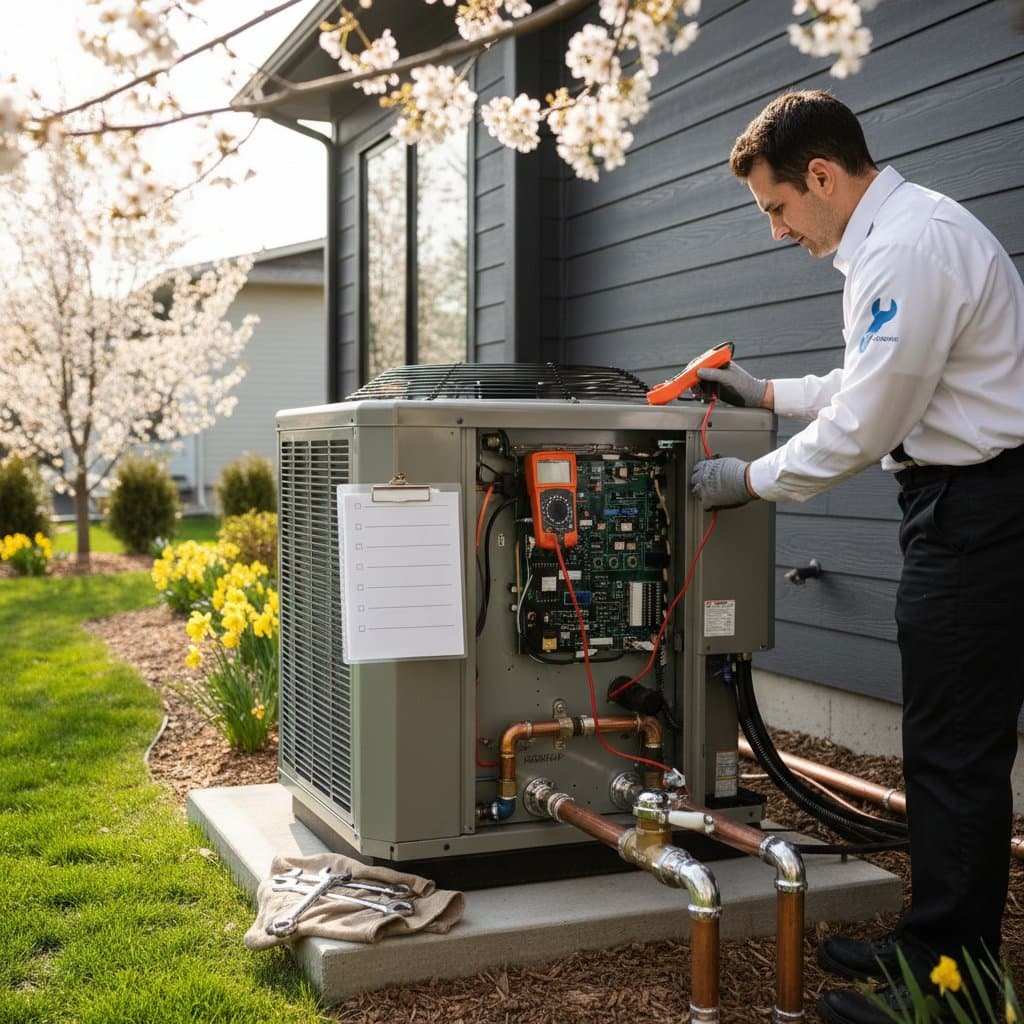
Spring HVAC and Plumbing Inspections: Prevent Costly Breakdowns
Homeowners benefit from conducting spring inspections on HVAC and plumbing systems to sidestep expensive repairs down the line. Delaying action until extreme weather strikes often leads to emergency service calls with inflated prices. A proactive spring tune-up maintains system efficiency, reliability, and safety for the entire household.
Optimal Timing for Spring Inspections
Spring serves as a transitional period between intensive winter heating and summer cooling demands. During this season, HVAC components recover from heavy use, while plumbing adjusts to fluctuating temperatures. Addressing potential issues at this stage identifies minor problems before they develop into significant failures.
Professional HVAC evaluations generally range from $100 to $250, and plumbing assessments cost $150 to $300, varying by home size and system intricacy. These investments pale in comparison to the $3,000 to $8,000 required for air conditioning replacement or the $1,000 to $5,000 for water damage remediation from undetected leaks. The financial advantages become evident through such comparisons.
Detailed HVAC Maintenance Steps for Spring
Homeowners can perform several foundational tasks independently prior to professional involvement. These actions focus on optimizing airflow, verifying safety features, and readying the system for warmer months.
1. Replace or Clean Air Filters
Clogged filters force the HVAC unit to operate inefficiently, potentially raising energy consumption by 15 percent. Homeowners should replace disposable filters or clean reusable versions every one to three months. Always select filters that align with the manufacturer's recommended specifications for optimal performance.
2. Clear Debris from Outdoor Units
Accumulated leaves, soil, and other debris around the outdoor condenser hinder operation. Maintain a minimum two-foot clearance to allow proper ventilation. Examine the condenser fins for bends or damage, and use a fin comb to straighten them carefully if necessary.
3. Examine Ducts and Vents
Leaks in ductwork result in lost conditioned air and elevated utility bills. Inspect for visible gaps or disconnected joints, then apply foil-backed tape or mastic sealant to secure them. Vacuum all vents and registers to eliminate dust accumulation that impedes airflow.
4. Test the Thermostat
Transition the thermostat setting from heating to cooling mode and run a system test. If temperature regulation appears inaccurate, recalibrate the device or evaluate options for a smart thermostat upgrade. Such models adjust run cycles according to occupancy patterns, thereby lowering energy expenses.
5. Schedule a Professional Tune-Up
Regardless of initial findings, engage a certified technician to measure refrigerant levels, review electrical components, and service the evaporator coil. This comprehensive process typically spans one to two hours and significantly prolongs the system's operational lifespan.
Essential Plumbing Inspections for Spring
Plumbing issues frequently remain concealed until they manifest as substantial damage. Variations in water pressure, temperature shifts, and soil movement during seasonal changes exert stress on pipes. Routine spring evaluations mitigate the risk of unforeseen and costly disruptions.
1. Detect Hidden Leaks
Shut off all water fixtures and monitor the water meter for movement. Any dial activity indicates an undetected leak. Additionally, survey areas under sinks, near toilets, and behind appliances for moisture signs. A minor drip can squander hundreds of gallons monthly, escalating water bills and damage risks.
2. Evaluate Outdoor Faucets and Hoses
Winter freezes may fracture exterior plumbing elements. Activate each hose bib to assess for drips or diminished flow. Puddles forming near the home's foundation suggest possible subsurface pipe ruptures, necessitating immediate expert intervention.
3. Service the Water Heater
Mineral sediment accumulation diminishes heating efficiency and accelerates wear. Flush approximately one-quarter of the tank capacity until outflow appears clear. Audible popping noises signal deposit buildup; for aging or corroded units, plan for timely replacement to avert sudden failures.
4. Assess Drains and Traps
Observe drainage speed in sinks and showers after running water. Delayed flow points to obstructions in the P-trap or venting system. Steer clear of chemical cleaners that corrode pipes; opt for a manual snake tool or professional assistance for persistent clogs.
5. Review Supply Lines and Shut-Off Valves
Flexible lines connected to toilets and washers degrade with age, showing signs like swelling, corrosion, or fissures. Replace any compromised hoses promptly. Rotate each shut-off valve to confirm smooth operation; if resistance occurs, apply light force and prepare for substitution to ensure emergency readiness.
Indicators Necessitating Professional Intervention
Certain symptoms warrant halting DIY efforts and summoning qualified help without delay:
- HVAC short-cycling or emitting abnormal sounds
- Inconsistent temperature distribution in rooms
- Ongoing sewer smells or drain gurgling
- Discolored water or pipe rust
- Reduced pressure across multiple outlets
- Excess moisture or condensation at vents
These symptoms often reveal underlying mechanical or structural faults. Amateur attempts at resolution risk warranty invalidation or non-compliance with building codes.
Integrating DIY and Expert Services
Homeowners handle straightforward upkeep safely, reserving tasks with electrical, refrigerant, or piping elements for certified specialists. Numerous service providers bundle HVAC and plumbing spring packages at reduced rates when combined. This strategy guarantees peak efficiency and adherence to local regulations for both systems.
Evaluating Costs and Returns
Skepticism about inspection expenses prompts questions on value. Consider these key aspects for a compelling return on investment:
- Energy Savings: Tuned HVAC operations reduce consumption by up to 20 percent.
- Damage Prevention: Timely leak identification averts thousands in restoration costs.
- Extended Durability: Consistent checks add at least five years to major equipment longevity.
For those preparing to sell, maintenance documentation bolsters buyer confidence in system integrity, potentially elevating property value.
Prioritizing Safety and Compliance
Trained professionals adhere to protocols that safeguard occupants and property. HVAC experts test for carbon monoxide presence, secure gas lines, and manage refrigerants per environmental standards. Plumbers evaluate risks of contamination between drinking water and drainage. These practices avert health threats and streamline insurance processes.
When selecting providers, confirm state licensing, liability coverage, and client testimonials. Request a detailed written inspection outline to clarify service scope.
Adapting to Regional and Seasonal Needs
In frost-prone areas, time inspections after sustained thawing to prevent handling iced components. Warmer zones require checks prior to intense heat, allowing repairs before service surges inflate fees. Heat pump users should toggle modes from heating to cooling during spring and validate dual functionality.
Sustaining System Performance Year-Round
Following inspections, establish routines for monthly filter swaps and biannual visual reviews. Prevent vegetation encroachment on exterior units and store hoses inside off-season. Mark valve locations for swift emergency access, and log all service milestones in a dedicated maintenance journal.
Advanced Strategies for Long-Term Reliability
To maximize benefits, integrate technology like leak detectors or energy monitors for ongoing oversight. Partner with local experts for tailored advice on regional water quality or climate impacts. Consistent application of these practices not only cuts costs but also enhances home resilience against seasonal stresses.