
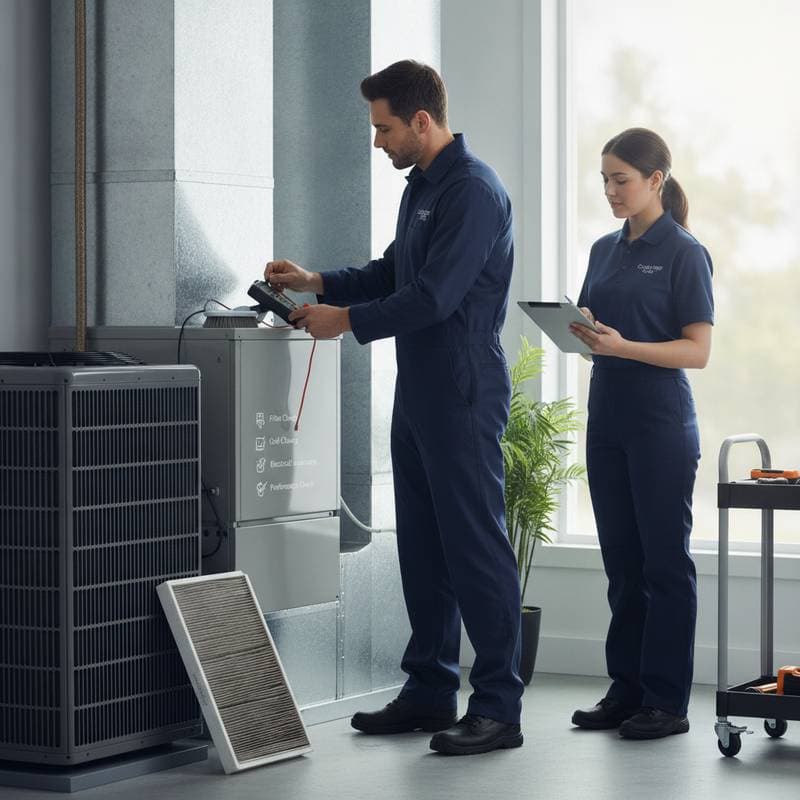
Essential Spring HVAC Checklist for Reliable Home Comfort
Consistent comfort and lower energy bills during warmer months require a spring tune up for the HVAC system. Many homeowners activate the air conditioner only when heat arrives and then discover poor performance or outright failure. Preventive maintenance completed now avoids expensive repairs and supports efficient operation throughout the season.
The following checklist covers the essential steps to prepare an HVAC system. Homeowners may complete some tasks independently while others benefit from a licensed technician. The objective remains the same in every case: maintain comfort, safety, and efficiency.
- Replace or clean air filters
- Clean the outdoor condenser unit
- Inspect and seal ductwork
- Clear indoor supply and return vents
- Check electrical components
- Assess system age and plan for replacement
Replace or Clean Air Filters
Air filters capture dust, pollen, and pet dander. When they become clogged, airflow drops and the system works harder. This increased effort raises energy use and shortens equipment life.
Turn the system off before removing the old filter. Consult the equipment manual for the correct size. Replace disposable filters or wash reusable filters with mild soap and water, then allow them to dry fully before reinstallation. A clean filter can reduce energy consumption by up to fifteen percent. Replace filters every one to three months during periods of heavy use. Standard disposable filters cost ten to twenty dollars while high efficiency pleated filters range from thirty to sixty dollars.
Clean the Outdoor Condenser Unit
The outdoor unit collects leaves, grass clippings, and dirt that block airflow across the coils. Restricted airflow reduces cooling capacity and raises operating costs.
Turn off power to the unit at the disconnect switch. Remove debris by hand or with a soft brush. Spray the coils with a garden hose on a gentle setting, working from the inside out. Avoid high pressure that can bend fins. Trim vegetation to maintain at least two feet of clearance around the cabinet. These steps restore proper heat exchange before summer demand peaks.
Inspect and Seal Ductwork
Small leaks in ductwork allow twenty to thirty percent of conditioned air to escape into attics or crawl spaces. Spring provides an opportunity to locate and correct these losses before cooling loads increase.
Examine visible sections near registers for gaps or loose connections. Listen for whistling sounds during system operation. Apply mastic sealant or metal backed tape to minor openings. Heavy dust, mold, or signs of pests inside vents indicate the need for professional cleaning. Pressure testing and sealing performed by a technician typically costs three hundred to seven hundred dollars yet recovers the expense through reduced energy bills within two seasons.
Clear Indoor Supply and Return Vents
Furniture, rugs, and accumulated dust block airflow at supply and return vents. Restricted passages create uneven temperatures and force the blower to work harder.
Move obstructions away from each vent. Remove covers and vacuum dust or pet hair. Wipe grilles with a damp cloth. Persistent temperature differences between rooms suggest the need for professional airflow balancing or further duct inspection.
Check Electrical Components
Loose connections, frayed wires, or worn contactors can cause sudden shutdowns or safety hazards once cooling season begins. A visual inspection identifies problems early.
Look for burn marks, loose terminals, or damaged insulation. Verify that equipment remains properly grounded. Any sign of electrical irregularity requires evaluation by a licensed technician rather than DIY repair.
Assess System Age and Efficiency
Systems older than ten years or those requiring repeated repairs often operate below modern efficiency standards. New equipment with variable speed compressors and higher SEER ratings can lower cooling costs by up to thirty percent.
Track repair frequency, rising utility bills, uneven cooling, and unusual noise. Replacement costs range from four thousand to twelve thousand dollars depending on capacity and installation conditions. The resulting comfort and energy savings justify the investment for many households.
Schedule Professional Service
A qualified technician performs a full inspection that includes refrigerant charge verification, coil cleaning, and safety control testing. Annual professional maintenance extends equipment life and preserves manufacturer warranties.