
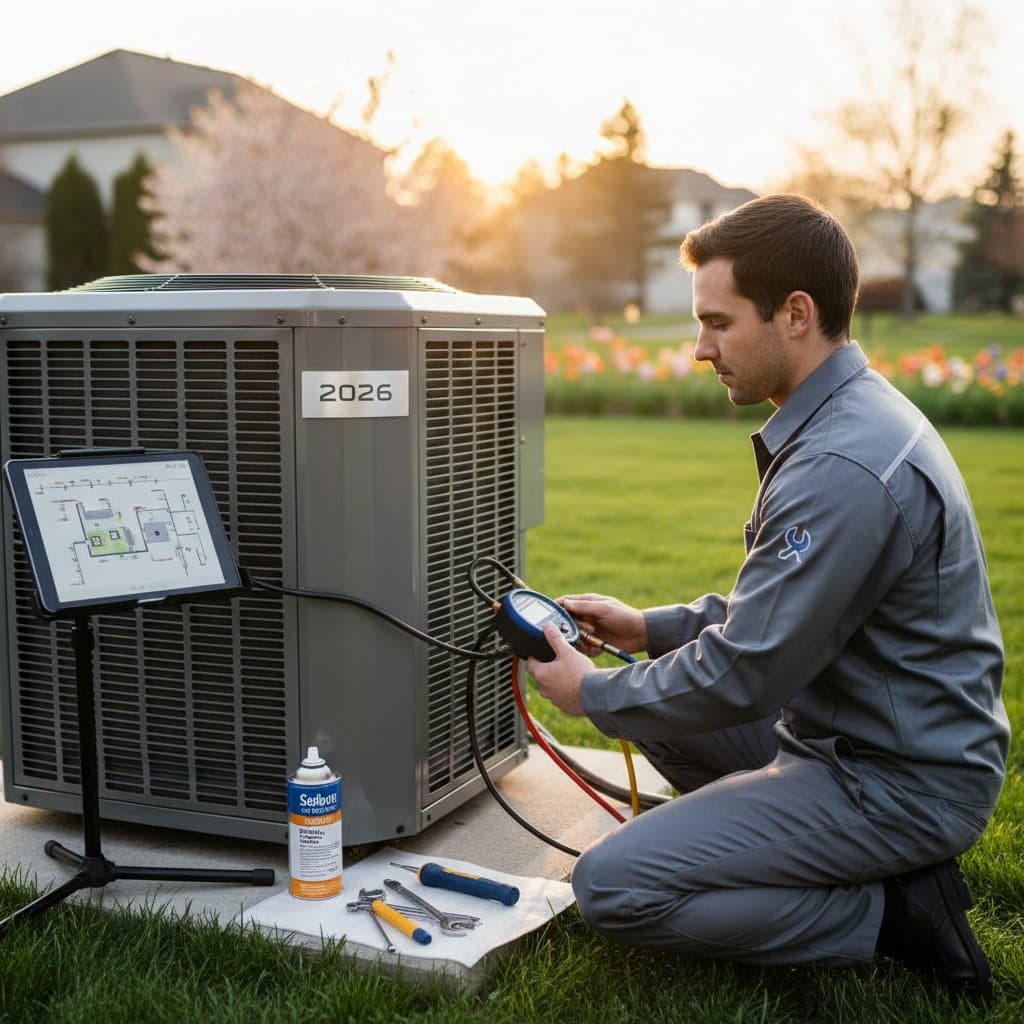
Spring HVAC Tune-Ups for Optimal Efficiency
Air conditioners often develop subtle inefficiencies over winter inactivity. These issues become evident on the initial hot day, when cooling falters, bills escalate, and indoor comfort diminishes. A dedicated spring HVAC tune-up addresses these concerns by optimizing the system for intensive summer operation, enhancing output, and prolonging durability. This comprehensive guide provides structured steps, expense estimates, and safety protocols tailored for homeowners seeking reliable comfort and cost savings.
The Importance of Spring HVAC Maintenance
HVAC systems face maximum strain during rising temperatures. Accumulated dust, debris, and degraded parts from prior use impair airflow and cooling effectiveness. Minor problems, such as obstructed filters or diminished refrigerant, can elevate energy consumption by 10 to 20 percent. A methodical tune-up, whether performed personally or by experts, guarantees peak cooling delivery with minimal electrical waste.
Consistent upkeep also mitigates expensive malfunctions. Identifying a frayed belt or unsecured wiring early avoids substantial repair fees. Benefits emerge quickly through reduced utilities and extended equipment longevity.
Essential Elements of a Spring HVAC Tune-Up
Effective maintenance examines all system aspects influencing operation, security, and economy. Understanding these components allows homeowners to oversee tasks or select appropriate professional aid without overlooking critical areas.
1. Air Filter Replacement
Filters serve as primary barriers to dust and allergens. Swap out disposables or rinse reusables at season's onset. Select MERV 8 to 11 ratings suitable for typical residences. Budget 10 to 25 dollars for replacements. Clogged filters hinder circulation, overworking the blower and inflating expenses.
2. Refrigerant Level Verification
Low refrigerant hampers cooling and risks coil icing. Experts employ pressure gauges to assess levels and detect leaks. Replenishment fees span 100 to 300 dollars, varying by refrigerant variety and volume.
3. Coil Cleaning Procedures
Dust buildup on evaporator and condenser coils blocks heat exchange. Thorough cleaning boosts efficiency up to 15 percent. Homeowners can use a hose and specialized cleaner for about 20 dollars. Expert services charge 120 to 200 dollars.
4. Electrical System Review
Frayed wires or oxidized contacts lead to power inconsistencies, harming vital parts. Tune-ups involve securing connections, evaluating capacitors, and scrutinizing relays. Essential safety: Deactivate electricity at the main panel prior to any access.
5. Thermostat Adjustment
Inaccurate thermostats trigger excessive cycling. Proper calibration, or installation of programmable/smart models, yields up to 10 percent annual savings. Advanced units cost 100 to 250 dollars and enable app-based oversight.
6. Blower and Fan Optimization
Imbalanced or soiled fans diminish airflow and generate sounds. Routine cleaning and alignment promote fluid function. Professionals incorporate this in routine visits.
7. Condensate Drain Maintenance
Obstructed drains provoke leaks and excess moisture. Seasonal flushing with vinegar or air clears blockages. Adding a float switch halts operations during backups for enhanced protection.
8. Performance Evaluation
Post-maintenance assessments gauge airflow, temperature drops, and system reactions. These metrics validate adherence to manufacturer specifications.
Costs and Return on Investment for Tune-Ups
Expert HVAC servicing ranges from 100 to 250 dollars, influenced by unit scale and region. Handling basic chores like filter swaps and coil rinses personally halves expenses.
Savings derive from lowered energy draw and avoided crises. Optimized systems reduce cooling costs by 15 percent or greater. For monthly bills of 150 dollars, expect 20 dollars monthly savings in peak periods. Enhanced reliability and ease compound the value, often recouping costs within a single season.
Choosing Between DIY and Professional Approaches
Some tasks suit capable homeowners, while others demand professional equipment and knowledge. This table guides decisions based on feasibility and expertise.
| Task | DIY Feasible | Professional Preferred | Typical Expense |
|---|---|---|---|
| Air filter replacement | Yes | No | 10-25 dollars |
| Outdoor coil cleaning | Yes | No | 20-40 dollars |
| Thermostat verification | Yes | No | Free to 250 dollars |
| Refrigerant pressure check | No | Yes | 100-300 dollars |
| Electrical inspection | Limited | Yes | 80-150 dollars |
| Blower adjustment | No | Yes | 100-200 dollars |
| Drain line clearing | Yes | Optional | 10-30 dollars |
Warranty terms may mandate professional intervention. Consult manufacturers prior to independent efforts.
Safety Protocols and Eco-Friendly Practices
Electrical and refrigerant handling demands vigilance. Power down via breakers before panel removal. Refrain from direct refrigerant contact due to health risks. Only EPA Section 608 certified personnel manage these substances compliantly.
Opt for eco-friendly cleaners on coils and drains, steering clear of corrosive bleaches. Properly discard filters and residues to protect waterways and grounds.
Issues Frequently Detected in Tune-Ups
Inspections often expose nascent faults that escalate without attention. Monitor these indicators:
- Weak airflow: Possible duct leaks, filter clogs, or blower faults
- Warm vent output: Typically low refrigerant or soiled coils
- Odd sounds: Indicate loose elements or motor degradation
- Unit-adjacent water: Signals drain obstructions
- Short cycling: Suggests thermostat errors or refrigerant discrepancies
Prompt resolution safeguards compressors and sustains comfort amid heatwaves.
Efficiency Enhancements to Explore
Tune-up timing suits reviewing upgrades for greater savings. Consult technicians on:
- Advanced filters: Trap micro-particles with minimal resistance
- Variable-speed blowers: Modulate flow for silence and dehumidification
- Zoned systems: Target areas for precise control and economy
- Intelligent thermostats: Adapt to routines via automation
- Insulation and duct repairs: Ease system burden and air purity
Such additions amplify livability and curb ongoing expenses.
Scheduling and Routine Recommendations
Plan tune-ups ahead of sustained warmth to secure availability and resolve findings promptly. Annual service suffices in most areas, but extended hot spells warrant summer checks.
Aging or problematic units gain from spring-fall cycles for year-round optimization.
Adapting to Location and Home Features
Climate, structure, and layout shape system needs. Humid zones emphasize drain and coil care against mold. Arid areas stress filters and seals versus dust. Multi-level homes benefit from zoning for even temperatures.
Expansive glazing or poor insulation extends runtime. Technicians can perform load analyses to affirm sizing adequacy.
Resolving Frequent Challenges
- No startup: Verify thermostat and breakers
- Poor cooling: Refresh filters, remove unit debris, ensure vent openness
- Strange smells: Sanitize pans and filters against moisture buildup
- Temperature variances: Inspect for airflow blockages
Practical Strategies for Lasting Results
- Maintain a log of services, changes, and fixes for oversight and compliance.
- Clear vegetation two feet from outdoor units to preserve ventilation.
- Employ hoses over pressure tools for fin cleaning to prevent damage.
- Run tests early to confirm seamless performance pre-heat.
- Request register airflow measurements for distribution verification.
Sustaining System Longevity
Investing in regular care preserves your HVAC asset. These practices ensure enduring efficiency, comfort, and value through proactive attention.