
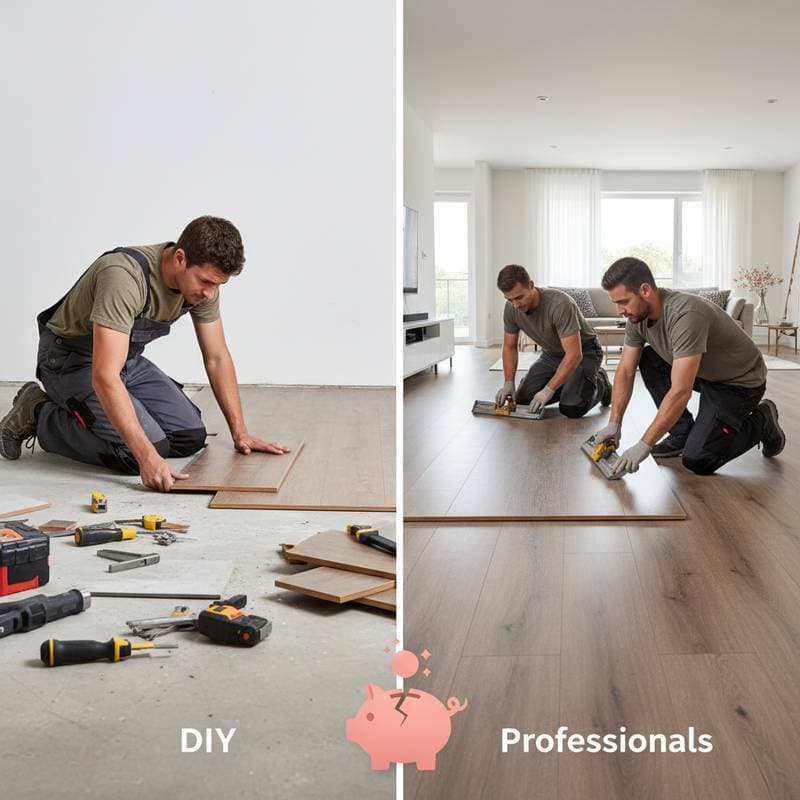
DIY LVP Flooring: When Professionals Outperform Self-Installation on Budget
Homeowners often envision transforming their spaces with luxury vinyl plank flooring spotted at local stores, completing the task over a single weekend. Luxury vinyl plank, or LVP, flooring ranks among the top choices for do-it-yourself projects, offering a premium aesthetic at a reduced cost. Although self-installation provides personal satisfaction, certain circumstances make professional services more economical in terms of money, time, and effort. Recognizing the balance between self-directed enthusiasm and expert efficiency enables informed choices that align with your home improvement goals and financial plans.
The Attraction of Self-Installing LVP Flooring
LVP flooring mimics the appearance of hardwood while demanding less upkeep and carrying a lower price. The planks typically interlock via a click system, eliminating the need for nails or adhesives, which suits beginners. Materials remain lightweight, resist water, and tolerate slight subfloor irregularities.
Materials for a standard self-installation range from $2.50 to $4.00 per square foot, varying by brand and thickness. Include an additional $0.50 to $1.00 per square foot for underlayment and trim. For a 300-square-foot area, expect total expenses of $900 to $1,200. This represents a small portion of the $1,800 to $3,000 charged by professional teams.
Such savings encourage action, particularly in basic rooms featuring straight lines and few barriers. However, tasks that appear straightforward in online videos may complicate during execution, such as trimming around doorways or addressing irregular subfloors.
Conditions Favoring Self-Installation
Self-installation suits projects meeting the following criteria:
- Simple room configuration. Rectangular or square spaces with limited transitions simplify the process.
- Level and dry subfloor. LVP demands a smooth base, with no variations exceeding 1/8 inch over six feet.
- Access to essential tools. A miter saw, tapping block, and pull bar prove necessary.
- Precise measuring and steady execution. Accurate cuts distinguish polished outcomes from noticeable seams.
- Available schedule. Preparation and cleanup extend even modest rooms to full weekends.
Under these circumstances, self-installation proves both affordable and fulfilling. Numerous homeowners experience pride in completing transformations that refresh interiors swiftly. Errors arise when project demands surpass available equipment, endurance, or prior knowledge.
Concealed Expenses in Self-Directed Projects
Self-installed LVP efforts may escalate in cost if complications emerge. Overlooked elements frequently inflate budgets or compromise floor longevity.
1. Subfloor challenges. Concealed dampness, irregular concrete, or creaking plywood leads to plank separation or distortion. Remediation post-installation necessitates dismantling and re-laying extensive areas.
2. Tool acquisitions. Renting saws or purchasing protective gear, spacers, and rollers contributes $100 to $250.
3. Material losses. Erroneous measurements and harmed planks accumulate waste. Experts allocate 5 percent for scraps, whereas self-projects often reach 10 percent.
4. Schedule extensions. Intended weekend tasks may span multiple periods amid unforeseen hurdles.
5. Warranty restrictions. Certain manufacturers invalidate coverage without certified installation. This affects claims related to moisture intrusion or production flaws.
Scenarios Justifying Professional Services
Expert installation typically spans $4.50 to $7.00 per square foot, encompassing materials. Although initial outlay doubles, long-term savings materialize in precision-dependent undertakings.
Ideal cases for experts:
- Intricate layouts involving corridors, storage areas, or numerous junctions.
- Aged residences with potentially uneven subfloors.
- Damp-prone zones like lower levels or restrooms, needing vapor seals and barriers.
- Urgent timelines where interruptions affect daily life.
Experts arrive with advanced equipment and extensive expertise, securing firm plank connections and fluid transitions. They identify issues promptly, including undetected leaks or foundational concerns, prior to laying materials. Labor and material warranties provide reassurance.
Self-Installation Versus Expert Comparison
| Category | Self-Installation LVP | Professional LVP |
|---|---|---|
| Average Cost | $2.50 to $4.00 per sq. ft. | $4.50 to $7.00 per sq. ft. |
| Timeframe | 2 to 3 days | 1 to 2 days |
| Tools Needed | Saws, spacers, tapping block | Provided by contractor |
| Risk Level | Moderate to high | Low |
| Warranty Coverage | Limited | Full manufacturer and labor warranty |
| Skill Requirement | Intermediate | Professional |
In essence, self-installation excels in compact, uncomplicated areas allowing paced work. Experts prevail in expansive, challenging designs or properties with subfloor variances, where exact placement influences endurance.
Framework for Choosing Between Self and Expert Installation
Consider these questions to guide your decision:
- What is the overall project size? Areas exceeding 400 square feet generally warrant professional involvement.
- Does the subfloor meet level and dry standards? Professional correction averts ongoing issues.
- How much unstructured time exists? Limited availability favors experts to maintain normalcy.
- Is home sale imminent? Expert work enhances market appeal and trust.
- Comfort with detailed cutting? Allocate for labor to avoid expensive mistakes if uncertain.
Strategies for Effective LVP Projects
Approach LVP installation with preparation to minimize setbacks. Begin by inspecting the subfloor thoroughly; use a straightedge and level to detect humps or depressions. For self-projects, practice cuts on scrap pieces to refine technique and reduce waste.
Select quality underlayment suited to your subfloor type, such as foam for acoustics or cork for added insulation. In moisture-vulnerable spots, apply a dedicated vapor barrier tape at seams. Professionals recommend acclimating planks indoors for 48 hours to prevent expansion gaps.
When hiring, obtain multiple quotes and verify contractor credentials, including licensing and insurance. Request references from similar LVP jobs to gauge reliability. Clear the space fully beforehand to streamline the process and cut costs.
Sustaining LVP Flooring Over Time
Proper care extends the lifespan of LVP floors, preserving appearance and functionality. Sweep or vacuum regularly with a soft brush attachment to remove debris without scratching. For stains, use a damp cloth and mild soap solution; avoid harsh chemicals that degrade the surface.
Address spills immediately to prevent seepage under planks. In high-traffic zones, place felt pads under furniture legs to avert dents. Refrain from using steam mops, as excess heat may warp vinyl; opt for microfiber mops with minimal water instead.
Annual inspections help spot loose seams or subfloor shifts early. Minor adjustments, like tapping separated edges, maintain integrity. With routine maintenance, LVP withstands daily use for 15 to 25 years, upholding your investment.