
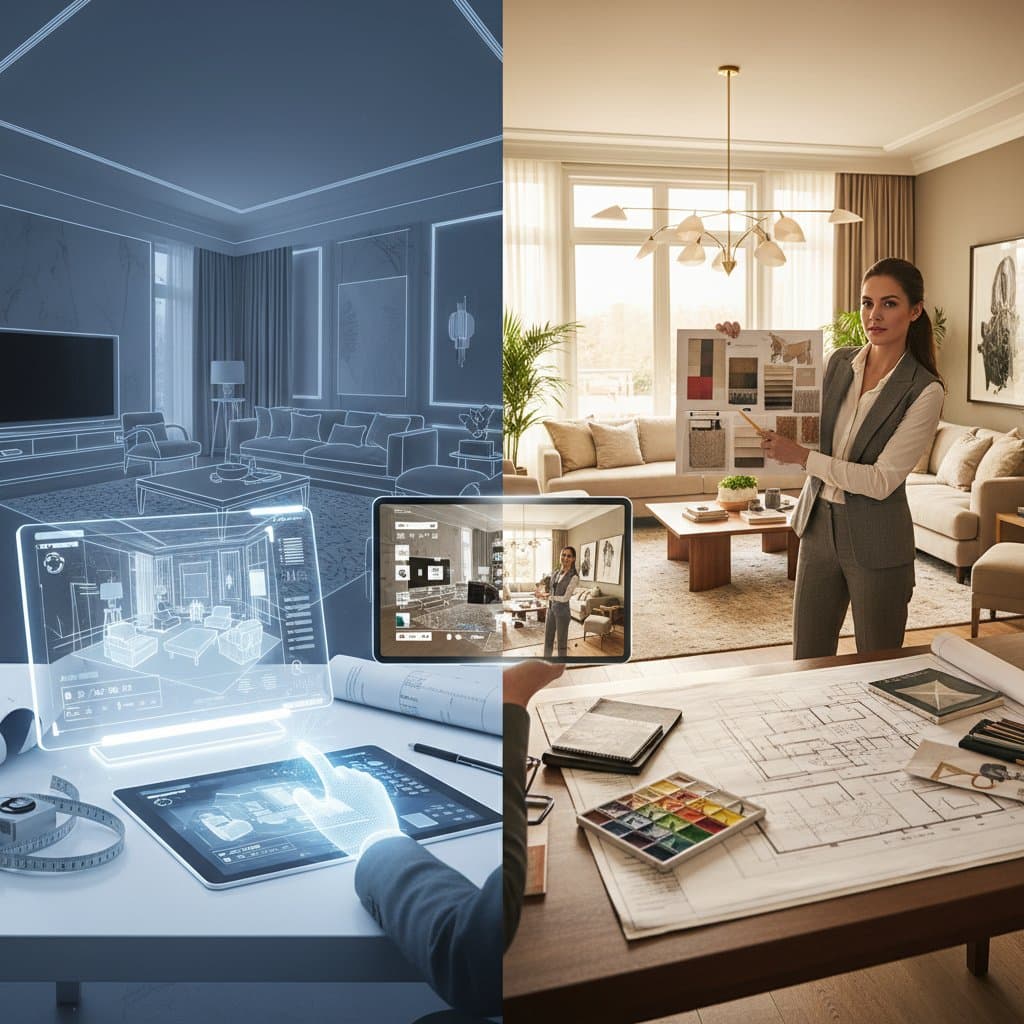
AI Tools Versus Designers: Determining the True ROI Winner
Homeowners often face a pivotal choice when planning renovations: rely on intuitive decisions, engage a professional interior designer, or utilize emerging AI-powered design applications. These digital platforms deliver swift outcomes at reduced expenses, yet they must compete with the innovative insight and enduring benefits that experienced designers provide. The optimal selection hinges on individual objectives, financial constraints, and a comprehensive assessment of return on investment in residential spaces.
This analysis evaluates both approaches across key dimensions such as expenses, duration, precision, and sustained worth. Readers gain a structured method to select between AI software and human expertise for upcoming home endeavors, ensuring decisions align with practical and aesthetic priorities.
Cost Comparison: Initial Outlays and Hidden Expenses
AI design tools typically present a low barrier to entry. Many applications operate on subscription models starting at ten to twenty dollars per month, or offer one-time fees under one hundred dollars for basic features. Users access virtual room planners, color simulators, and furniture visualizers without ongoing commitments. For modest projects like refreshing a single room, these tools eliminate consultation fees entirely, allowing experimentation at minimal cost.
Professional designers command higher rates, often charging two hundred to five hundred dollars per hour or a flat project fee ranging from one thousand to ten thousand dollars, depending on scope. These costs cover in-depth site visits, custom mood boards, and material sourcing. While the upfront investment appears substantial, designers frequently identify cost-saving opportunities, such as selecting durable, multi-functional pieces that reduce future replacements.
ROI Insight: AI tools minimize immediate spending, ideal for budget-conscious individuals testing concepts. Designers justify their fees through strategic selections that prevent expensive errors, yielding superior long-term financial returns via enhanced property value and reduced maintenance.
Time Efficiency and Project Acceleration
One of AI's primary strengths lies in its capacity for swift prototyping. Individuals upload room photographs, specify preferences like minimalist or rustic aesthetics, and receive diverse configurations in seconds. Features enabling real-time adjustments to paint shades, fixture placements, and decor elements accelerate choices and build user assurance. Those seeking prompt direction for time-sensitive updates, such as preparing for guests, find this velocity invaluable.
In contrast, designers proceed methodically. Preliminary meetings, ideation sessions, and iterative feedback loops extend over weeks or months. This deliberate process incorporates practical considerations including sunlight variations, movement pathways, and user ergonomics. Designers also manage collaborations with builders and vendors, ensuring seamless transitions from blueprint to buildout—elements beyond AI's current scope.
ROI Insight: AI shortens ideation periods, though execution might involve additional adjustments. Designers invest time initially to foresee obstacles, resulting in efficient implementations that conserve resources overall.
Creative Flexibility and Tailored Solutions
AI platforms draw from extensive libraries of photographed interiors and design principles, generating suggestions attuned to current trends. This approach suits users desiring contemporary arrangements, such as open-concept kitchens or neutral palettes. However, reliance on algorithmic patterns can produce outputs that lack uniqueness, particularly when incorporating personal narratives, regional motifs, or unconventional themes.
Designers excel in bespoke adaptations. They discern nuanced desires through discussions on daily routines and aspirations, crafting spaces that evoke specific sentiments. For instance, a designer could develop a serene reading nook optimized for afternoon glow, integrating bespoke shelving that aligns with a client's book collection. Such intuitive refinements surpass AI's data-driven constraints.
ROI Insight: AI provides economical access to stylish variations for trend followers. Designers deliver distinctive, resonant designs that elevate living experiences and potentially increase home resale appeal.
Accuracy, Implementation, and Long-Term Durability
Beyond aesthetics, accuracy during application determines success. AI visualizations offer compelling previews but may overlook physical realities like scale inaccuracies or material interactions. Users sometimes encounter discrepancies when procuring items, leading to returns or modifications that inflate timelines and budgets.
Designers prioritize feasibility from the outset. They apply knowledge of building codes, sustainable practices, and spatial dynamics to produce executable plans. Post-installation support ensures adjustments align with expectations, fostering spaces that endure lifestyle shifts without frequent overhauls.
ROI Insight: AI aids initial accuracy for simple tasks but risks implementation pitfalls. Designers' expertise minimizes errors, promoting durable outcomes that sustain value over years.
Integrating AI and Designers for Optimal Results
A synergistic strategy frequently yields the highest returns. Homeowners initiate with AI to brainstorm layouts and mood inspirations, then consult designers for expert curation and oversight. This method curtails preliminary hours while preserving specialized input. Designers concentrate on strategic elements like spatial harmony and procurement, leveraging AI outputs as foundational references.
Consider a full-room makeover: AI generates ten variants in an hour, narrowing options to three favorites. The designer then refines these, incorporating custom elements and verifying compatibility with existing architecture. Such collaboration balances affordability with sophistication, often reducing total project costs by twenty to thirty percent compared to designer-only approaches.
Achieving Enduring Home Value
Effective residential designs merge analytical precision with imaginative flair. AI illuminates possibilities efficiently, while designers infuse spaces with personal significance. This partnership optimizes expenditures and cultivates environments that enhance daily life and bolster property equity. Select the blend that fits your vision to transform your home into a worthwhile investment.