
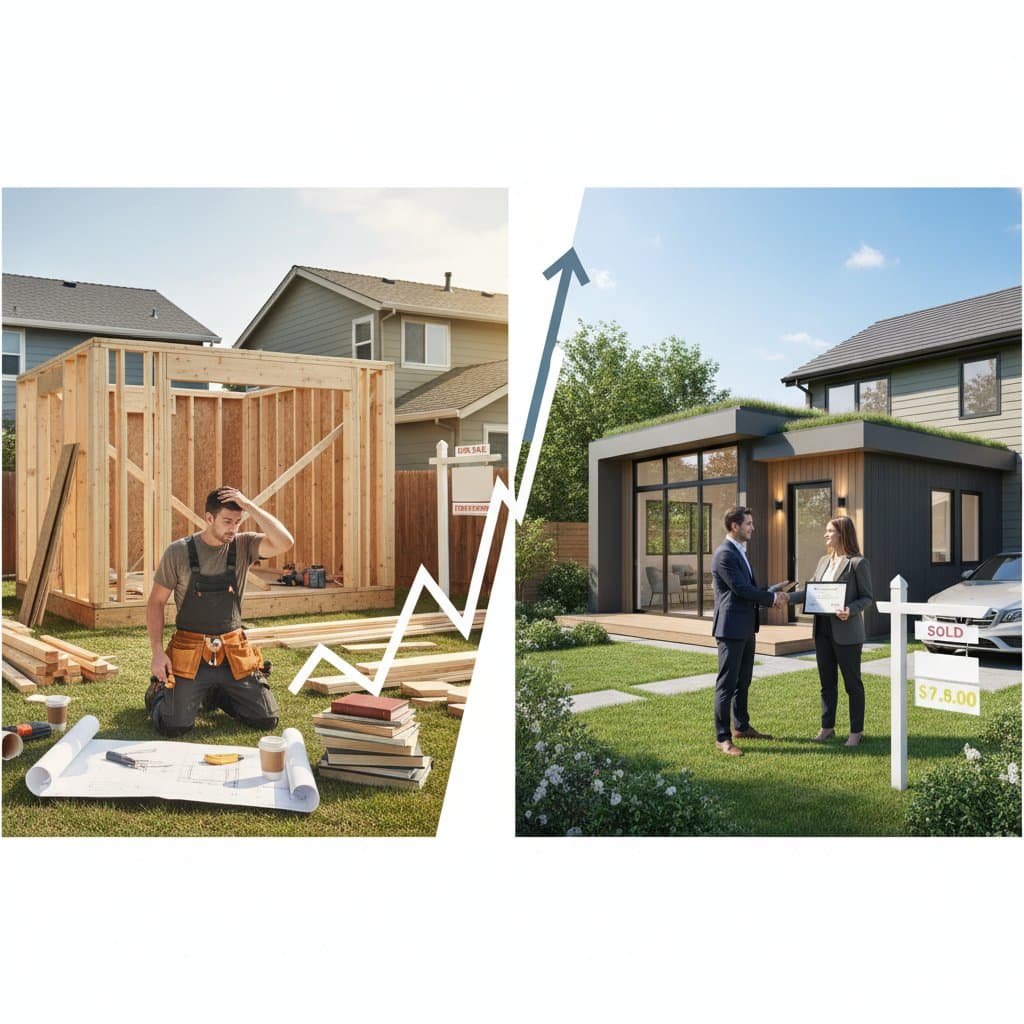
The Real Cost Gap: DIY ADU vs Professional Contractor
On a quiet weekend morning, the idea of constructing a backyard accessory dwelling unit frequently starts as an inspiring concept. Homeowners often envision a peaceful guest area positioned behind the primary residence or anticipate rental revenue to alleviate financial pressures. This initial enthusiasm soon leads to a critical choice: undertake the project independently or engage a professional contractor. The disparity between these options extends well beyond material expenses and influences the entire endeavor.
Aligning Vision with Financial Realities
An accessory dwelling unit, commonly known as an ADU, assumes diverse configurations. Certain homeowners transform existing detached garages, whereas others construct new compact buildings from the foundation upward. Practical considerations drive these initiatives, yet the expense differential between a self-directed build and a contractor-led effort profoundly affects results.
Professionals generally charge between $300 and $600 per square foot, varying by location and project intricacy. For a typical 400-square-foot ADU, the total might range from $120,000 to $240,000, encompassing comprehensive management, permits, and finishing elements. Homeowners who perform labor personally can reduce this figure to approximately $100,000 or as low as $70,000 through meticulous oversight. Such reductions, however, involve compromises in terms of time investment, required expertise, and tolerance for potential setbacks.
Defining a Practical DIY Approach
A DIY project seldom involves complete independence. Even dedicated homeowners must hire licensed specialists for electrical installations, plumbing systems, and structural evaluations. Numerous local governments mandate certified professionals for these aspects to uphold safety standards, particularly in units featuring kitchens or independent utilities.
Expect a DIY schedule to span six months to more than a year, contingent upon weekend availability and proficiency. Most participants manage tasks such as demolition, framing, painting, and interior detailing. Plumbing, electrical, and foundational elements typically demand external expertise. This blended method, involving oversight of subcontractors alongside personal contributions, yields savings of 15 to 25 percent relative to a fully managed build.
Savings potential diminishes rapidly due to errors. An improperly aligned foundation or inadequate insulation can necessitate expensive remedies. The required knowledge escalates quickly, and adherence to regional building regulations permits minimal deviation.
Analyzing Expenses by Category
To clarify the financial divide, examine costs across five primary areas:
- Design and Permits
- Contractor-led: $10,000 to $20,000
- DIY with architect consultation: $5,000 to $10,000
The permitting phase alone may consume several months, and submission inaccuracies frequently postpone progress. Contractors expedite this through established connections with regulatory officials.
- Foundation and Framing
- Contractor: $25,000 to $50,000
- DIY with partial self-labor: $15,000 to $30,000
Errors in these stages pose structural hazards. Outsourcing the foundation pouring and framing assembly often justifies the additional expenditure for reliability.
- Systems Including Plumbing, Electrical, and HVAC
- Contractor: $30,000 to $60,000
- DIY coordinating licensed specialists: $20,000 to $40,000
Regulations commonly stipulate professional involvement here. Self-builders serve primarily as coordinators, arranging tradespeople and overseeing verifications.
- Interior Finishes
- Contractor: $40,000 to $70,000
- DIY: $20,000 to $40,000
Substantial reductions occur in this domain. Homeowners can address painting, flooring installation, and cabinet assembly through methodical effort and precision.
- Landscaping and Exterior Enhancements
- Contractor: $10,000 to $20,000
- DIY: $5,000 to $10,000
Dedicate a weekend to installing durable plants or constructing a simple gravel path, which imparts unique appeal beyond monetary worth.
Unseen Expenses in Independent Builds
Monetary benefits of self-construction accompany concealed drawbacks that surface during execution. Forfeited leisure time, supply chain disruptions, and adverse weather prolong durations. Such extensions incur ancillary expenses, particularly if the ADU aims to generate rental proceeds.
Insurance represents another overlooked factor. Standard homeowner policies may exclude coverage for non-professional work. Should an assisting friend sustain injury during framing, the property owner might bear liability for treatment costs. Contractors maintain liability and workers compensation policies that safeguard clients and personnel alike.
Inspection challenges further complicate matters. A rejected evaluation can suspend advancement for weeks. Officials apply stricter scrutiny to non-credentialed builders, potentially requiring revisions and material discards.
Benefits of Expert Management
Engaging a contractor introduces organization and foreseeability. Licensed builders handle permits, timelines, and quality assurance. They furnish warranties that shield owners post-completion, a feature many deem valuable enough to offset higher fees.
Such builds preserve superior market value. Evaluators consider construction caliber in valuations. A thoroughly recorded, professionally executed ADU can elevate property worth by 25 to 35 percent, whereas amateur efforts might underperform without full code conformity or complete records.
Contractors differ in openness and fee structures. Fixed-price agreements minimize budgetary risks but constrain modifications. Cost-plus arrangements allow adaptability yet demand careful monitoring to curb excesses. Dependable providers supply comprehensive, itemized proposals detailing fund allocation.
Incorporating Sustainability Considerations
Sustainability influences ADU decisions beyond immediate finances. Independent builders frequently select recycled materials, reused windows, or recovered lumber to minimize environmental impact. These selections promote eco-friendliness but may hinder approvals or code alignment.
Professionals utilize vetted materials compliant with energy standards. They incorporate features like solar-ready wiring, water collection setups, and advanced insulation while preserving stability. Initial investments rise accordingly, yet they lower ongoing energy costs and upkeep needs over time.
Evaluating Options Through Personal Assessment
Choosing between self-build and professional services hinges on candid evaluation rather than mere enthusiasm. Reflect on these three key inquiries:
-
What weekly time commitment can you dedicate?
Projects demand consistent input. Limited availability of scattered hours favors expert assistance for efficiency. -
How comfortable are you with regulatory requirements?
Managing codes, approvals, and checks demands endurance. If these elements overwhelm, contractor knowledge ensures steady advancement. -
Do you anticipate unforeseen expenditures?
Surprises arise even in thorough plans. Allocate a 10 to 15 percent buffer in your budget for either method.
Essential Strategies for Effective Execution
- Develop precise blueprints upfront. Accurate designs, whether for self or hired work, avert misunderstandings and foundational problems.
- Review municipal zoning prior to commencement. Restrictions on dimensions, elevations, or leasing vary by area.
- Maintain thorough records. Preserve invoices, approvals, and evaluation summaries to bolster future sales or loans.
- Prioritize durable elements. Allocate resources to insulation, roofing, and waterproofing for enduring performance.
- Delegate critical systems. Avoid experimentation with wiring or piping; certified experts guarantee security and adherence.
Embracing the Outcomes of Your ADU Choice
Ultimately, the selected path shapes not only the structure but also the homeowner experience. A DIY effort fosters personal achievement and tailored details, ideal for those with time and aptitude. Professional involvement delivers seamless results and enduring assurance, suiting schedules constrained by demands. Weigh these elements against your circumstances to construct an ADU that enhances life and property value effectively.