
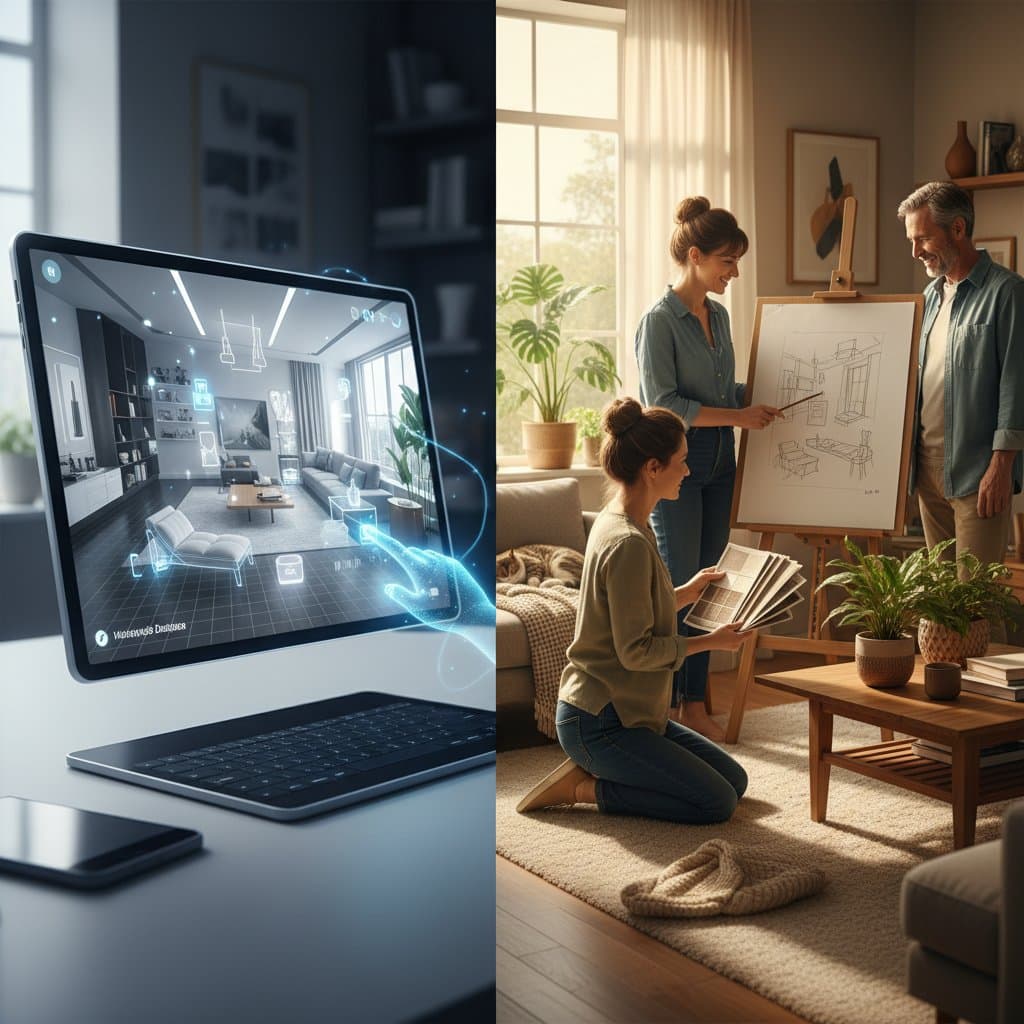
AI vs Interior Designer: Which Wins Your Home in 2026
Standing in your living room amid scattered paint swatches often leads to indecision and frustration. An application now exists that generates ten layout options in moments, matches colors to existing furniture, and assesses lighting balance. Artificial intelligence delivers such efficiency. A professional designer, however, observes how morning light falls on your sofa and selects fabric to enhance its appeal. The question remains: in the near future, will algorithmic precision or professional intuition transform your home more effectively?
The Rise of Virtual Design Assistants
AI-driven design tools have advanced beyond basic mood board creation to sophisticated visualization platforms. Systems such as RoomGPT, Homestyler, and Modsy employ machine learning to evaluate user preferences, photographs of current rooms, and budget limits. In seconds, these platforms generate detailed 3D renderings, including furniture suggestions and color schemes.
Homeowners appreciate the speed and low cost of these tools. A basic room plan typically ranges from 10 to 50 dollars, while comprehensive packages with virtual staging may cost up to 200 dollars. In contrast, engaging a professional interior designer often involves fees from 1,500 to more than 10,000 dollars, based on project size and materials. This financial gap draws many toward AI options.
AI thrives in data-informed decisions. By examining patterns across thousands of interiors, it proposes layouts that boost comfort, increase resale value, or improve energy efficiency. For instance, the software might recommend window treatments that maximize natural light while minimizing heat gain. Despite these strengths, AI falters in grasping emotional nuances. It mimics trends effectively but seldom infuses spaces with personal significance.
The Human Touch Algorithms Overlook
Professional designers view homes as stories, not mere data sets. They identify cherished elements, such as a family heirloom vase or a favored reading nook during rainy days. These observations create environments that feel genuine and inhabited.
Designers also address practical challenges that digital models ignore. Anplan might feature an attractive sectional sofa that appears ideal virtually but obstructs a heating vent in reality. Experienced professionals foresee such issues, preventing expensive errors. They manage interactions with contractors, electricians, and inspectors to align ideas with building codes and safety requirements.
Collaboration with a designer refines personal style through dialogue and shared references. Homeowners gain clarity on their preferences during this exchange. Virtual tools, regardless of sophistication, cannot duplicate this interactive discovery process.
Balancing Cost, Time, and Quality
Evaluating AI against human designers requires considering individual objectives rather than declaring a superior choice. AI excels in rapidity; multiple room concepts emerge in less than an hour, with immediate modifications. Professional designers demand weeks for consultations, sourcing, and adjustments, yet this duration yields more nuanced outcomes.
Financial considerations heavily influence decisions. For minor updates or rental enhancements, AI tools produce polished results affordably. Major renovations or spaces reflecting enduring identity benefit from a designer's expertise, which averts errors like mismatched furniture dimensions or durable material selections.
Many adopt a combined strategy. Individuals generate initial layouts via AI for ideas, then partner with designers for refinements. This method merges technological accuracy with creative insight, reducing costs without sacrificing standards.
Sustainability and Enduring Value
Achieving sustainable designs demands subtle evaluation that AI approaches tentatively. Professionals assess material lifespans, finish environmental effects, and furniture versatility. They source from local craftspeople or use reclaimed items to minimize waste.
Certain AI platforms incorporate sustainability data, proposing layouts that optimize energy use or recommend paints with low volatile organic compounds. These features require human oversight for accuracy. Designers familiar with local climates, resources, and material longevity ensure sustainability integrates meaningfully beyond surface compliance.
Pro Tips for Design Success
-
Establish clear priorities. Outline goals like comfort, resale appeal, or eco-friendliness before selecting tools. This focus directs both AI and professionals effectively.
-
Integrate digital and expert input. Employ AI to brainstorm options, then consult humans for precise adjustments.
-
Confirm measurements and compliance. Review room sizes, electrical outlets, and airflow paths prior to finalizing plans.
-
Allocate budget for changes. Reserve 10 percent of funds for real-world adaptations from digital concepts.
-
Focus on enduring features. Choose quality materials and neutral bases that adapt over time, avoiding fleeting trends.
Designing Spaces That Last
Effective design, whether from technology or expertise, reflects personal narrative. It enhances daily routines, adds beauty, and aligns with core values. Tools accelerate decisions, but authentic warmth arises from individual involvement.
AI reshapes design accessibility, providing tools once out of reach. Human professionals offer irreplaceable intuition, creating balance that turns houses into homes. Interior design evolves through partnership, not replacement.