
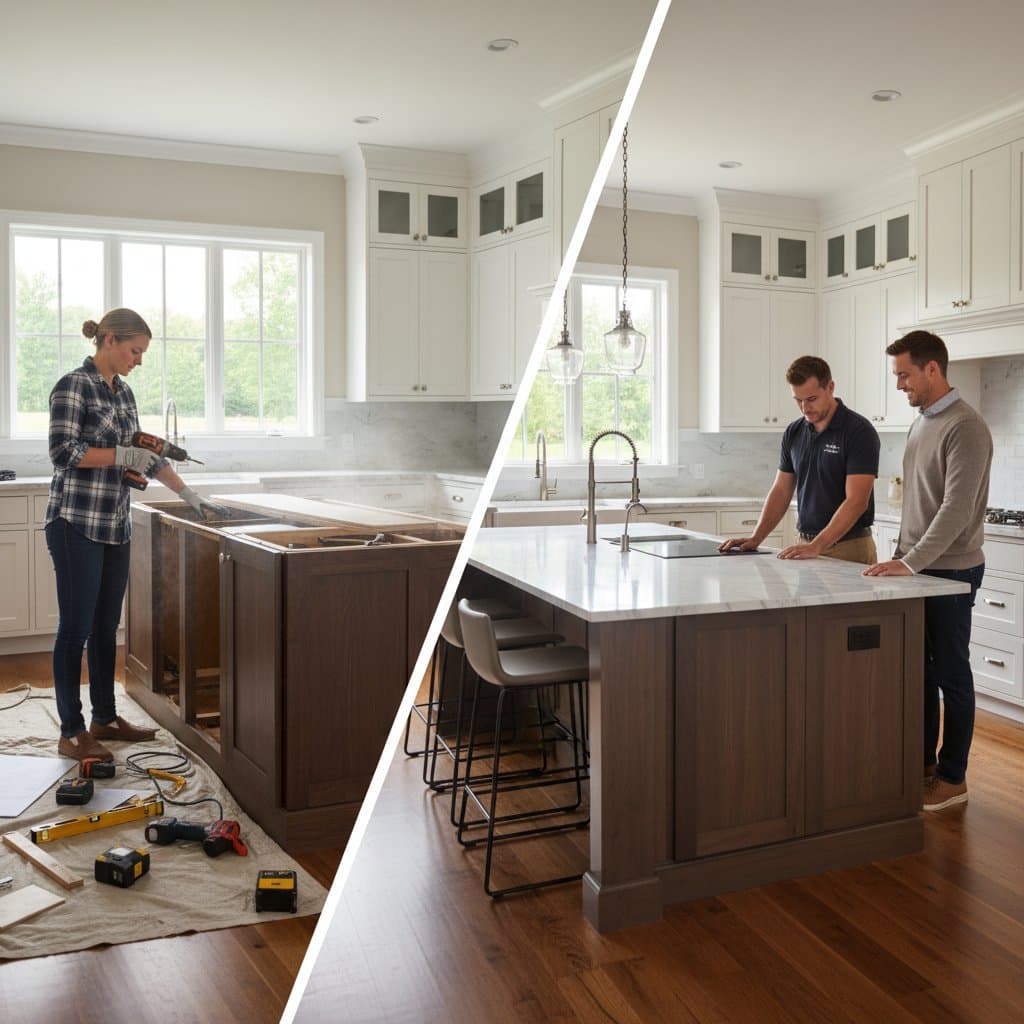
Kitchen Island: DIY Enthusiasm or Professional Expertise?
If you have ever balanced a cutting board over your sink to create extra counter space, you understand the appeal of kitchen islands. These versatile elements provide preparation surfaces, casual seating areas, and stylish enhancements in one unit. However, when the vision of installing one confronts practical considerations, a key decision emerges: undertake the project personally or engage a professional?
This choice hinges on your financial resources, technical abilities, and tolerance for extended efforts that may exceed initial timelines. Whether considering a basic rolling cart or a custom-built island incorporating plumbing and electrical features, comprehension of the requirements helps avoid disappointment and unnecessary expenses. The following sections outline the factors to evaluate for an informed selection.
Evaluating Your Kitchen Setup
Prior to commencing work or contacting specialists, examine your kitchen's configuration and existing systems thoroughly. Consider these essential inquiries.
- Is sufficient space available? Effective islands demand at least 36 inches of clearance around all sides. In compact kitchens, opt for mobile or slim designs.
- What functions are desired? For primary use as additional workspace, a straightforward model suffices. Seating, storage, or embedded appliances increase the project's intricacy.
- What lies beneath the floor? Electrical conduits or water lines may restrict positioning, particularly with additions like power sources or sinks.
- How stable is the flooring? Placement on irregular or fragile surfaces, such as aged hardwood or misaligned tiles, often necessitates expert modifications.
These assessments influence both the aesthetic and installation approach. With clear responses, comparing personal efforts against professional services becomes straightforward.
Professional Installation: Ensuring Accuracy and Compliance
Engage a contractor or kitchen expert when the island extends beyond basic furniture. Projects involving power outlets, integrated stoves, or sinks with water connections require licensed assistance to adhere to safety regulations and operate reliably.
Anticipated Elements
- Duration: Generally spans one to two weeks, encompassing planning, procurement, and assembly.
- Expense Spectrum: Ranges from $2,500 to $8,000, varying by components, scope, and location.
- Required Expertise: No hands-on skills needed from the homeowner, though early choices on aesthetics and supplies are essential.
- Comprehensive Offerings: Encompasses on-site evaluations, resource acquisition, electrical and plumbing integrations, and concluding refinements.
Experts deliver meticulous execution difficult to replicate independently. They employ tools like laser levels for alignment, verify adherence to building standards, and synchronize subcontractors such as electricians and plumbers. The outcome integrates fluidly with the existing kitchen, appearing as an original feature rather than an afterthought.
Scenarios Justifying Expert Involvement
- Incorporation of Utilities: Tasks with electrical or plumbing elements mandate certified professionals.
- Premium Components: Handling stone surfaces, bespoke cabinets, or substantial quartz pieces demands specialized techniques.
- Schedule Constraints: Specialists accelerate completion and resolve complications promptly.
- Assurance Coverage: Numerous providers offer guarantees, safeguarding the expenditure.
Although expenses are elevated, the reliability and superior craftsmanship frequently validate the investment, particularly for enduring kitchen improvements.
Prioritizing Safety in Every Step
Every kitchen island endeavor, regardless of scale, requires vigilant safety measures. Implement these practices to safeguard individuals and property.
- Electrical Precautions: Refrain from manipulating wiring without knowledge of regional codes or proper power disconnection.
- Load Distribution: Secure supports for dense countertops like granite or quartz to avert instability or fractures.
- Hazard Prevention: Organize cables, equipment, and supplies to eliminate risks in confined areas.
- Air Quality Management: Select low-VOC coatings and sealants, and maintain ventilation during use.
Uncertainty signals the need for professional consultation. An hour of guidance from a qualified individual can avert substantial future costs.
Customizing for Style and Utility
With practical aspects resolved, focus on personalization. The island can serve as a focal point or harmonize with the kitchen's overall design. Explore these concepts for motivation.
- Color Contrasts: Integrate deep navy or rich green bases with neutral cabinetry for contemporary flair.
- Textural Elements: Incorporate paneling, salvaged timber, or horizontal siding for depth.
- Material Blends: Pair timber with stone, or engineered quartz with end-grain wood for varied appeal.
- Storage Solutions: Feature expansive drawers, extendable trays, and recessed organizers for efficiency.
- Illumination Features: Suspend fixtures overhead to delineate the zone and elevate the atmosphere.
Selections must align with daily routines rather than mere visuals. For frequent cooking, emphasize expansive surfaces. For gatherings, incorporate perches and charging ports.
Essential Strategies for Optimal Results
Applicable to both approaches, these recommendations enhance the final product.
- Verify Measurements Diligently: Precise calculations minimize waste and rework.
- Incorporate Power Access: Simple islands gain versatility with convenient electrical points for appliances or devices.
- Simulate Traffic Patterns: Outline the footprint with tape to confirm unobstructed access for cabinets and pathways.
- Select Resilient Surfaces: High-use environments demand resistance to humidity and abrasions.
- Consider Future Resale: Maintain versatile, enduring aesthetics for potential market appeal.
Advancing Your Kitchen Island Project
Armed with this guidance, proceed confidently toward your ideal setup. Balance personal involvement with expert support to achieve a functional, attractive addition that elevates daily life and home value. Begin by mapping your space and outlining priorities to transform vision into reality.