
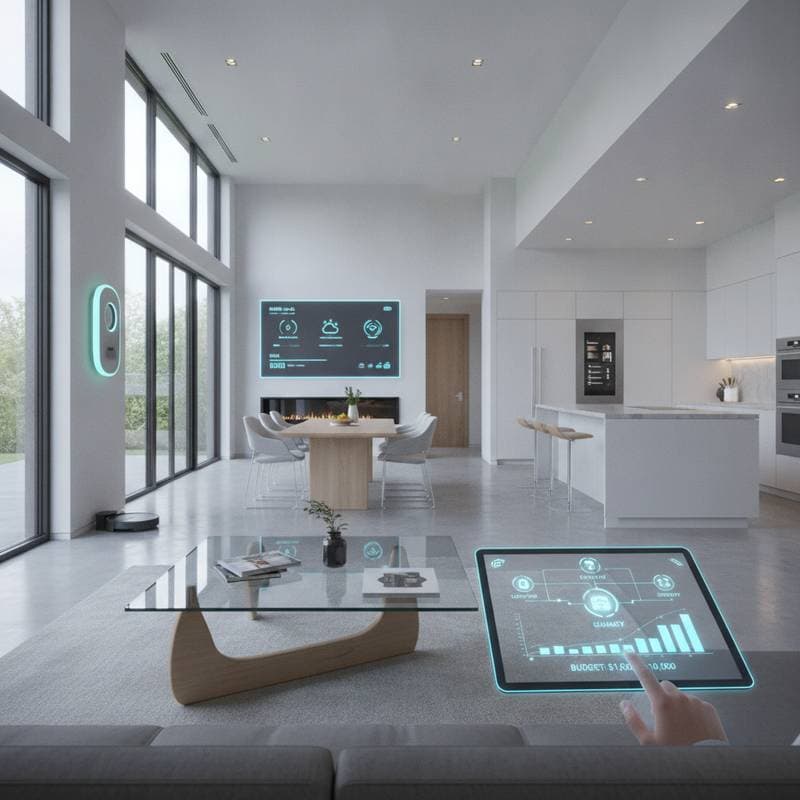
Smart Home Planning: $1K to $10K Budget Breakdown
Smart home upgrades deliver smoother routines, stronger security, and lower energy costs when planned with clear priorities. This guide outlines practical steps across lighting, security, climate, and controls for budgets from 1000 dollars to 10000 dollars.
Core Planning Checklist
- Identify daily tasks that benefit from automation
- Verify device compatibility with existing wiring and networks
- Allocate funds first to network reliability and core controls
- Schedule installations to limit household disruption
- Review privacy settings and firmware update processes
Define Clear Objectives
Picture the specific routines you want automated. Morning lights that activate with coffee brewing or automatic locks that confirm security each evening provide immediate value. List three daily pain points such as uneven room temperatures or forgotten lights, then match devices to those exact needs.
Establish Network Reliability
Smart devices require steady connectivity throughout the property. Replace or expand the router with a mesh system costing 200 to 500 dollars before adding other components. Confirm that upload speeds support simultaneous video streams from cameras and voice commands from multiple rooms.
Install Lighting Controls
Begin with smart bulbs priced 15 to 40 dollars each or in-wall dimmers for whole-room control. Program schedules that align with sunrise and sunset to reduce electricity use. Renters can start with plug-in modules while homeowners add permanent switches for cleaner aesthetics and scene control.
Secure Entry Points
Video doorbells and smart locks range from 100 to 300 dollars per unit. Measure door thickness and backset before purchase to ensure proper fit. Test app notifications during a trial period to confirm reliable alerts without subscription fees.
Optimize Climate Systems
Smart thermostats between 120 and 300 dollars learn occupancy patterns and adjust setpoints automatically. Add motorized vents in underused rooms to balance airflow and cut HVAC runtime by up to 15 percent in multi-story homes.
Unify Entertainment and Controls
Select one voice platform and pair it with speakers starting at 150 dollars each. Integrate a universal remote or hub for 100 to 250 dollars to manage televisions and streaming devices from a single interface.
Track Energy Consumption
Smart plugs at 20 dollars each monitor individual appliances and power them down during idle periods. Larger investments in connected refrigerators or washers reach 1000 dollars and pair well with solar monitoring for further savings.
Centralize Device Management
A hub or display between 100 and 250 dollars serves as the command center. Choose models supporting Matter or Thread standards to maintain compatibility across brands as the system expands.
Protect Data and Access
Apply unique passwords and enable two-factor authentication on every account. Schedule quarterly firmware checks and limit device internet access to necessary functions only. Professional security audits cost 100 to 200 dollars when additional verification is required.
Sequence Purchases by Budget Tier
A 1000 to 2500 dollar DIY setup covers network upgrades, lighting, and basic security. Systems reaching 10000 dollars incorporate wired controls, multi-room audio, and professional integration. Complete one category per quarter to evaluate performance before the next phase.
Maintain Long-Term Performance
Label every circuit and device during installation to simplify future troubleshooting. Add battery backup to routers and hubs so core functions remain active during outages. Review usage reports monthly to refine automations and sustain efficiency gains.