
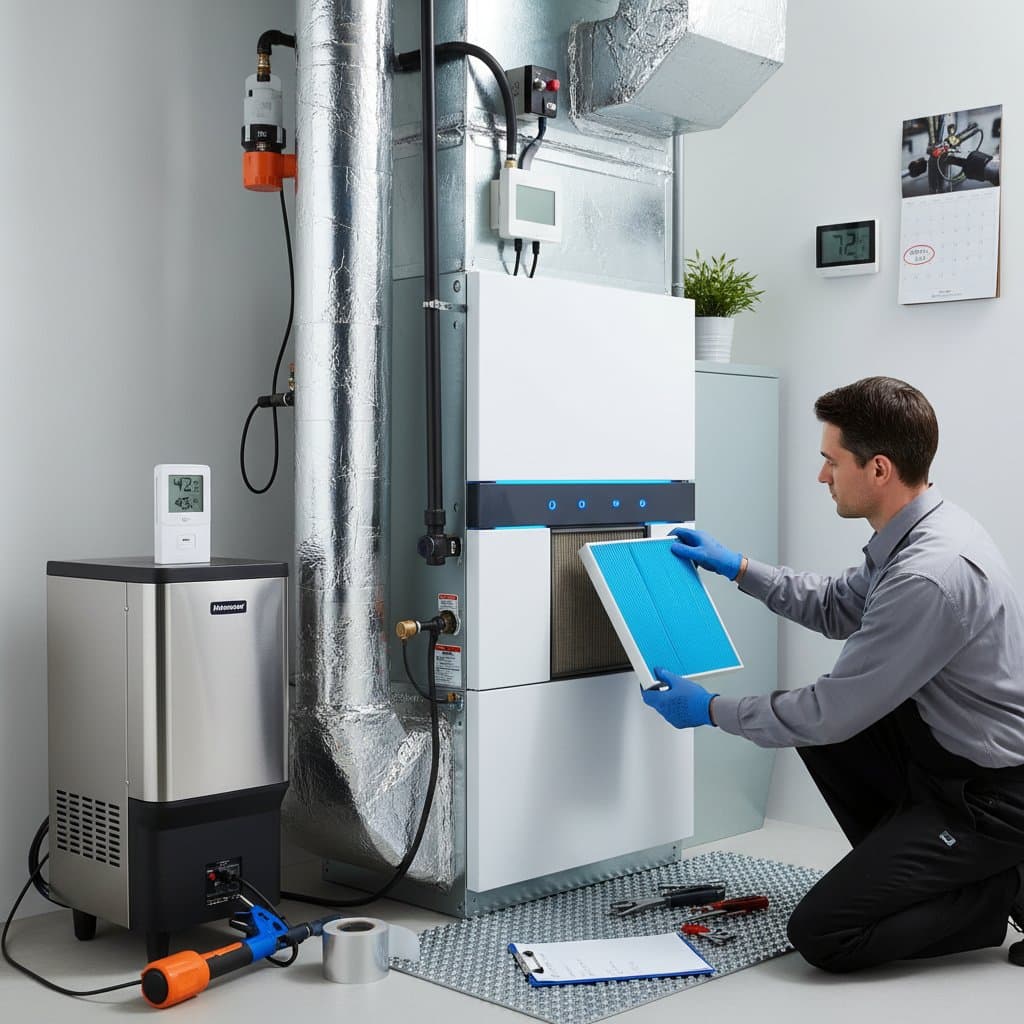
Breathe Easier: Spring HVAC Air Quality Checklist
Winter confines indoor air within sealed spaces, allowing dust, dander, and pollutants to accumulate unnoticed. As spring arrives, the HVAC system serves as the key to transitioning from stagnant conditions to refreshed ventilation. A systematic spring maintenance routine restores air quality, enhances system efficiency, and promotes household health.
This guide provides a structured approach with steps suitable for various homes and skill levels. Core elements include filter replacement, duct inspection, humidity control, professional servicing, and odor management. Follow these to achieve cleaner air, lower energy use, and prolonged equipment life.
Step 1: Examine and Replace Air Filters
The air filter acts as the primary barrier against airborne contaminants in the HVAC system. It captures particles such as dust, pollen, and pet dander that circulate through living spaces. A clogged filter reduces airflow, strains the system, and diminishes air purity.
Selecting an Appropriate Filter
Filters receive ratings based on MERV, which measures particle capture efficiency. Higher ratings trap finer particles, though they demand compatible system design to avoid airflow restrictions. Consider these categories:
- MERV 1-4: Offers basic filtration for older units or homes with minimal activity.
- MERV 5-8: Provides standard protection for typical residences, maintaining balanced airflow.
- MERV 9-12: Targets fine dust, pollen, and allergens effectively.
- MERV 13 and above: Delivers advanced filtration ideal for sensitive individuals, pending system evaluation.
For allergy concerns, select a MERV 11 or 12 option to improve air without excessive strain.
Replacement Schedule
Replace disposable filters every one to three months under normal conditions. Homes with pets, nearby construction, or high system use require monthly changes. Clean reusable filters by rinsing with water and allowing complete drying prior to reinstallation.
Step 2: Inspect Ductwork for Leaks and Accumulation
Duct leaks compromise efficiency by up to 30 percent, permitting conditioned air to escape and drawing in external contaminants. Dust buildup within ducts further pollutes recirculated air.
Conducting a Basic Inspection
- Examine accessible ducts for visible gaps or loose joints.
- Employ a flashlight to identify dark streaks indicating air escape.
- Feel along seams with the system operating to detect drafts.
Seal minor leaks using UL-rated foil tape or mastic sealant. For extensive issues or significant dust, engage a professional service equipped with negative-pressure tools and HEPA vacuums to remove debris thoroughly.
Step 3: Evaluate and Balance Humidity
Optimal indoor humidity ranges from 30 to 50 percent. Levels below this dry out mucous membranes, while excess promotes mold and odors. HVAC accessories assist in maintaining equilibrium.
- For dry conditions, install a whole-home humidifier at $150 to $500 for self-installation or up to $800 professionally.
- For damp environments, add a dehumidifier unit costing $200 to $600.
Acquire a digital hygrometer for under $20 to track levels accurately and make timely adjustments.
Step 4: Arrange a Professional System Tune-Up
Annual expert inspection uncovers issues invisible to homeowners. Technicians assess refrigerant, electrical systems, airflow, and overall performance to ensure safe operation.
Such evaluations prevent minor problems from escalating into expensive failures. Professionals access and clean components beyond safe DIY reach.
Elements of a Comprehensive Tune-Up
- Review of blower motor, belts, and bearings.
- Calibration of thermostat and electrical connections.
- Cleaning of coils and condenser.
- Refrigerant level checks.
- Carbon monoxide safety verification in integrated setups.
Maintenance plans often reduce repair costs by 10 to 15 percent on parts and labor.
Step 5: Identify and Mitigate Odors and Allergens
Persistent odors signal underlying issues within or beyond the HVAC system. Addressing them enhances air freshness and reduces irritants.
- Musty odors stem from mold in ducts or drain pans.
- Burning smells arise from dust on heating elements post-inactivity.
- Chemical scents indicate potential refrigerant leaks, necessitating immediate professional intervention.
Enhance filtration with portable air purifiers featuring HEPA and activated carbon elements. Budget $100 to $300 for units suitable for average rooms.
Essential Maintenance Strategies
Label filters with installation dates to track replacement needs. Maintain a log of all servicing activities for filters, coils, and ducts. Set calendar alerts for quarterly reviews.
Clear debris from the outdoor unit following storms to preserve airflow. Monitor for atypical sounds like rattling, which suggest loose components or restrictions.
Sustaining System Performance
Regular upkeep extends HVAC longevity, optimizes energy consumption, and safeguards occupant well-being. Integrate spring routines into annual habits for consistent results.
Clean air supports daily comfort and productivity. Through diligent care, the system fulfills its role in delivering reliable indoor environments year-round.