
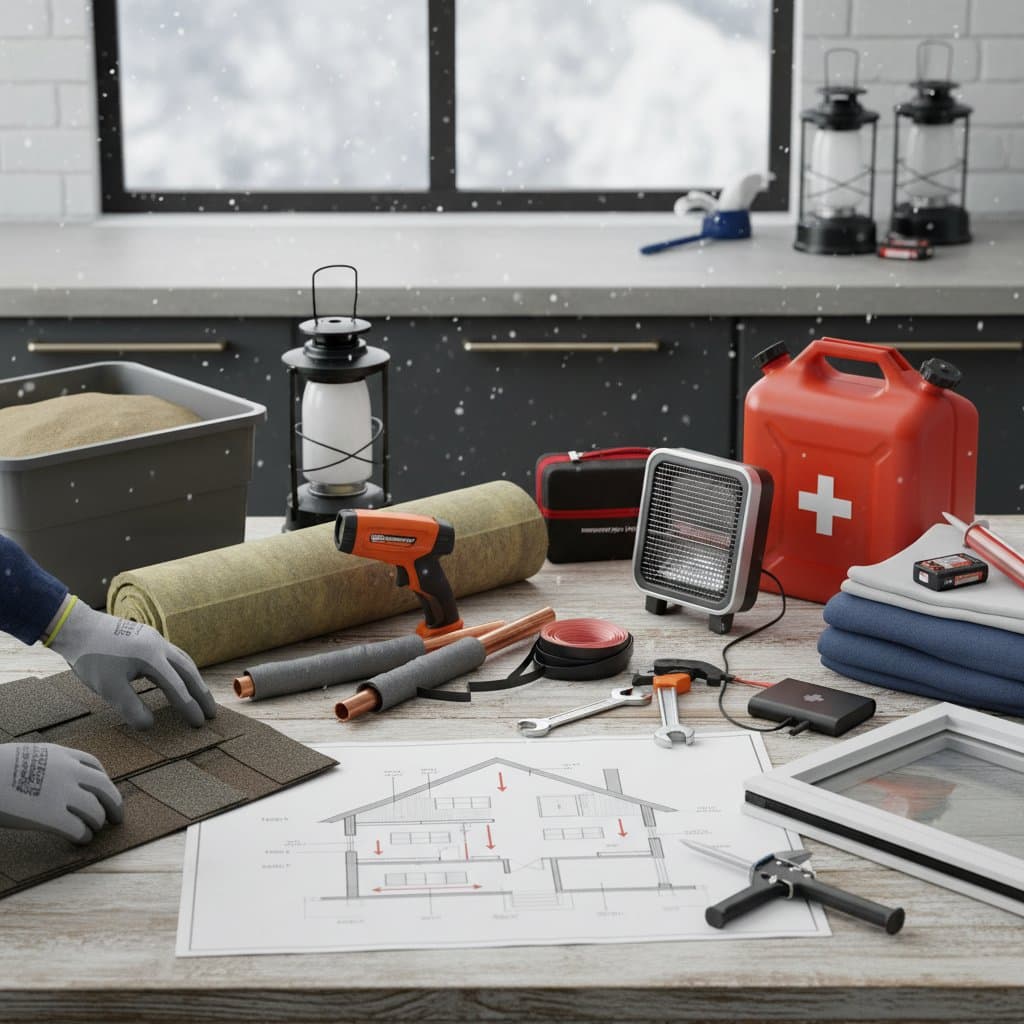
Essential Steps to Protect Your Home from Winter Storms
Winter storms deliver heavy snow, biting winds, and freezing temperatures that challenge home structures. Homeowners face potential issues like ice dams, burst pipes, and heating failures if preparation lags. Proactive measures create a barrier against these threats, preserving comfort and avoiding repair expenses.
Conduct a Thorough Roof Inspection
Roofs endure the heaviest loads from snow accumulation and ice formation. Begin with a ground-level visual assessment for damaged shingles, loose flashing, or blocked gutters. Discoloration or sagging indicates moisture problems that worsen in cold weather.
For steep or high roofs, engage a licensed professional for a detailed examination. Such services range from 150 to 400 dollars based on roof size and location. Clear gutters thoroughly to avoid ice dams, which push water under shingles and cause leaks. Install gutter guards at 2 to 4 dollars per foot for ongoing protection. Inspect downspouts for rust or gaps, as freezing water in these areas expands and damages nearby surfaces.
Seal Windows and Doors Against Drafts
Gaps around windows and doors allow cold air to infiltrate, increasing energy use. Test for drafts by observing a lit candle flame near frames; any flicker signals air leaks. Apply weatherstripping with foam or rubber materials, available for 10 to 25 dollars per roll, to seal these openings.
In older homes, apply silicone caulk along exterior wooden trim to block moisture. Condensation between panes in double-glazed windows suggests failed insulation; replace units if possible, or use shrink-film kits under 20 dollars as a quick fix applied with a hair dryer. Add door sweeps to block snow and drafts at the threshold.
Insulate Pipes to Prevent Freezing
Burst pipes from freezing water expansion lead to flooding and major repairs. Identify the main water shutoff valve and verify its operation. Wrap exposed pipes in unheated areas with foam sleeves or fiberglass insulation at 1 to 3 dollars per linear foot.
Install heat tape with thermostats on vulnerable sections for automatic warming in subfreezing conditions. Drain and disconnect outdoor hoses, then cover faucets with insulated caps. For irrigation systems, close the supply and use compressed air to remove water; professional services cost 60 to 100 dollars but avert damages over 1,000 dollars.
Service Heating Systems for Reliability
Heating equipment demands attention to operate efficiently through winter. Arrange a professional tune-up costing 100 to 200 dollars, which covers ignition checks, burner cleaning, and carbon monoxide detection. Change air filters monthly to support optimal airflow.
Verify thermostat accuracy, especially for heat pumps or radiant setups; programmable models adjust to routines and cut energy use by 10 percent. Clear vents of obstructions to promote even heat distribution and reduce system stress. For fireplaces, schedule chimney cleaning to eliminate creosote and lower fire hazards.
Strengthen Exterior Features
Siding, decks, and other outdoor elements suffer from freeze-thaw cycles. Inspect the home's perimeter for peeling paint, loose siding, or cracked caulk. Perform minor fixes to halt moisture entry, then apply protective coatings at 1 to 2 dollars per square foot to prolong durability.
Prune overhanging tree branches to maintain 10 feet of clearance from roofs and lines, reducing snap risks under snow load. Secure or store outdoor items like furniture and planters in sheltered spots; use strapped waterproof covers for exposed pieces.
Secure Electrical and Backup Systems
Storms frequently cause outages, making reliable backups essential. Run generators for 15 minutes monthly to confirm startup, and store stabilized fuel in safe containers. Portable models cost 500 to 2,500 dollars; larger systems exceed 10,000 dollars. Position generators outdoors to avoid carbon monoxide risks.
Test smoke and carbon monoxide detectors, replacing batteries as needed. Stock flashlights, rechargeable LED lights, and batteries in easy-reach locations. Assemble an emergency kit with water, blankets, first-aid supplies, and nonperishable food for multi-day needs.
Insulate Hidden Spaces Effectively
Attics, basements, and crawl spaces often harbor cold spots that lead to broader issues. In attics, distribute insulation evenly over joists while preserving airflow to prevent ice dams; target 12 inches of depth for 10 to 20 percent heating savings. Use dehumidifiers in basements to manage moisture that freezes on surfaces.
Apply hydraulic cement to seal wall cracks against water intrusion. Install vapor barriers in crawl spaces at 0.50 to 1 dollar per square foot to block ground dampness. Add insulated doors to these areas for stable temperatures.
Prepare Pathways and Vehicles
Cracked driveways and walkways worsen with freezing water in fissures. Seal surfaces with protective compounds before snow falls. Position snow removal tools, ice melt, and sand near doors; select non-toxic options safe for pets and plants.
For vehicles, check tire pressure and tread, refill with freeze-resistant washer fluid, and pack jumper cables. Include a shovel, blanket, and flashlight for roadside emergencies during storms.
Implement Key Preparation Strategies
Schedule services early to beat seasonal rushes for roofers and technicians. Combine sealing, insulation, and maintenance for comprehensive protection. Document all work and warranties to streamline insurance processes if needed.
Opt for sustainable materials like recycled cellulose insulation, which matches traditional performance with lower environmental impact. Rehearse emergency procedures, such as shutting off water or accessing breakers, to build confidence.
Secure Long-Term Home Resilience
Consistent winter preparation safeguards investments and minimizes disruptions. These steps not only prevent immediate damages but also enhance energy efficiency year-round. Homeowners who act ahead enjoy peace of mind amid the season's challenges.