
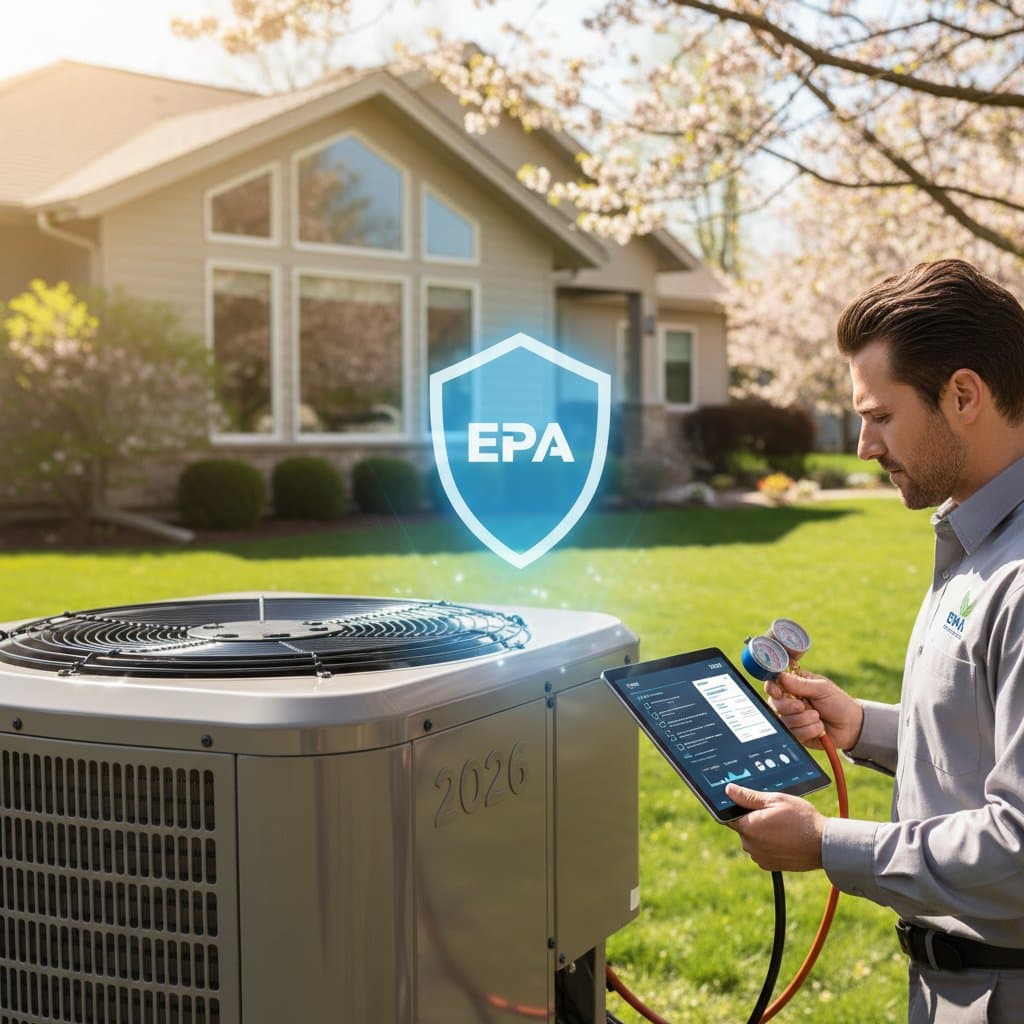
Understanding the 2026 EPA HVAC Updates
The Environmental Protection Agency has introduced significant changes to HVAC regulations, effective in 2026, aimed at reducing environmental impact through better refrigerant management and improved energy efficiency. Homeowners must now ensure their air conditioning systems comply with these standards to avoid penalties and maintain optimal performance. This guide provides a clear path to readiness, focusing on proactive spring maintenance that safeguards your investment and promotes sustainability.
These rules phase out older refrigerants like R-410A in favor of lower-global-warming-potential alternatives, such as R-32 or R-454B. Systems must also achieve higher Seasonal Energy Efficiency Ratio ratings, typically SEER2 14 or above for new installations. By addressing these requirements early, you position your home for long-term reliability and cost savings.
Step 1: Conduct a Thorough Inspection
Begin the preparation process with a detailed professional inspection to assess your system's current status against upcoming regulations. This foundational step identifies potential issues before they escalate, ensuring compliance and preventing unexpected breakdowns during the warmer months.
Key elements of the inspection include:
- Refrigerant type verification. Technicians will determine if your unit contains phased-out substances. Systems using non-compliant refrigerants may require retrofitting with compatible options or full replacement to meet EPA guidelines.
- Leak detection and testing. Minor leaks can release harmful refrigerants into the atmosphere, triggering fines up to $50,000 per violation. Pressure tests and electronic detectors pinpoint even trace amounts of escape.
- Evaluation of coils and filters. Accumulated dirt on evaporator and condenser coils reduces heat transfer, while clogged filters restrict airflow. Both contribute to lower efficiency, potentially failing to meet mandated SEER thresholds.
- Review of electrical components and controls. Inspect wiring for corrosion or looseness, and calibrate thermostats to ensure accurate temperature regulation. Outdated controls may not support the precise monitoring required for compliance.
The cost for this inspection typically ranges from $150 to $350, influenced by local labor rates and the complexity of your setup. Schedule it in early spring to allow time for any necessary follow-up work.
Step 2: Perform Adjustments for Peak Efficiency
After the inspection reveals areas for improvement, technicians can implement targeted optimizations to elevate your system's performance. These adjustments directly address efficiency mandates, helping your AC operate within regulatory bounds while minimizing energy consumption.
Essential actions encompass:
- Filter replacement. Select filters rated MERV 8 to 13, which balance particle capture with sufficient airflow. Higher MERV ratings trap more allergens but may strain older blowers if not matched properly.
- Coil cleaning. Remove debris from evaporator and condenser coils using specialized tools and solutions. This maintenance boosts cooling capacity by 10 to 15 percent, aligning with EPA efficiency goals.
- Duct sealing. Identify and seal gaps in ductwork with mastic or foil tape. Unsealed ducts lose 20 to 30 percent of cooled air, increasing runtime and energy use beyond compliant levels.
- Refrigerant level assessment and recharge. Verify charge levels with precision gauges to achieve optimal pressure. Incorrect charges can drop efficiency by 5 to 10 percent and risk refrigerant loss.
Budget $100 to $250 for these services, excluding costs for additional parts like seals or filters. Completing them promptly ensures your system runs smoothly as temperatures rise.
Step 3: Establish Documentation and Future Planning
Reliable records form the backbone of compliance, offering proof of adherence during audits or home sales. Maintain a centralized file with service invoices, refrigerant specifications, and technician credentials to streamline ongoing management.
Create a digital log that tracks:
- Dates and details of all maintenance activities.
- Current refrigerant composition and any conversions performed.
- Certification numbers for servicing professionals, verifying their EPA Section 608 handling qualifications.
This practice not only protects against regulatory scrutiny but also preserves your home's market value, as buyers increasingly prioritize energy-efficient, compliant features.
Evaluating Costs and Return on Investment
Investing in compliance upgrades yields measurable financial benefits over time. While initial expenses vary, the reductions in utility bills and avoidance of penalties provide a strong case for action.
Consider the following breakdown for common system upgrades:
| System Type | Average Installed Cost | Estimated Annual Savings | Payback Period |
|---|---|---|---|
| Standard Efficiency Retrofit | $5,000 to $8,000 | 10 to 15 percent | 6 to 8 years |
| High Efficiency with New Refrigerant | $8,000 to $12,000 | 20 to 30 percent | 4 to 6 years |
| Variable Speed Heat Pump | $10,000 to $14,000 | 30 to 40 percent | 3 to 5 years |
Factors like your local climate, home size, and utility rates influence these figures. High-efficiency models often qualify for federal tax credits up to $2,000, accelerating payback. Consult a certified contractor for a personalized analysis.
Strategic Timing for Spring Implementation
Tackle maintenance in spring to capitalize on milder weather and technician availability. This season avoids the rush of summer demands, securing faster service and potentially lower rates.
Follow this recommended sequence:
- Book the initial inspection and refrigerant check in March or early April.
- Address cleaning, sealing, and adjustments before mid-May, ahead of consistent heat.
- Conduct a performance verification test after one week of operation to measure airflow, temperatures, and energy draw.
Proactive timing minimizes disruptions and ensures your system performs reliably when needed most.
Practical Recommendations for Long-Term Compliance
Enhance your maintenance routine with these targeted strategies to sustain efficiency and regulatory alignment.
- Request that technicians affix a durable label to your outdoor unit specifying the refrigerant type and service date. This aids subsequent providers in maintaining compliance without redundant testing.
- Integrate a smart thermostat to monitor usage patterns and detect anomalies like excessive runtime, which may signal leaks or imbalances.
- Regularly clear vegetation and debris from the unit's vicinity, especially during high-pollen periods, to preserve unrestricted airflow.
- Analyze post-maintenance electric bills for evidence of reduced consumption, confirming the impact of your upgrades.
Securing Benefits Through Proactive Care
Adhering to these EPA-driven standards equips your home with a resilient cooling infrastructure. You gain peace of mind from avoided penalties, consistent comfort, and diminished environmental footprint. By investing effort this spring, your system delivers enduring efficiency, cost reductions, and enhanced property appeal in an era of evolving regulations.