
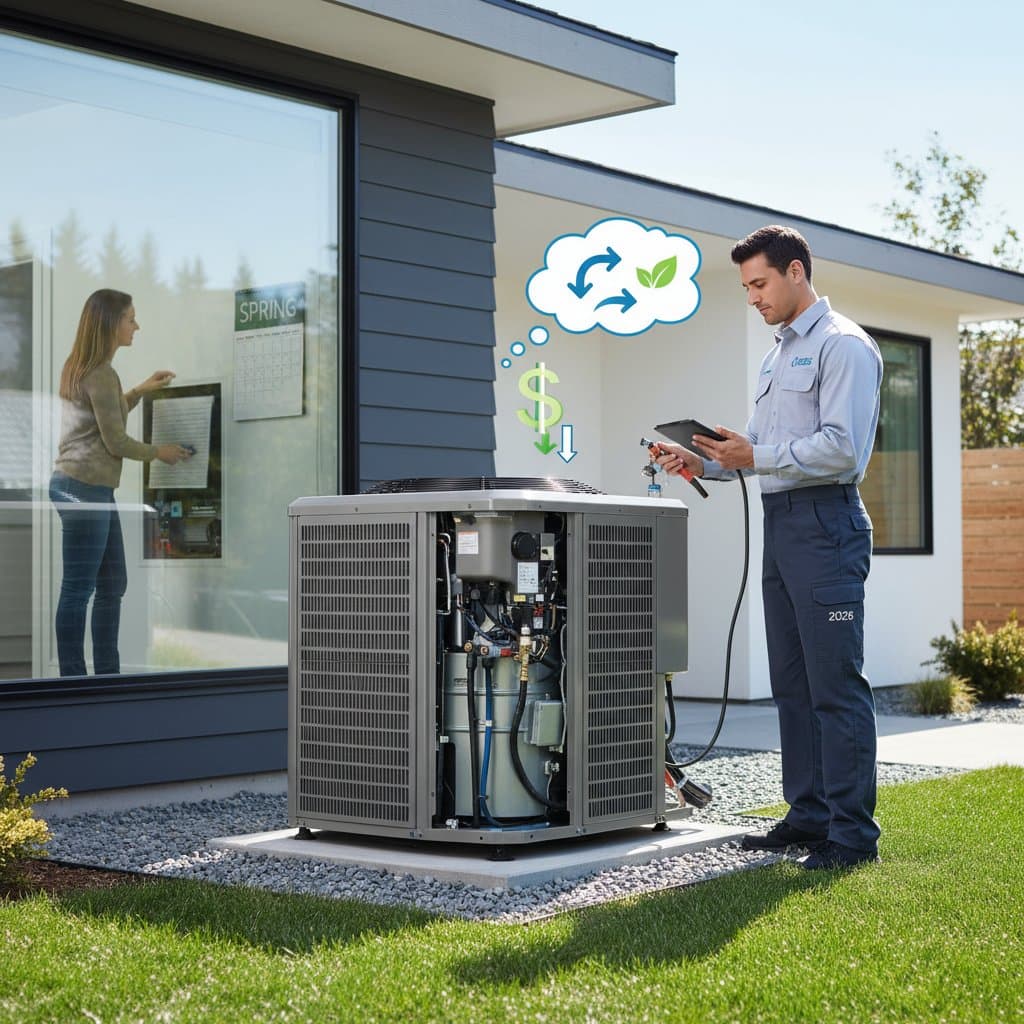
Essential Spring HVAC Checklist to Beat the Heat
Homeowners often encounter frustration when air conditioners deliver warm air or emit unusual sounds at the onset of warm weather. Proactive preparation in spring enables the HVAC system to operate efficiently throughout the summer. This checklist suits both those who enjoy hands-on projects and individuals who opt for professional assistance, resulting in cost savings, fewer disruptions, and consistent home comfort.
The Importance of Spring HVAC Maintenance
Air conditioning units receive little attention until they falter during intense heat. These systems require routine care to maintain efficiency, much like vehicles demand regular servicing. Spring provides an optimal window to perform cleaning, inspections, and adjustments before prolonged operation begins. Proper upkeep lowers cooling expenses by as much as 15 percent, prolongs equipment lifespan, and enhances indoor air quality.
Neglecting maintenance invites issues such as obstructed filters, iced coils, and degraded parts, which diminish effectiveness and elevate utility costs. An efficient system delivers comfort while conserving hundreds of dollars annually on power and urgent fixes.
Step 1: Replace or Clean Air Filters
Begin with air filters, a straightforward task that yields significant benefits. Accumulated dust, pollen, and pet hair obstruct filters, compelling the system to labor excessively. This added effort raises energy consumption and hampers air circulation.
Actions to take:
- Verify the filter dimensions, often indicated on the current unit's frame.
- Install new disposable filters every one to three months.
- For reusable types, rinse with mild soap and water, then allow complete drying prior to replacement.
Expense: Basic disposable filters cost between $10 and $25. Enhanced models, priced up to $60, capture finer particles and endure longer.
Step 2: Clean Vents and Registers
Blocked vents undermine even the most capable HVAC setup by impeding air delivery. Dust accumulation limits flow, while obstructions lead to imbalanced temperatures.
Practical advice:
- Employ a vacuum with a brush tool to remove dust from covers and registers.
- Confirm that furnishings and carpets do not restrict access.
- Wipe surrounding areas with a moist cloth to eliminate surface grime.
A musty odor or mold signs signal the need for expert duct cleaning, which ranges from $300 to $500 for an entire residence, based on scale and reach.
Step 3: Inspect the Outdoor Unit
The exterior condenser expels heat from the interior, so routine care enhances its function. Debris like leaves and clippings gathers over cooler months, encumbering performance.
Safe cleaning method:
- Disconnect power at the circuit breaker.
- Clear refuse from the base, maintaining a two-foot perimeter on each side.
- Rinse coils gently with a hose, directing water inward without excessive force.
- Straighten any deformed fins using a specialized comb.
Oil residue or odd sounds may point to refrigerant escapes or compressor faults, necessitating professional intervention.
Step 4: Test the Thermostat
The thermostat governs HVAC operations, and faults here result in erratic settings or wasteful energy use.
Verification steps:
- Activate cooling mode and adjust the temperature several degrees below ambient levels.
- Observe for cool airflow within minutes.
- Swap batteries in battery-operated models.
- Upgrade to programmable or intelligent versions, which cut energy use by up to 10 percent via optimized cycles.
Smart thermostats cost $120 to $250 and install quickly, often in less than an hour.
Step 5: Check Drain Lines and Condensate Pans
Humidity removal produces condensation that exits via narrow pipes. Blockages from algae or sediment cause overflows, fostering leaks and mold.
Upkeep procedures:
- Identify the drain line adjacent to the indoor component.
- Flush with a cup of white vinegar or a dedicated cleaner to dissolve deposits.
- Examine the pan for pooled liquid or corrosion.
Ongoing dampness requires a specialist's evaluation; fixes range from $100 to $300, depending on the problem's extent.
Step 6: Inspect Ductwork for Leaks
Minor duct breaches squander up to 30 percent of cooled air, directing it to unintended spaces like attics.
Home inspection:
- Traverse the attic or crawlspace, listening for air escapes during operation.
- Apply foil tape or sealant to small fissures.
- In aging structures with widespread issues, engage experts for comprehensive sealing, priced at $500 to $1,200.
Step 7: Schedule a Professional Tune-Up
DIY efforts cover basics, yet expert service verifies readiness for demanding periods. Technicians assess refrigerant, connections, lubrication, and ventilation.
Standard fee: $100 to $200 covers a thorough review. Seasonal promotions or plans provide expedited access and repair reductions.
Such inspections detect subtle deterioration, averting summer failures and their high costs.
Step 8: Evaluate Air Quality Enhancements
For allergy sufferers, spring invites consideration of purification options like dehumidifiers, UV systems, and superior filters.
Key advantages:
- Reduced allergens in circulation
- Minimized mold and microbial proliferation
- Enhanced comfort with odor control
Costs span $400 for entry-level units to over $1,500 for comprehensive setups, boosting both livability and property appeal.
Step 9: Assess Energy Efficiency and Unit Age
Units over ten years old with recurring issues benefit from replacement with high-efficiency alternatives, slashing costs by 20 to 40 percent. Prioritize models boasting elevated SEER ratings.
Consult a professional for sizing via load analysis to prevent short-cycling or inadequacy.
Step 10: Plan for Seasonal Adjustments
Anticipate summer demands by calibrating settings in advance. Raise the thermostat by one degree for each two degrees of outdoor rise to balance comfort and savings. Integrate ceiling fans to circulate air effectively, allowing higher settings without discomfort.
Expert Recommendations for Optimal Results
- Initiate tasks promptly to resolve concerns before peak demand overwhelms services.
- Maintain logs of maintenance activities to monitor trends and support home valuation.
- Prioritize safety by powering down units before any handling; defer complex electrical or refrigerant work to qualified experts.
Achieve Reliable Summer Comfort
Implementing this spring routine equips your HVAC for seamless performance, ensuring cool, clean air without unexpected expenses. Regular attention transforms seasonal challenges into opportunities for efficiency and peace of mind.