
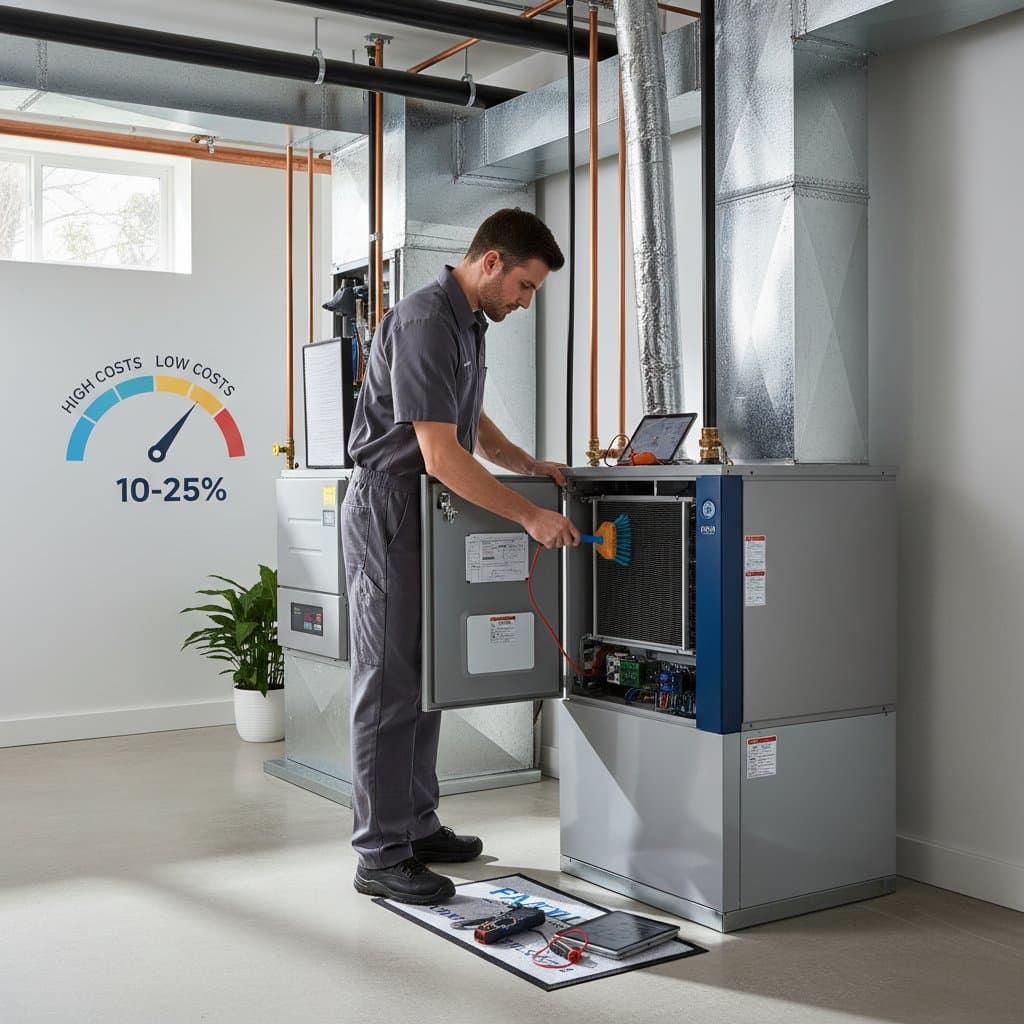
Spring HVAC Tune-Up That Reduces Energy Bills
Rising energy bills coincide with warmer weather, signaling that the HVAC system requires maintenance. The unit strains to distribute cool air past clogged filters and worn components. A straightforward spring tune-up delivers substantial improvements. This process requires minimal time and expense, ensuring comfort while lowering cooling expenses throughout the season.
Reasons to Schedule an HVAC Tune-Up in Spring
Spring occupies the interval between intense heating and cooling periods. The HVAC system emerges from a demanding heating season and prepares for cooling demands. Maintenance during this phase resembles servicing a vehicle prior to an extended journey. Efficiency increases, energy consumption decreases, and breakdown risks diminish during critical usage.
Proper maintenance elevates energy efficiency by 10 to 25 percent. Savings range from 30 to 80 dollars monthly, based on system capacity and regional rates. Across a full cooling season, these reductions accumulate significantly in household budgets.
Components of a Professional HVAC Tune-Up
Homeowners often handle filter changes, yet professional service examines deeper elements. Technicians charge 90 to 150 dollars on average for comprehensive care. Services encompass:
- Inspection and cleaning of condenser coils to optimize heat dissipation
- Verification of refrigerant levels for effective cooling
- Securing of electrical connections to avoid disruptions
- Evaluation of blower motors and belts for reliable function
- Application of lubrication to moving components, minimizing friction and prolonging durability
- Adjustment of thermostats for precise temperature regulation
- Assessment of ductwork to identify leaks wasting up to 30 percent of air
Such thorough checks enhance performance and detect issues early. Addressing a minor refrigerant leak at 150 dollars prevents compressor failure, which exceeds 1,000 dollars.
Essential DIY Maintenance Tasks
Homeowners initiate savings without professional assistance. These uncomplicated actions optimize the system and prolong its service life.
- Replace or clean air filters: Obstructed filters force excessive effort. Exchange disposables or rinse reusables every one to two months in high-use periods.
- Clear surroundings of outdoor units: Remove vegetation or debris within a two-foot radius to preserve ventilation.
- Vacuum supply vents and return grilles: Accumulated dust impedes circulation and efficiency.
- Adjust thermostat settings: Raise the temperature by several degrees during absences to conserve energy while preserving comfort.
- Examine accessible ducts: Seal visible separations with mastic sealant or foil tape.
Completion requires under one hour and yields measurable gains. Regular application reduces operational strain for consistent temperatures.
Planning the Financial Aspects of Maintenance
Spring HVAC maintenance qualifies as an economical home investment. Costs average 90 to 150 dollars, varying by region and equipment. Older units or those with issues may require up to 200 dollars for detailed review.
Neglect accelerates efficiency loss, elevating bills by 20 percent or greater. The service recoups expenses in one season. Numerous providers offer annual plans with two visits for 200 to 300 dollars. Benefits include expedited appointments and component discounts, suiting those seeking minimal involvement.
Critical Safety and Operational Verifications
HVAC systems incorporate electrical elements, refrigerants, and mechanical parts, demanding caution. Basic cleaning suits homeowners, but specific evaluations require certified experts. These include:
- Electrical assessments to avert shorts or fire hazards
- Refrigerant management, as incorrect levels harm the compressor
- Pressure evaluations for secure leak detection
- Combustion reviews for integrated heating features
Experts utilize precise instruments to align operations with manufacturer standards. Unusual sounds, uneven cooling, or elevated bills post-cleaning warrant professional intervention.
Benefits of Enhanced Energy Efficiency
Tuned systems extend beyond cost reductions to elevate living quality. Clean coils and balanced refrigerant accelerate cooling and reduce cycling frequency. Results include even temperatures, diminished humidity, and reduced noise levels. Improved circulation enhances air purity by trapping additional particles and allergens.
Smart thermostat users gain further advantages post-tune-up. Calibration enables automation to decrease usage by 10 to 15 percent via intelligent scheduling and adaptation.
In humid climates, technicians inspect condensate drain lines. Blockages lead to leaks and excess moisture, intensifying perceived warmth. Clear lines facilitate moisture extraction for optimal indoor conditions.
Evaluating System Replacement Options
Maintenance cannot revitalize outdated or low-performing units. Systems over ten years old, delivering irregular cooling, or demanding repeated fixes may benefit from upgrades. Modern equipment achieves 40 percent superior efficiency, particularly with advanced controls and sealed ducts.
Request a financial analysis from the technician comparing repair versus replacement costs. Many discover that new installations lower ongoing expenses, recovering investment through reduced payments over several years.
Practical Recommendations for Optimal Results
- Book the service ahead of peak heat to secure prompt availability.
- Maintain records of filter replacements and inspections to monitor trends.
- Request demonstrations on refrigerant gauges or thermostat functions from the technician. System familiarity aids early problem identification.
- Enhance with attic insulation or window/door sealing. These measures amplify tune-up effects on energy conservation.
Maximizing Seasonal Comfort and Savings
Routine spring maintenance establishes a foundation for efficient operation. Homeowners experience reliable cooling, lower expenses, and extended equipment life. Implement these strategies to sustain a welcoming environment through summer.