
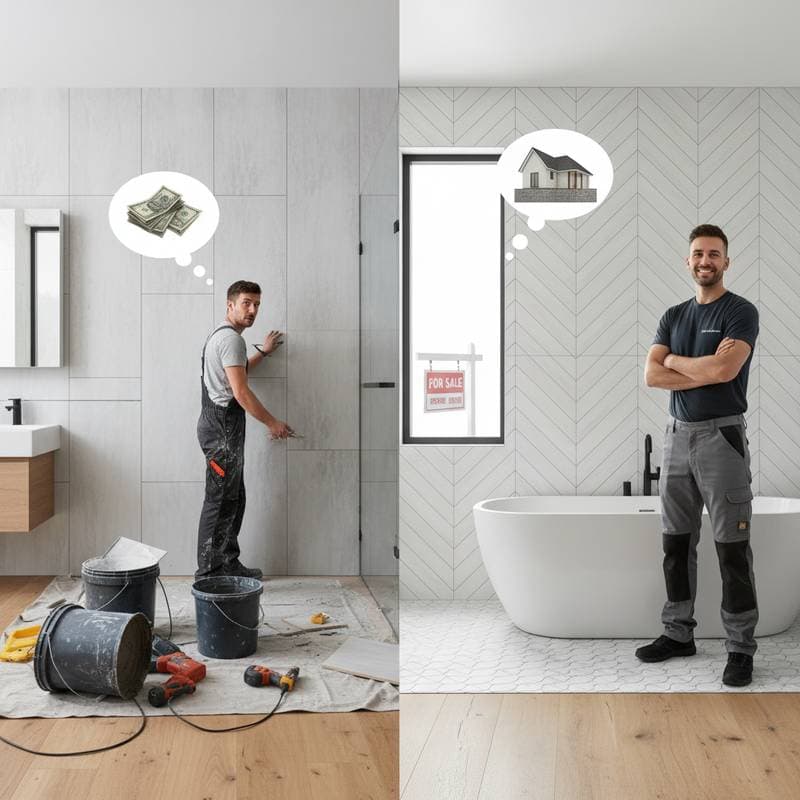
The True Cost of DIY Versus Professional Bathroom Tiling
Many homeowners gaze at worn bathroom tiles and envision a fresh update through their own efforts. The appeal of cost savings and personal customization draws numerous individuals to DIY projects. However, a thorough examination of expenses reveals that the financial commitment extends beyond initial purchases to include time, potential errors, and enduring performance.
Essential Cost Components in Bathroom Tiling
Bathroom tiling involves more than surface application; it demands precise preparation and finishing. Key elements influencing the budget include materials such as tiles, grout, thin-set mortar, spacers, and sealants. Tools range from cutters and levels to trowels and mixing containers, while labor accounts for either personal hours or contractor fees. Preparation tasks encompass old tile removal, subfloor repairs, and waterproofing installation, followed by finishing steps like grout sealing and alignment verification.
These components vary significantly based on the chosen approach.
Expenses for a DIY Bathroom Tiling Project
Opting for DIY typically limits costs to materials, averaging $3 to $6 per square foot for standard ceramic or porcelain options. Selecting luxury materials, such as natural stone or custom designs, elevates this to $10 or higher per square foot. For a modest 100-square-foot bathroom, materials alone might total $300 to $600.
Tools represent an unexpected outlay for novices. Renting a wet tile saw for a day costs $50 to $80, while buying one ranges from $150 to $300. Essential items like notched trowels, rubber floats, spacers, and buckets add $100 to $200. Safety equipment, including dust masks, gloves, knee pads, and goggles, contributes another $30 to $50 if not already owned.
A complete small-scale DIY effort often totals $600 to $1,200, assuming existing tools. This figure excludes the 20 to 30 hours required for floor and wall coverage, which can extend due to inexperience or complications.
Overlooked Expenses in DIY Tiling
Initial savings from DIY diminish if errors occur, leading to future repairs. Uneven tile placement results in safety risks and aesthetic flaws, while inadequate waterproofing invites leaks and mold. Improper grout application causes cracking and water infiltration, and inaccurate cuts waste supplies.
Correcting these issues, such as addressing a concealed leak, incurs $500 to $1,000 in fixes. To mitigate risks, research techniques thoroughly, practice on scrap pieces, and allocate buffer time and materials.
For skilled individuals who value hands-on involvement, DIY offers creative freedom and accomplishment. Success hinges on meticulous planning, premium supplies, and guidance from trusted instructional videos.
Professional Installation Fees and Benefits
Professionals charge $10 to $25 per square foot, translating to $2,000 to $5,000 for an average bathroom, influenced by location, materials, and scope. This fee covers expert assessment, specialized equipment, and efficient execution.
Experienced installers identify structural concerns early, ensuring robust subflooring, effective waterproofing, and flawless cuts. They complete projects in days rather than weeks, minimizing disruption.
Professional installations demonstrate superior durability, resisting wear for decades. Warranties on labor provide assurance against defects, a feature absent in self-directed work.
Evaluating Time, Quality, and Durability
Decisions require weighing time demands, workmanship standards, and sustained performance.
DIY extends timelines for novices, potentially sidelining the bathroom for extended periods. Professionals accelerate completion, freeing schedules sooner.
Quality manifests in uniform lines and level surfaces, where pros excel through refined methods. DIY often involves iterative adjustments.
Longevity depends on correct installation; errors accelerate failure from moisture or stress. For long-term residents, professional work enhances home value and curtails upkeep.
Budget-conscious remodelers or those seeking personal achievement may prefer DIY with diligent preparation.
Prioritizing Safety and Compliance
Wet bathroom settings necessitate adherence to safety protocols. Verify subfloor stability and use appropriate cement backer boards compliant with local codes for damp areas.
Omit waterproofing at your peril, as it prevents substructure decay. Around electrical elements, maintain required distances and incorporate ground-fault interrupters.
During tile cutting, don eye protection and gloves to guard against shards and dust. Operate in ventilated zones and wipe surfaces promptly to avoid hazards.
Variations in Costs by Location
Rates fluctuate regionally; metropolitan zones command higher professional fees due to elevated labor markets. Rural settings offer more modest pricing.
Material availability affects supply costs; humid climates demand enhanced sealants to combat mold. DIY enthusiasts benefit from outlet promotions or surplus stock, but acquire 10 to 15 percent additional tiles for cuts and spares.
Indicators for Professional Involvement
Complex features like curved showers or intricate patterns signal the need for experts. Uneven bases or fixture modifications further complicate self-attempts.
Homeowners can hybridize by managing demo and debris removal, then engaging pros for tiling. This balances savings with reliability.
Strategies for Optimal Results
- Map the layout from the room's center outward for balanced patterns.
- Employ spacers consistently to achieve uniform joints.
- Select durable, stain-resistant grout and apply sealant generously.
- Purchase surplus tiles to facilitate future matches.
- Measure levelness frequently to prevent compounding errors.
Preserving Your Tiled Surfaces
Routine care extends tile lifespan. Clean with mild, pH-neutral solutions weekly to remove residues. Reapply sealant to grout lines annually, inspecting for cracks or loose pieces. Address spills immediately to avert stains, and ventilate post-shower to control humidity. These habits safeguard your investment against wear and maintain a pristine appearance for years.