
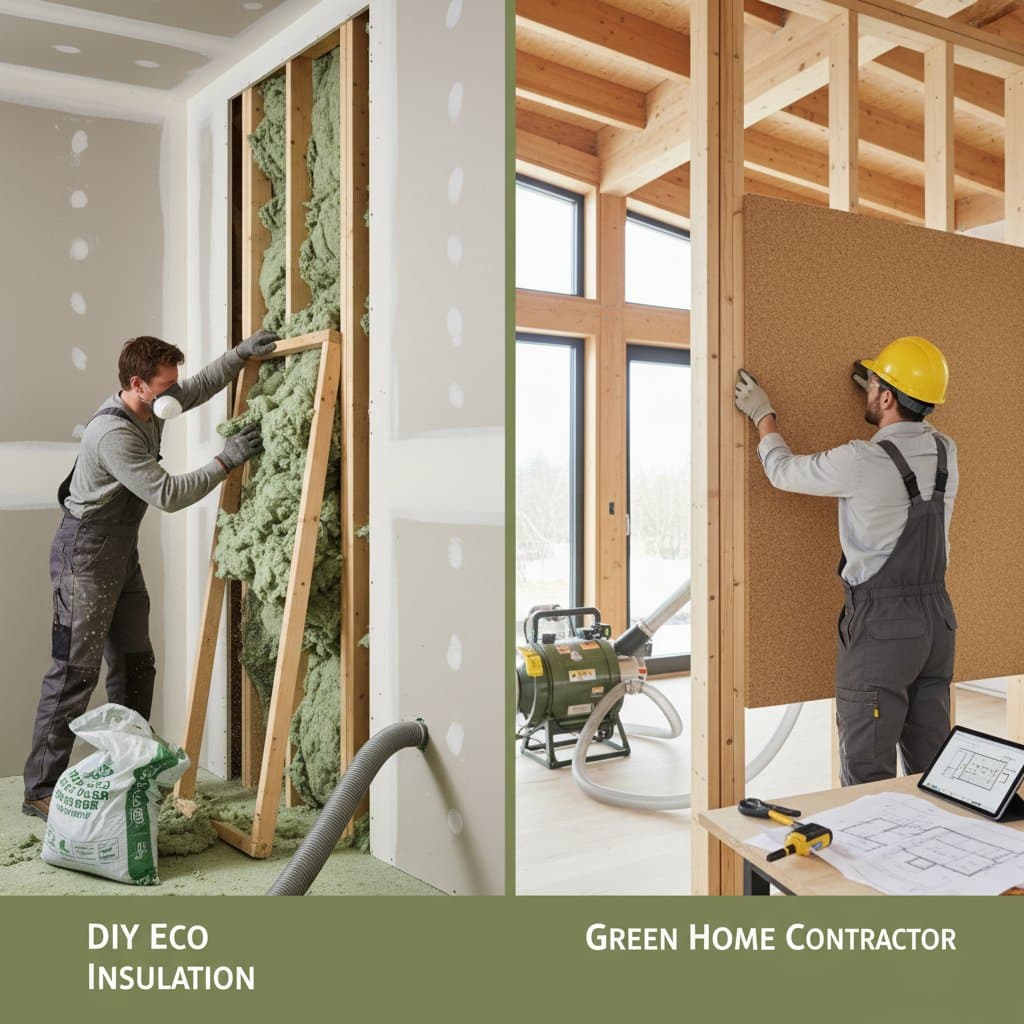
Weighing DIY Eco Insulation Against Professional Installation
Homeowners often consider installing eco-friendly insulation to lower energy costs and support sustainability. However, the decision between a do-it-yourself approach and hiring experts hinges on more than initial expenses. Small errors in application can compromise performance, leading to higher utility bills and reduced comfort over time. Understanding these factors helps determine the most effective strategy for your home.
Essential Considerations
- Cost Savings with Risks: DIY methods reduce labor expenses by 20 to 50 percent, yet flawed execution may diminish insulation effectiveness by as much as 40 percent.
- Professional Advantages: Experts guarantee adherence to building codes, thorough air sealing, and uniform R-value distribution, all of which lower long-term energy use.
- Material Specifics: Options such as cellulose, sheep's wool, or cork offer environmental advantages, but demand precise techniques for moisture control and durability.
- Investment Outcomes: Results vary by regional climate, product type, and workmanship quality, emphasizing the importance of execution beyond mere selection.
Many tutorials make the process seem straightforward, but achieving optimal results requires attention to detail, including proper sealing and material adaptation post-installation.
Breaking Down the Costs
Cost drives many decisions to pursue DIY insulation. Hiring professionals for eco materials generally costs $1.50 to $3.50 per square foot, influenced by the product and regional labor rates. In contrast, self-installation drops this to $0.75 to $2.00 per square foot, provided you possess essential tools and protective equipment.
Several overlooked expenses can arise with DIY efforts:
- Rental Needs: For blown-in cellulose, renting a blower or hopper incurs $50 to $100 daily.
- Safety Investments: Respirators, durable gloves, and full-body coveralls total $50 to $150 to maintain health standards.
- Disposal Logistics: Certain areas mandate specialized handling for eco insulation waste, adding fees and effort.
- Labor Time: A standard attic insulation might consume an entire weekend, with wall or crawl space projects extending further.
Professionals frequently negotiate better material rates and complete tasks faster, potentially offsetting their fees through sustained energy reductions and avoided repairs.
Scenarios Favoring Professional Help
Opting for a certified contractor delivers reliability and regulatory alignment that self-directed projects may miss. Trained specialists navigate local requirements for energy performance, vapor barriers, and airtightness. Their access to advanced tools ensures comprehensive coverage and appropriate material density.
Consider professional involvement in these situations:
- Insulating interior walls or confined crawl spaces where access proves challenging.
- Implementing complex setups, such as multi-layered systems with radiant barriers or spray-applied cellulose.
- Addressing pre-existing concerns like moisture accumulation, mold growth, or pest infestations in current insulation.
- Pursuing utility rebates or certifications that stipulate verified professional work.
Contractors manage waste removal, site cleanup, and optional post-project air leakage assessments. These elements enhance overall home performance in ways DIY approaches seldom achieve.
Prioritizing Safety and Environmental Impact
Eco insulation materials pose fewer health risks than traditional fiberglass, yet precautions remain essential. Inhaling cellulose particles can cause respiratory irritation, and natural fibers might retain allergens if not stored correctly. Equip yourself with masks, gloves, and ensure ample ventilation throughout the workspace.
Professionals deploy containment measures to minimize dust dispersion and safeguard indoor air. They verify that fire-retardant additives comply with codes, a detail frequently neglected in amateur applications.
On the environmental front, engaging green-certified contractors promotes ethical sourcing and optimal application for peak efficiency. Many such experts recycle displaced insulation or compensate for project-related carbon emissions, amplifying sustainability gains.
Strategies for Optimal Results
Success in insulation projects, whether self-managed or outsourced, relies on proven techniques:
- Inspect and resolve moisture problems prior to installation to prevent trapped humidity and subsequent mold development.
- Record installation details, including photographs and R-value specifications, for future reference in sales or claims.
- Blend methods by performing DIY air sealing alongside hired insulation to control expenses effectively.
- Schedule blower door tests to quantify enhancements in home airtightness and efficiency.
- Inquire about available incentives, as numerous utilities provide rebates for qualifying eco upgrades.
For endeavors beyond simple attics or crawl spaces, obtain quotes from at least two licensed specialists. Evaluate not just pricing, but also project scope, guarantees, and verification processes.
Sustaining Long-Term Benefits
Proper insulation extends beyond installation to ongoing care. Regularly inspect for signs of settling, damage, or environmental shifts that could affect performance. Combine these upgrades with other efficiency measures, such as efficient windows or HVAC tuning, to amplify savings. This integrated approach secures enduring comfort, reduced environmental footprint, and enhanced property worth.