
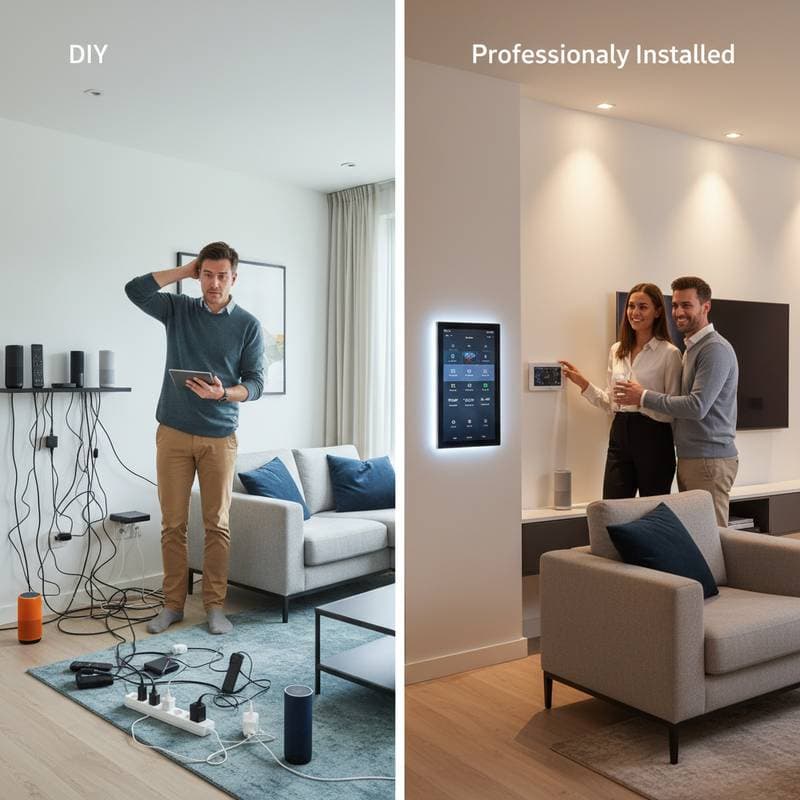
DIY Versus Professional: Realizing Your Smart Home's Potential
Many homeowners experience frustration when smart devices fail to operate in unison. Initial purchases of items like connected lights or voice assistants often lead to disjointed functionality, marked by multiple applications, delayed responses, and constant adjustments. The ideal vision of coordinated control over lighting, security, and climate systems remains elusive without proper integration. Homeowners must evaluate whether to persist with self-assembly or engage experts to create a dependable framework.
This examination details the advantages of each method, associated expenses, and strategies for selection to fully activate your smart home capabilities.
Analyzing Expenses and Financial Implications
Cost serves as a primary consideration when choosing between self-managed and expert-led smart home setups. Initial differences appear substantial, yet long-term performance variations merit attention.
| Setup Category | Estimated Initial Expense | Required Expertise | Ongoing Care |
|---|---|---|---|
| Basic DIY Configuration | $300 to $1,000 | Entry-level | Regular issue resolution |
| Combined Approach | $1,000 to $3,500 | Moderate | Periodic enhancements |
| Expert-Led Deployment | $4,000 to $15,000 or more | None needed | Limited intervention |
Self-directed systems appeal through gradual expansion. Individuals may invest modestly in essentials such as intelligent outlets, LED fixtures, and detectors. Expert deployments resemble foundational upgrades, involving structured cabling, precise tuning, and comprehensive linkage for enduring operation.
Beyond surface figures, account for indirect costs including hours spent on diagnostics, product exchanges, or connectivity failures. Although self-setup presents lower entry barriers, the assurance of expert precision frequently justifies the investment over extended periods.
Hidden Costs in Self-Directed Projects
Time represents a significant overlooked element. Resolving compatibility issues between brands like Philips Hue and Nest can consume weekends. Device incompatibilities might necessitate replacements, inflating budgets unexpectedly. Professional services mitigate these by pre-assessing compatibility during planning.
Expert Installation: Achieving Unified Operation and Durability
Expert deployment eliminates uncertainties in advanced technology implementation. Qualified technicians craft solutions suited to your residence's architecture, electrical framework, and daily routines. Outcomes include synchronized responses across illumination, environmental controls, and media, accessible via a single interface or control station.
Primary Advantages of Expert Services
-
Dependability: Configurations utilize secure wiring or isolated networks, minimizing reliance on standard wireless signals.
-
Personalization: Technicians configure intricate routines, such as an "Absence Protocol" that secures entry points, dims interior lights, and optimizes heating settings upon departure.
-
Growth Potential: Additions for new areas or capabilities integrate without foundational overhauls.
-
Assistance: Continuous monitoring or virtual support maintains optimal function.
Challenges with Expert Approaches
Upfront investments cover skilled labor and high-quality components. Minor modifications, like incorporating a new sensor, could involve appointment scheduling. Certain ecosystems restrict compatibility to approved providers, limiting choices.
Individuals valuing consistency, visual appeal, and future-proofing find expert integration provides superior tranquility compared to independent efforts.
Prioritizing Security, Protection, and Regulatory Compliance
Connected devices interface with electrical sources, access controls, and surveillance tools. Self-managed installations typically employ low-energy links, but integrations like fixed climate regulators or circuit integrations demand adherence to regional standards. Before any electrical handling, deactivate circuits at the main panel and confirm absence of current using appropriate meters.
Trained professionals adhere to National Electrical Code standards and device specifications. They position critical elements, including alert systems and barriers, to preserve guarantees and functionality. For projects altering power distribution, seek guidance from certified specialists to avoid hazards.
Essential Safety Practices for All Setups
-
Verify device certifications for cybersecurity features, such as encrypted communications.
-
Update firmware routinely to address vulnerabilities.
-
Segment networks to isolate guest access from core home controls.
These measures safeguard against breaches, ensuring your intelligent environment enhances rather than endangers well-being.
Steps to Implement Your Chosen Strategy
Both routes can yield an enhanced, streamlined residence with deliberate preparation. Begin by outlining desired outcomes, such as simplified daily activations or remote oversight. Assess your technical affinity, financial limits, and expansion intentions.
For DIY enthusiasts, select interoperable platforms like those supporting Matter standards to ease future additions. Hybrid options blend self-purchases with targeted expert input for balanced results. Professionals excel in complex environments, delivering turnkey solutions.
Evaluating Your Readiness
List current devices and compatibility gaps. Estimate time for setup against professional timelines. Consult reviews from similar households to gauge satisfaction. This process aligns your selection with practical realities.
Securing Lasting Benefits from Your Smart Home
A well-executed smart home transcends mere convenience, fostering energy efficiency and intuitive living. Integration resolves initial pitfalls, transforming potential frustrations into reliable enhancements. By choosing the approach that matches your circumstances, you invest in a responsive space that evolves with your needs, delivering enduring efficiency and control.