
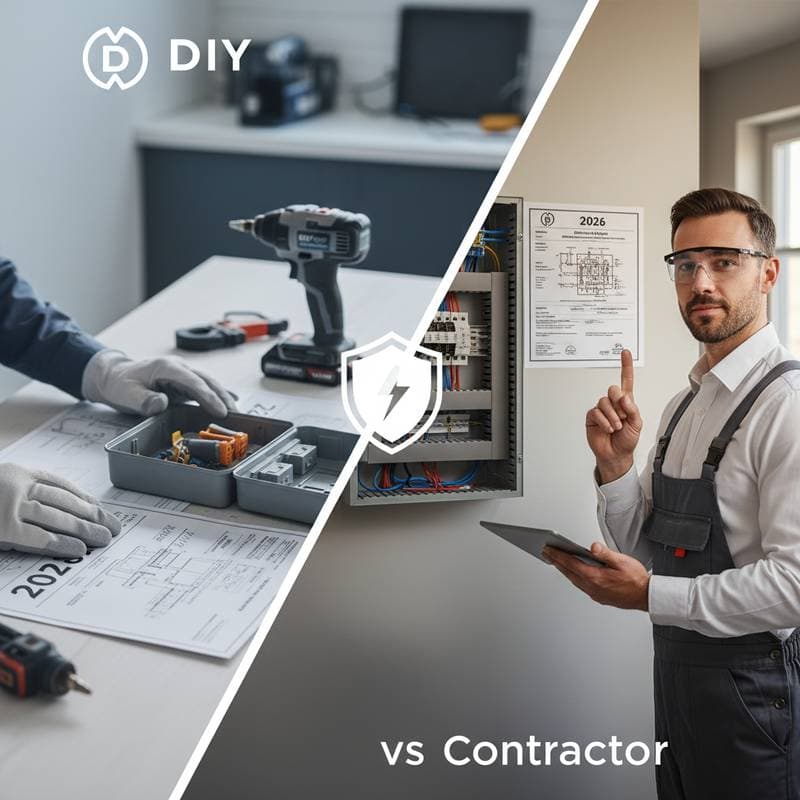
Navigating 2026 DIY Electrical Projects: Permits and Professional Requirements
Homeowners often approach electrical tasks with enthusiasm, envisioning cost savings and skill development. However, certain electrical modifications demand permits and licensed professionals to ensure compliance with safety standards. Local building codes delineate clear boundaries between permissible DIY efforts and work reserved for certified electricians.
Before initiating any electrical alteration, such as rewiring a kitchen or installing outdoor lighting, verify permit requirements. These regulations safeguard occupants, property, and infrastructure by verifying that installations align with national and local standards, including the National Electrical Code (NEC). This guide distinguishes DIY-friendly tasks from those necessitating expert intervention.
The Purpose of Electrical Permits
Electrical permits function as essential oversight mechanisms, mandating inspections to confirm adherence to safety protocols. Absence of proper documentation may result in insurance claim denials following incidents like electrical fires. During property sales, undisclosed modifications can complicate transactions or diminish value.
Permits establish a verifiable record of compliance, mitigating concealed risks within structural elements. They promote systematic evaluation, ensuring electrical systems support intended loads without compromise.
Triggers for Permit Requirements
Permits typically apply to projects involving:
- Installation of wiring or outlets in novel positions
- Replacement or enhancement of electrical panels
- Addition of circuits or subpanels
- Routing of wiring through structural cavities
- Establishment of permanent outdoor electrical features
In contrast, permits prove unnecessary for straightforward substitutions, such as replacing a faulty outlet or light fixture, provided existing wiring configurations remain unaltered. Alterations to circuits or wiring extensions invariably necessitate professional oversight.
Projects Mandating Permits and Licensed Expertise
Projects impacting systemic safety or capacity require permits and certified execution. These interventions influence the home's electrical integrity comprehensively.
1. Upgrading Service Panels
Transitioning from an obsolete panel to a higher-amperage unit accommodates modern demands, including appliances, solar systems, or vehicle charging stations. This procedure mandates a permit and licensed electrician involvement, as it entails utility disconnection. Professional execution prevents disruptions to service and ensures precise integration.
Associated costs span $1,500 to $3,000, influenced by panel specifications and local labor. Electricians coordinate with utilities for safe isolation, followed by meticulous reconnection and testing.
2. Incorporating New Circuits
Expanding living spaces, such as home offices or workshops, frequently requires supplementary circuits for appliances. This entails threading new wiring through enclosures and interfacing with the main panel, a process subject to permit due to potential overload or ignition risks from improper execution.
Licensed professionals calculate load requirements, select appropriate wire gauges, and install arc-fault circuit interrupters (AFCIs) where mandated. DIY attempts risk code violations and hazardous imbalances.
3. Outdoor Installations and Hot Tubs
Exterior electrical additions demand heightened resilience against environmental factors, including moisture and temperature fluctuations. Connections to the primary system, like hot tubs or landscape illumination, necessitate permits and inspections to verify weatherproof enclosures, ground-fault circuit interrupter (GFCI) protection, and grounding integrity.
Professionals employ buried conduits or aerial-rated cables, adhering to burial depth standards (typically 18-24 inches for direct burial wire). Such measures avert corrosion and electrocution hazards.
4. Comprehensive Rewiring in Older Structures
Homes featuring antiquated systems, such as knob-and-tube or aluminum wiring, benefit from full rewiring to eliminate fire vulnerabilities. This extensive endeavor involves structural modifications, circuit redistribution, and load equalization, rendering it unsuitable for DIY.
Costs range from $4,000 to $10,000, contingent on square footage and accessibility. Licensed teams assess asbestos presence in older insulation and coordinate phased disruptions to minimize inconvenience.
Consequences of Bypassing Permits
Foregoing permits may appear expedient initially, yet it invites substantial repercussions.
- Insurance Complications: Claims related to electrical failures may face rejection if unpermitted alterations contributed.
- Property Transaction Hurdles: Inspections frequently identify undocumented changes, potentially reducing offers or prolonging sales.
- Operational Hazards: Substandard joints foster arcing, short circuits, or thermal buildup, manifesting unpredictably.
- Regulatory Penalties: Municipalities impose fines or mandate demolition and reconstruction of noncompliant installations.
These outcomes underscore that initial economies seldom justify long-term liabilities.
Project Cost Projections and Scheduling
Permit expenditures fluctuate regionally, from $50 for minor circuit additions to $500 for panel overhauls. Evaluations occur in phases: rough-in assessments prior to enclosure and final verifications post-installation.
Licensed electrician rates average $75 to $150 hourly, reflecting expedited completion and error minimization. Substantial undertakings span one to three days, plus inspection intervals. Budget-conscious homeowners may undertake preparatory tasks, like surface removal or path mapping, while deferring energized components to experts.
Essential Safety Protocols for DIY Enthusiasts
All electrical engagements harbor inherent dangers, demanding rigorous precautions.
- Deactivate power via the breaker panel before commencing.
- Employ a non-contact voltage detector to validate de-energization.
- Avoid intermingling copper and aluminum conductors absent specialized pigtail adapters.
- Affix precise labels to breakers for future reference.
- Procure components calibrated to project voltage and current ratings.
Adherence to these steps curtails shock and fire probabilities.
Sustaining Electrical System Reliability
Post-project maintenance preserves investment longevity. Schedule annual inspections to detect wear, corrosion, or loose connections. Update surge protectors biennially and monitor for unusual heat or flickering, signaling prompt professional evaluation.
By integrating permits and expertise into planning, homeowners foster enduring safety and efficiency. This approach not only complies with 2026 regulations but also enhances property resilience against evolving electrical demands.