
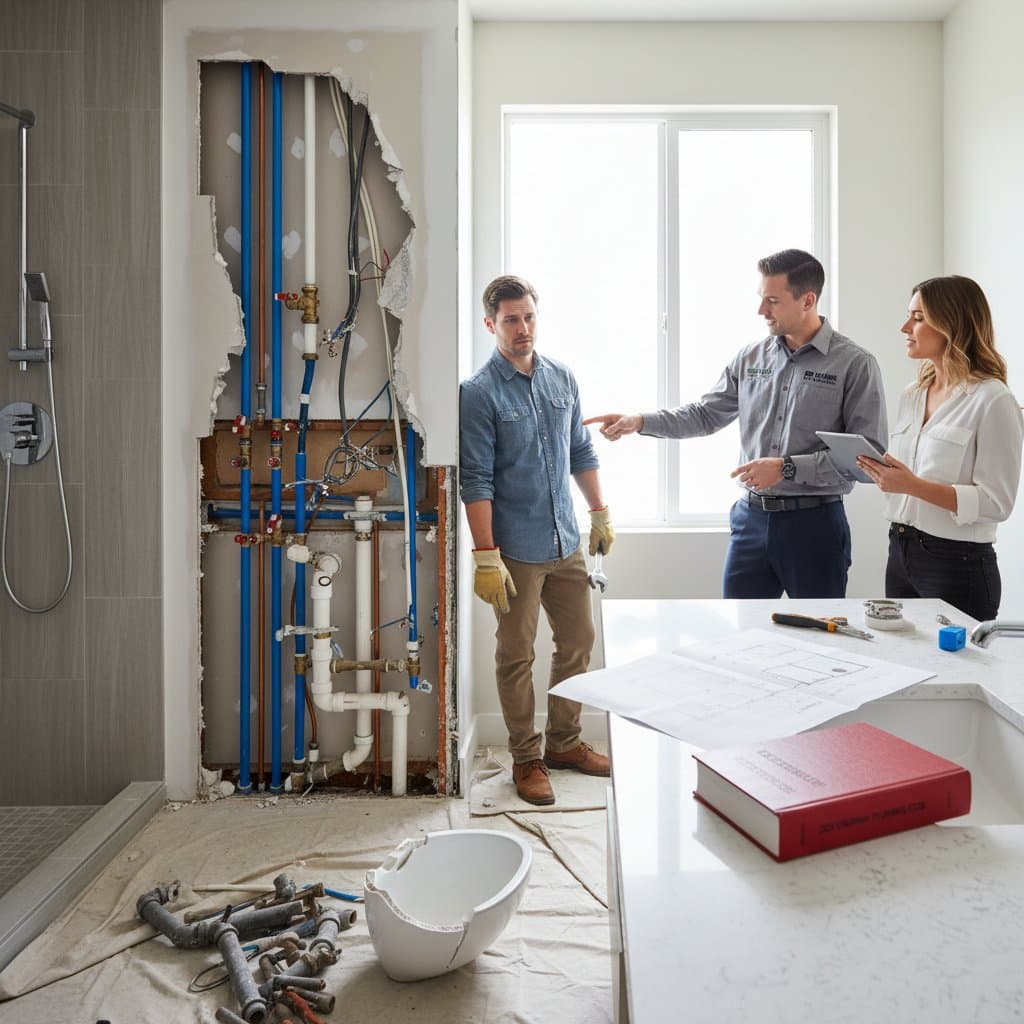
Why DIY Bathroom Remodels Demand a Professional Plumber
If you have ever stood in your bathroom with paint samples in one hand and a wrench in the other, you have likely asked yourself whether you can truly handle this remodel alone. The promise of saving thousands in labor costs appears tempting. After all, how difficult could it be to replace a sink, reroute a drain, or move that showerhead a few inches higher? However, bathrooms conceal a complex network of plumbing systems, pressure balances, and code requirements that can transform a simple DIY dream into a costly nightmare.
Before you begin tearing out tile or disconnecting pipes, consider why hiring a professional plumber for your bathroom remodel represents not just a smart choice but often a necessary one for safety, compliance, and long-term value.
Understanding Plumbing Codes and Their Importance
Every region enforces plumbing codes to protect homeowners from contamination, flooding, and structural damage. These codes specify how pipes must be sized and connected, how fixtures require venting, and where shut-off valves need placement.
If you undertake a remodel without grasping these rules, you risk violating code requirements that render your home unsafe or uninsurable. For example, selecting the wrong trap size or omitting an air admittance valve can permit sewer gases to enter your bathroom. In addition, an inspector might fail your remodel during a home resale, requiring expensive corrections before closing the deal.
A licensed plumber receives training to adhere to local and national plumbing codes. Such professionals understand when a permit becomes necessary, how to pass inspections, and how to document work to maintain compliance. This assurance provides value that exceeds any short-term savings.
Navigating Permits to Avoid Costly Oversights
Many homeowners bypass permits to conserve time, yet permits serve to protect you. They verify that remodeling work aligns with safety and structural standards. In most areas, projects involving new drain lines, significant fixture relocation, or water heater replacement demand a plumbing permit.
Should you remodel without obtaining one, your insurance might decline coverage for future water damage due to unverified work. Furthermore, unpermitted plumbing can delay or derail a home sale. Inspectors often require evidence that the remodel complies with current codes, and without it, you may need to expose walls or replace fixtures for verification.
A professional plumber manages this procedure on your behalf. They identify the required forms, schedule inspections, and ensure everything passes on the initial attempt. This approach spares weeks of frustration and unforeseen costs.
Prioritizing Safety in Bathroom Plumbing Projects
Water and electricity maintain a hazardous interaction in bathrooms. If your work occurs near outlets, lighting, or heated floors, a single error can generate severe risks. Professional plumbers collaborate with electricians to confirm proper grounding and bonding, thereby minimizing the potential for shock or fire.
These experts also possess training to manage high water pressure securely. A abrupt burst from a pressurized pipe can inflict injury or cause flooding in mere minutes. Professionals employ pressure gauges, pipe supports, and shut-off protocols to address these dangers effectively.
Safety encompasses more than immediate threats. Inadequate venting can produce air pressure imbalances that force sewer gases back into your home. A licensed plumber guarantees that every connection seals and vents correctly, safeguarding your health and the home's air quality.
Identifying and Avoiding Common DIY Plumbing Errors
Even diligent homeowners encounter mistakes during plumbing tasks. The following list highlights frequent and expensive errors to recognize:
-
Incorrect pipe slope: Drain lines require a precise angle for optimal flow. An angle that proves too steep allows water to outpace waste. One that remains too shallow promotes rapid clogs.
-
Mismatched materials: Combining copper and galvanized steel without a dielectric fitting leads to corrosion that compromises the system.
-
Omitted vent pipes: Without adequate venting, water siphons from traps, permitting sewer gases to infiltrate your bathroom.
-
Excessive tightening of fittings: Applying too much force easily cracks connectors or strips threads.
-
Neglected water pressure balance: Imbalanced pressure results in scalding hot water or insufficient flow, particularly in showers.
-
Faulty sealing: Incorrect application of silicone or thread tape creates leaks that remain undetected until damage emerges.
A plumber circumvents these problems through established installation methods and thorough verification of each connection prior to enclosing walls or floors.
Practical Strategies for a Successful Remodel
If you prepare to initiate your bathroom remodel, implement these strategies to optimize collaboration with a professional plumber:
-
Involve the plumber early: Consult a plumber before commencing demolition. They can pinpoint walls housing critical plumbing lines and recommend fixture placements.
-
Solicit multiple quotes: Evaluate plumbers according to experience, references, and warranty offerings, rather than price alone.
-
Inquire about permits: Verify who assumes responsibility for paperwork and inspections.
-
Select quality materials: Inexpensive fittings offer initial savings but typically fail prematurely.
-
Coordinate scheduling: Align plumbing tasks with tile installation and electrical work to prevent delays.
-
Articulate your objectives: Specify your budget, timeline, and design preferences clearly.
Realizing the Benefits of Professional Installation
Once the water flows clearly, drains operate smoothly, and new fixtures gleam, you will experience the pride and relief of a well-executed remodel. You will recognize that every pipe behind the walls installs safely and legally, with each fixture functioning as designed.
A professional plumber enables more than the feasibility of your remodel. They ensure reliability, efficiency, and durability. Therefore, even if you embrace the DIY approach, acknowledge the boundaries of your expertise and the value of professional intervention.