
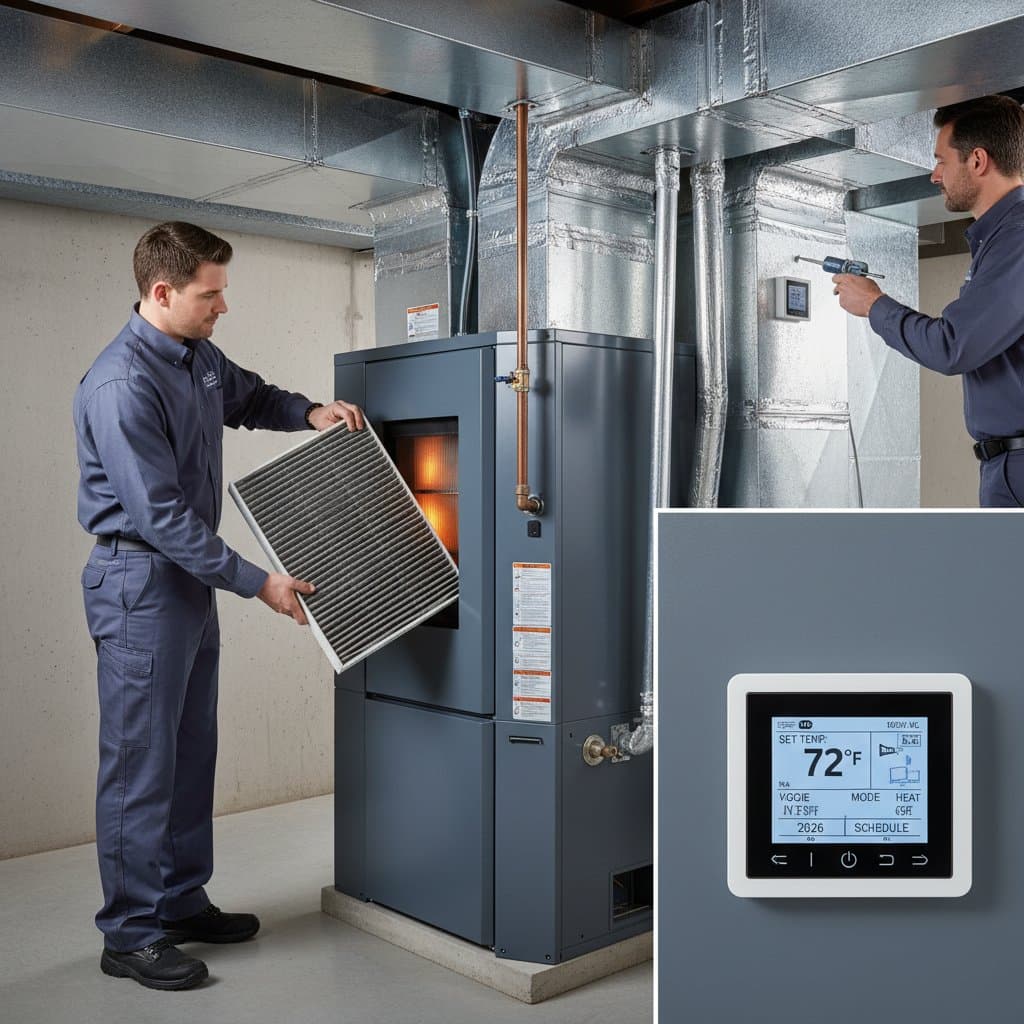
Cost for professional inspection: $100 to $200.
Step 6: Inspect Blower Belt and Motor
Noisy operation often signals a worn blower belt or dry motor bearings. Power down the system and inspect the belt for cracks, glazing, or looseness. Replace belts showing wear to prevent sudden failures.
Motor care: Apply lightweight machine oil to ports on older models as specified in the manual.
Cost: Belts cost $10 to $30; motor lubrication is free with proper oil.
Skill level: Suitable for moderate DIY; seek expert help if unsure.
Step 7: Schedule Professional Tune-Up
Annual inspections by certified technicians identify issues early. They clean coils, check refrigerant levels, and test controls comprehensively. Book appointments before winter demand peaks to secure timely service.
What to expect: Technicians measure airflow, combustion efficiency, and safety controls.
Cost: $75 to $200 per visit, depending on location and system type.
Step 8: Seal Ductwork Leaks
Leaky ducts lose up to 30 percent of conditioned air, increasing energy demands. Examine accessible ducts in attics, basements, and crawl spaces for separations or punctures. Apply mastic sealant or foil tape to repair gaps.
Key advice: Avoid standard cloth tape, which degrades under temperature fluctuations.
Professional service: Aeroseal or similar methods cost $300 to $700 and offer long-term efficiency gains.
Step 9: Clear the Condensate Drain Line
High-efficiency furnaces produce acidic condensate that must drain properly. Locate the PVC line near the unit and flush it with a solution of warm water and vinegar to dissolve buildup.
Steps:
- Inspect the drain pan for standing water or corrosion.
- Use a wet-dry vacuum to remove clogs if flushing fails.
Warning: Rusty pans require immediate replacement to prevent water damage.
Cost: DIY materials under $10; professional clearing $100 to $150.
Step 10: Assess System Age and Efficiency
Units over 15 years old often operate below 80 percent efficiency. Review repair history; if costs exceed 50 percent of replacement value, consider upgrading. Modern systems achieve 95 percent or higher AFUE ratings, reducing fuel use significantly.
Upgrade benefits: Lower emissions and eligibility for rebates or tax credits.
Cost: Installations range from $3,000 to $7,000.
Timeline: Energy savings recoup investment in five to eight years.
Step 11: Check Insulation Around the Unit
Inadequate insulation around the HVAC equipment leads to heat loss. Inspect and repair weatherstripping on access panels and doors. Add insulation to unconditioned spaces near the system if needed.
Exterior consideration: Clear snow and debris from outdoor units to maintain airflow.
Cost: Basic insulation materials $20 to $50.
Step 12: Monitor Indoor Humidity Levels
Winter heating dries indoor air, causing health issues and material damage. Maintain 30 to 50 percent relative humidity using a hygrometer for measurement. Integrate a humidifier with the HVAC system for consistent control.
Options: Portable units suit small spaces; whole-home models connect directly to the furnace.
Cost: Portable from $50; installed systems $400 to $900.
Upkeep: Clean pads monthly to prevent mold growth.
Step 13: Document Maintenance Records
Keep a log of all service dates, filter changes, and repairs. This record aids warranty claims and tracks system performance over time. Review it annually to plan future needs.
Digital tools: Use apps or spreadsheets for easy access.
Step 14: Plan for Emergency Preparedness
Prepare a backup heating plan, such as space heaters, for unexpected outages. Stock batteries for detectors and flashlights. Know your system's shut-off procedures for safety.
Insurance check: Verify coverage for HVAC-related damages.
Strategies for Long-Term Reliability
Perform maintenance early to sidestep seasonal rushes. Combine HVAC tasks with other home winterizations, like attic insulation audits. Select durable components to maximize system longevity and warranty protection.
Prioritize safety by disconnecting power before any hands-on work. Consult professionals for diagnostics beyond basic checks. These practices ensure a warmer, more efficient home through winter and beyond.