
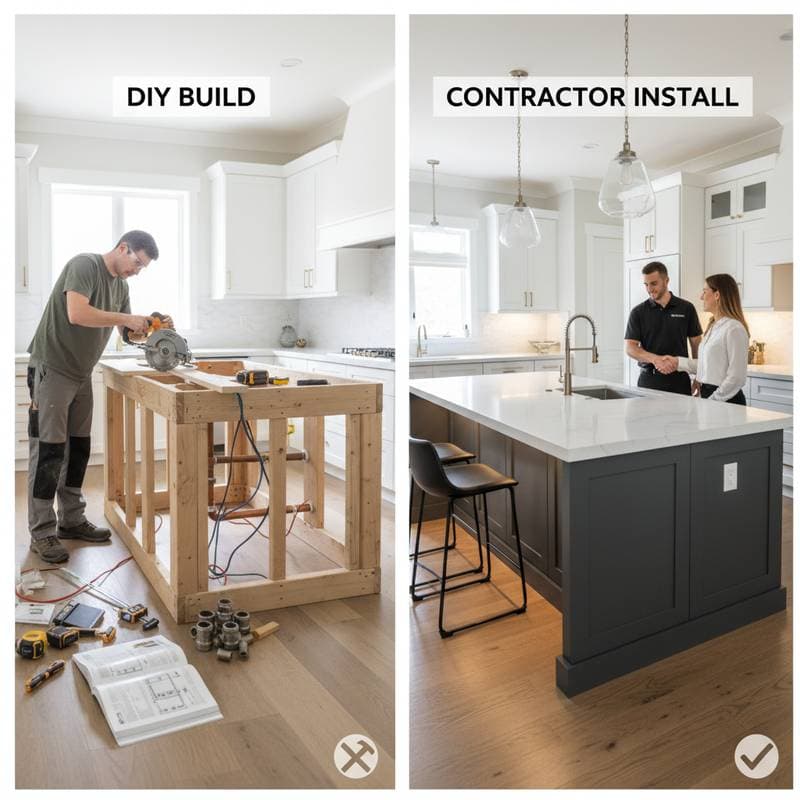
Weighing DIY Against Professional Installation for Kitchen Islands
The decision to build a kitchen island yourself or hire a professional hinges on project scope and personal expertise. Kitchen islands vary from basic freestanding units to intricate installations involving utilities. Success requires evaluating complexity, skills, and regulatory demands that experts manage routinely.
Key Elements of a Kitchen Island Project
A kitchen island extends beyond additional workspace; it influences cooking efficiency, social gatherings, and navigation in the kitchen. For a straightforward DIY version, expenses typically range from $400 to $1,500, influenced by material selections and surface treatments. In contrast, a professional setup incorporating plumbing, electrical features, and bespoke storage may cost $4,000 to $8,000 or higher.
This cost disparity stems from technical intricacies. Incorporating power sources, illumination, or a basin necessitates connections to current systems, adherence to building codes, acquisition of permits, and official inspections. While assembling cabinets and securing countertops falls within DIY capabilities, modifying utility lines introduces significant hazards.
Advantages and Challenges of the DIY Approach
Opt for DIY when the island remains mobile or fixed without utility integrations. This method yields substantial savings, develops practical abilities, and delivers the fulfillment of personal craftsmanship. Essential steps encompass:
-
Design and Dimension Assessment: Ensure minimum 36-inch clearances around the island to support smooth movement. Insufficient space risks congestion and accidents.
-
Framework Construction: Utilize ready-made base cabinets or repurposed furnishings as the core structure.
-
Surface Attachment: Select options like hardwood slabs, synthetic laminates, or composite stones, aligned with financial limits and available equipment.
-
Customization Elements: Apply coatings, edging, or fixtures to match existing decor.
Primary concerns for independent builders include foundation durability and regulatory adherence. An inadequately secured unit may wobble with use, while unevenly supported surfaces invite fractures. Introducing power outlets or heating elements enters a domain of strict oversight; local authorities often mandate approvals for modifications, and insurers may reject coverage for unauthorized alterations causing harm.
To mitigate these issues, consult building guidelines early and test stability with weighted loads before final assembly. For instance, anchor the base to subflooring using appropriate fasteners rated for the expected weight, which can exceed 500 pounds for larger designs.
Benefits of Engaging a Professional
A certified specialist eliminates uncertainties by expertly merging utilities, adjusting for floor irregularities, and satisfying jurisdictional standards. Professionals possess coverage for liabilities and offer guarantees on their installations, shielding homeowners from financial repercussions of errors.
Anticipate hourly rates of $75 to $150 for services in woodworking, pipe fitting, and circuit work. Although the initial outlay appears considerable, it secures tranquility and enhances property appeal. Potential buyers value verified installations, as evaluations and audits readily distinguish quality workmanship, potentially boosting market value by 5 to 10 percent in kitchen-focused appraisals.
Professionals also streamline timelines, often completing integrations in phases that align with permit approvals, reducing overall disruption to daily routines.
Indicators Requiring Expert Intervention
Projects can evolve from modest to demanding. Seek professional assistance if these conditions arise:
-
Integration of a basin, appliance, or heating surface into the island.
-
Addition of power access or fixtures within the structure.
-
Presence of irregular or inclined flooring necessitating adjustments.
-
Electrical system approaching its maximum load.
-
Uncertainty regarding regional regulations or approval procedures.
Overlooking these prompts endangers safety, results in inspection failures, or provokes hazards like circuit overloads. Experts not only apply technical proficiency but also expedite administrative tasks, coordinating with officials to avoid delays.
Strategies to Control Expenses Regardless of Method
Intelligent preparation curbs expenditures even under professional oversight. Effective approaches include:
-
Combine Independent and Expert Efforts: Manage site preparation, surface treatments, and detailing personally, reserving utility modifications for qualified personnel.
-
Select Standard Storage Units: Tailored designs impress yet inflate budgets threefold; prefabricated or partially customized options blend seamlessly post-finishing.
-
Opt for Balanced Material Choices: Durable timber surfaces or fabricated stones deliver premium appearance at reduced rates compared to natural luxury options.
-
Strategize Utility Positions in Advance: Relocating lines mid-project escalates costs dramatically; initial blueprints prevent such adjustments.
Detailed scheduling averts unforeseen issues and adheres to projected durations. Simple assemblies conclude over a weekend, whereas advanced setups span one to two weeks, factoring in reviews and specialist schedules.
Prioritizing Safety and Enduring Benefits
Tool proficiency does not excuse safety oversights. Disconnect electricity at the main panel prior to proximity with wiring, employ protective gear for vision and grasp, and confirm support capacity before mounting substantial tops. For any doubts on framework or circuits, schedule a brief review with a qualified inspector; the fee for such an evaluation pales against remediation of failures like structural collapses or faulty connections.
Long-term, compliant installations preserve functionality and aesthetics, resisting daily wear. Regular maintenance, such as annual sealant applications, extends lifespan and upholds hygiene standards essential for food preparation areas.
Practical Recommendations for Optimal Results
-
Outline Spatial Arrangement: Employ adhesive tape on the floor to simulate boundaries and assess usability.
-
Assemble Supplies in Advance: Procurement interruptions frequently prolong efforts; compile a comprehensive inventory upfront.
-
Monitor Evenness and Positioning Regularly: Minor deviations impair operational elements like storage access.
-
Conclude with Protective Measures: Seal surfaces against moisture and abrasion to ensure longevity.
-
Document the Process: Record measurements and steps for future reference or resale documentation.
-
Evaluate Post-Installation: Test all features for stability and convenience, making minor tweaks as needed.
Implementing these practices transforms a kitchen island into a reliable asset, enhancing both utility and enjoyment for years ahead.