
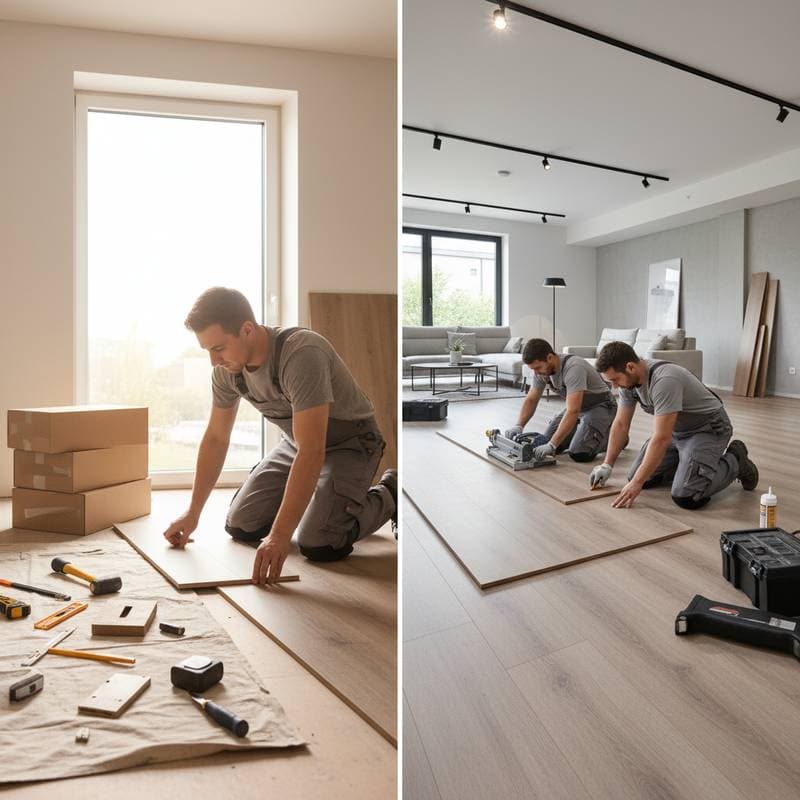
DIY LVP Flooring: Weigh Savings Against Professional Precision
Luxury vinyl plank flooring, known as LVP, attracts homeowners seeking hardwood appearance at a lower cost and with reduced upkeep. This material resists water, withstands heavy use, and supports relatively simple installation. The central decision involves whether to tackle the project personally or engage a specialist. Factors such as technical ability, available time, and acceptance of potential flaws influence this choice.
LVP installation ranks among the more accessible home improvement endeavors for non-experts. However, apparent ease can mislead. Minor errors may result in irregular joints, spaces, or planks that rise over time. To make an informed choice, evaluate the actual expenses, required equipment, and techniques needed for a seamless outcome.
Key Features That Support DIY LVP Installation
LVP incorporates tongue-and-groove edges that lock securely without adhesives or fasteners. The planks rest loosely atop the subfloor, which streamlines the process compared to conventional options like tile or solid wood. Many manufacturers integrate underlayment directly into the planks, reducing preparatory steps.
This design offers DIY enthusiasts significant adaptability. Work proceeds room by room, with pauses possible between areas, and individual planks can be swapped out for repairs without disrupting the whole surface. LVP also accommodates slight subfloor irregularities more readily than rigid materials, often eliminating the need for major leveling.
Despite these conveniences, the system demands attention to specifics. Allow planks to acclimate to room conditions, maintain expansion gaps around edges, and align rows meticulously. Neglect in these areas invites problems like visible separations or distortion from environmental shifts in humidity and temperature.
Frequent DIY Errors and Prevention Strategies
Experienced hobbyists occasionally encounter challenges during LVP projects. Below are typical problems along with methods to sidestep them.
- Overlooking subfloor preparation: Irregular bases create uneven wear and openings. Measure and level the surface thoroughly prior to laying planks.
- Bypassing acclimation period: Placing unadjusted material risks future deformation. Position boxes in the installation space for a minimum of 48 hours beforehand.
- Neglecting expansion allowances: Without perimeter gaps, the floor may buckle under stress. Apply uniform spacers along walls and obstacles.
- Inadequate layout design: Arbitrary arrangement ignores natural plank variations, yielding an unnatural appearance. Plan patterns to distribute colors and textures evenly.
- Hastening edge details: Transitions at doors and borders demand accurate trimming. Proceed methodically to secure smooth connections and alignments.
Patience combined with precise measuring, cutting, and adherence to guidelines enables results comparable to expert work. For those comfortable with basic tools, success lies within reach.
Scenarios Favoring Professional Assistance
Certain situations render expert involvement the wiser option. Subfloors with pronounced unevenness, dampness issues, or needs for filler applications benefit from professional assessment and correction. Expansive areas or spaces with complex contours and numerous transitions introduce variables best addressed by seasoned teams.
Experts deliver efficiency in scheduling. A novice might require multiple days spread across weekends, whereas a trained group often finishes in hours. Warranties on their labor provide reassurance against future complications.
For properties nearing sale, certified installation enhances market appeal. Prospective buyers gain confidence from documentation of qualified workmanship, potentially justifying a higher valuation.
Analyzing Expenses and Enduring Benefits
LVP excels in balancing initial affordability with extended performance. Correctly installed and cared for, these floors endure 15 to 25 years or beyond, resisting scratches, stains, and fading.
Opting for DIY extends funds, permitting coverage of larger areas within budget limits. Yet, installation flaws compromise longevity. Shifting or gapping planks permit water entry, accelerating deterioration and necessitating early replacements.
Professional services incur higher immediate outlays but guarantee uniform execution compliant with building standards and product specifications. Review manufacturer terms carefully, as some invalidate coverage without verified installer credentials. Over time, this investment safeguards against costly fixes.
To quantify, expect material costs of $2 to $7 per square foot, depending on style and quality. DIY tools add $100 to $300 if not owned, while labor fees range from $2 to $5 per square foot for pros. Factor in preparation needs, such as subfloor repairs at $1 to $3 per square foot, to compare total investments accurately.
Everyday Upkeep for Lasting Performance
LVP demands minimal routine attention relative to alternatives like wood or engineered composites. Vacuum or sweep debris daily, followed by damp mopping using a gentle, vinyl-safe solution. Refrain from oil-based polishes or harsh abrasives that compromise the surface sheen.
Safeguard traffic zones with area rugs and attach protective pads to furniture bases to minimize scratches. Damaged sections replace easily on an individual basis, preserving the overall installation. This modularity suits busy households valuing convenience.
Annual inspections check for loose edges or moisture signs, allowing prompt interventions. Consistent habits extend the floor's service life and maintain its visual appeal.
Expert Recommendations for Optimal Results
Invest in reliable implements to ease the process. A rubber mallet with a tapping block secures joints without marring edges, a pull bar aids tight fits around perimeters, and plastic spacers ensure consistent gaps.
Inspect connections row by row, sliding a straightedge along seams to detect highs or lows. Blend material from several cartons during layout to harmonize subtle shade differences, mimicking natural wood grain.
Record the installation pattern through photographs and sketches, facilitating future matching for repairs. In concrete settings, test for excess humidity and incorporate a vapor retarder sheet to block potential damage.
Start small if new to the task: practice cuts on scraps and dry-lay a section to preview the full effect. These practices elevate amateur efforts to professional standards.
Securing Long-Term Floor Durability
A well-executed LVP installation transforms living spaces with style and resilience. Whether pursuing DIY economies or professional reliability, focus on preparation and detail yields returns in comfort and value. Regular maintenance reinforces this foundation, ensuring the floor performs reliably for years ahead.