
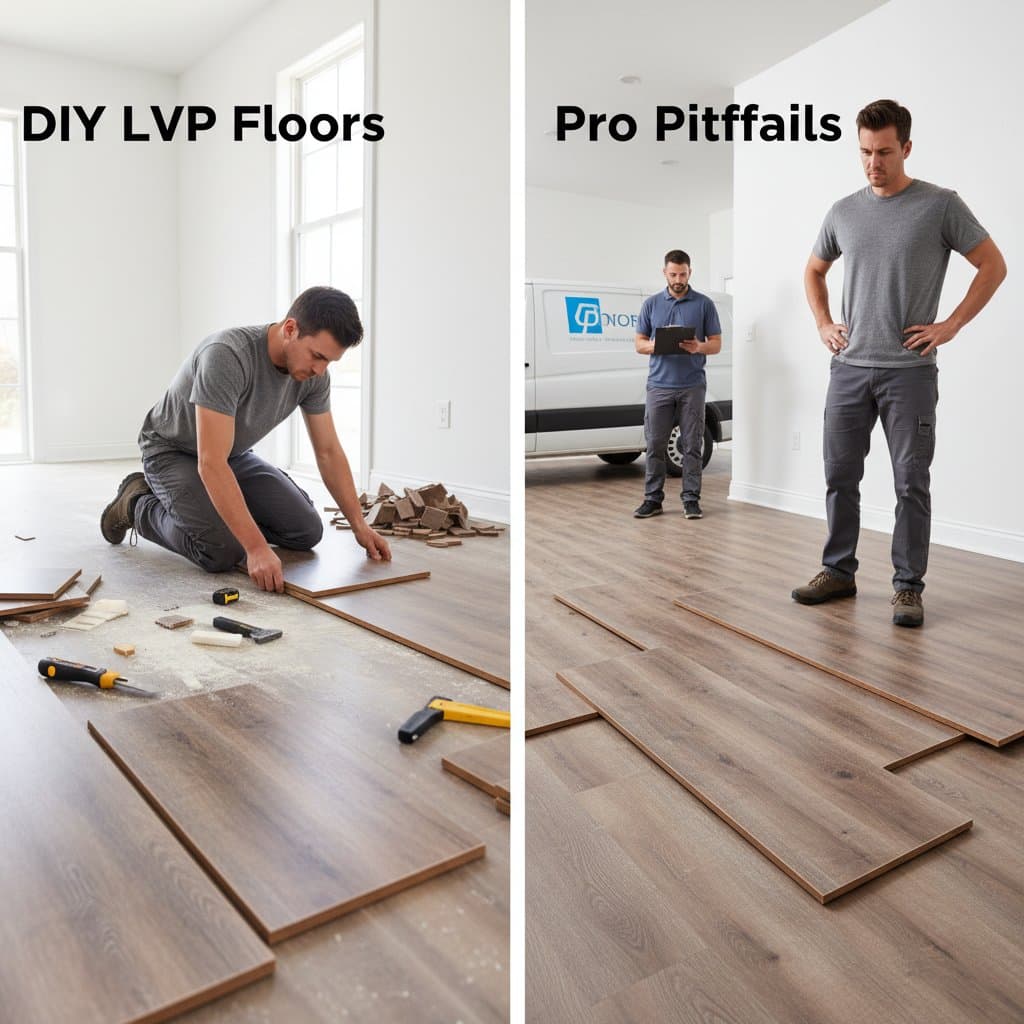
DIY LVP Flooring: Achieve Savings or Encounter Professional Challenges?
Homeowners often view renovation videos and consider tackling projects themselves. Luxury vinyl plank, or LVP, flooring presents a durable, attractive, and economical option for those seeking to replace worn carpet or damaged hardwood. Before accumulating boxes of planks, evaluate whether DIY installation yields genuine savings or invites expensive complications.
Reasons LVP Flooring Attracts DIY Enthusiasts
Marketing highlights effortless click-lock systems, water-resistant properties, and wood-like aesthetics at reduced costs. These features contribute to LVP's widespread adoption. Professional hardwood installation typically costs $6 to $12 per square foot, whereas LVP materials range from $2 to $4 per square foot. Including underlayment, trim, and basic tools, a homeowner can outfit a standard room for less than $500.
LVP proves more tolerant than alternatives like tile or solid wood. Installation requires no advanced cutting equipment or bonding agents. With diligence, a utility knife, and a tapping block, one can cover a room over a weekend. The project delivers quick aesthetic improvements and a sense of accomplishment.
Overlooked Expenses That Surprise DIY Installers
The gap between professional and DIY costs narrows quickly without caution. Labor fees from experts run $2 to $3 per square foot, encompassing accurate assessments, subfloor readiness, and protective details. Neglecting these elements risks irregular plank placement, visible seams, or shifting surfaces that reduce flooring longevity.
Materials such as subfloor leveling compounds, vapor barriers, and matching trim may increase expenses by $100 or more. Errors in cutting or plank damage further erode budget advantages. What begins as an economical endeavor can soon align with professional rates.
Assessing Required Skills
Promotional materials portray LVP installation as straightforward assembly. In practice, success demands precision and visual acuity. Key steps include the following:
- Measure accurately. Purchase 10 percent extra material to cover cuts, waste, and errors.
- Prepare the subfloor thoroughly. Clear debris, repair cracks, and level imperfections. Minor depressions lead to plank separation over time.
- Design the layout thoughtfully. Begin along the most prominent wall and offset joints to mimic natural patterns.
- Execute cuts with care. Employ a sharp utility knife or dedicated vinyl cutter to avoid fraying or jagged results.
Individuals who relish manual tasks and adhere to instructions find this project fulfilling. Those who dislike calculations, exact measurements, or extended kneeling positions benefit from professional assistance to preserve quality and composure.
Safety Measures and Essential Tools
LVP work avoids dangerous substances, yet basic precautions remain essential. Knee pads safeguard joints during prolonged floor time. Gloves prevent injuries from sharp edges during trimming. Maintain tool sharpness while ensuring stability to minimize accidents. In damp locations like basements, select LVP rated for moisture exposure, as lower-quality options may deform under prolonged wetness.
Acquire these tools for effective installation:
- Utility knife or specialized vinyl cutter
- Measuring tape and straightedge ruler
- Rubber mallet and tapping block
- Pull bar for compressing edges in confined spaces
- Spacers to establish consistent expansion gaps along walls
Borrowing or renting items controls expenses without sacrificing accuracy.
Situations That Necessitate Professional Intervention
Projects spanning several rooms, featuring intricate patterns, or requiring transitions to other surfaces like tile or carpet demand expert handling to avoid inefficiencies and future repairs. Professionals provide warranty-supported work, safeguarding against defects such as delamination or loosening. Homeowners facing irregular subfloors or underfloor heating systems gain reliability through specialized knowledge, justifying the added investment.
Strategies for Long-Term Preservation
After installation, simple habits sustain the floor's appeal. Attach felt protectors to furniture legs to prevent scratches. Regularly sweep or vacuum to remove grit. Clean with a solution formulated for vinyl surfaces, steering clear of steam methods that compromise joint integrity.
Practical Advice for Optimal Results
Allow planks to adjust to indoor conditions for 48 hours prior to layout. Blend tiles from various cartons to distribute subtle shade differences evenly. Maintain a tidy, illuminated work area to ensure precise cuts. Pause periodically to verify alignment and counteract weariness-induced errors.
Undertaking LVP installation personally fosters empowerment and fiscal prudence when approached with preparation and perseverance. The completed surface enhances daily living, whether through serene reflection or active enjoyment of the space.