
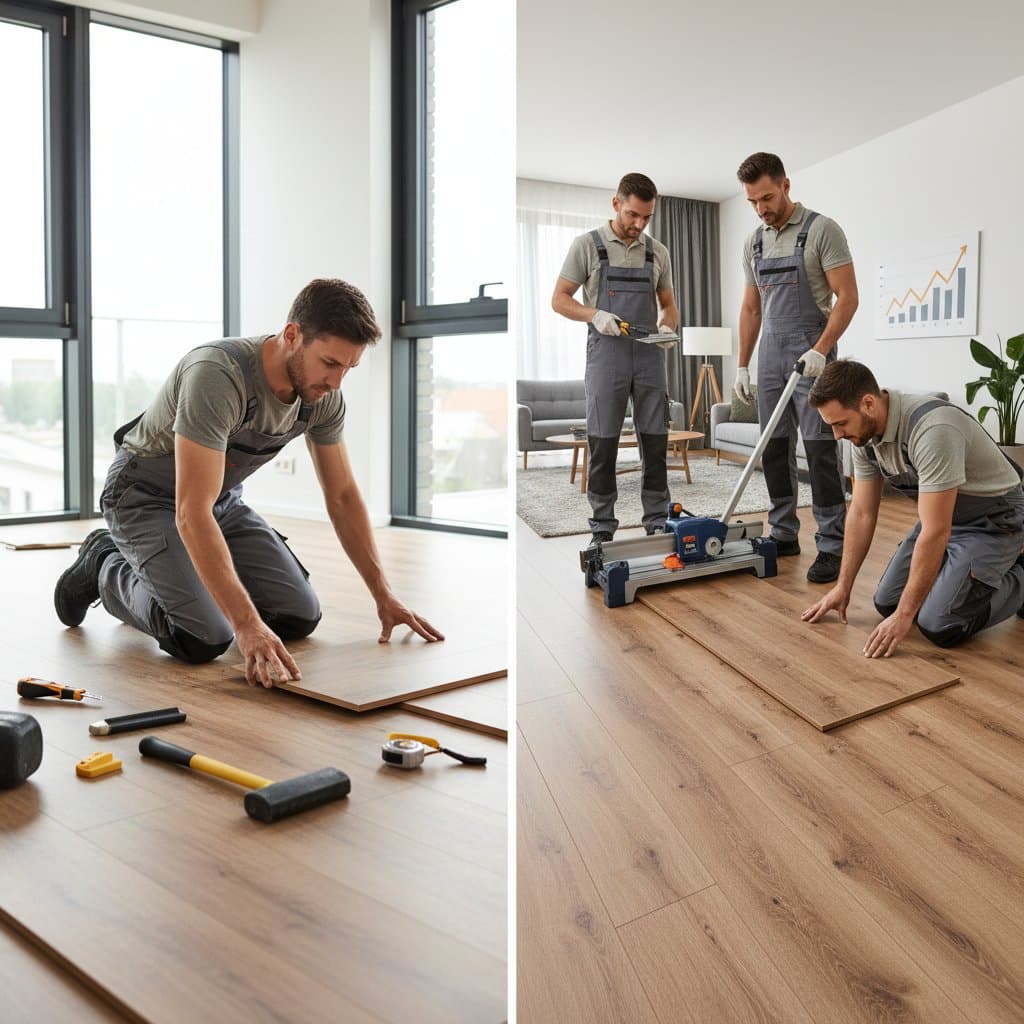
Installing LVP Floors: DIY Approach or Professional Expertise?
Homeowners often admire the polished appearance of luxury vinyl plank flooring displayed in home improvement stores, envisioning similar transformations in their own spaces. Luxury vinyl plank, known as LVP, provides the aesthetic appeal of hardwood floors without the associated expense or upkeep demands. The primary decision revolves around whether to undertake the installation independently or engage professional services. This choice hinges on individual skill levels, financial resources, and tolerance for effort.
Prior to purchasing materials, individuals should evaluate the full scope of the project. Manufacturers promote LVP as suitable for DIY efforts, yet success requires substantial preparation and precision. The outcome can range from a professional finish to noticeable imperfections, depending largely on thorough groundwork, appropriate equipment, and meticulous execution.
Appeal of the DIY Method: Reasons Homeowners Pursue It
The DIY approach attracts many due to opportunities for cost reduction and the accomplishment of completing the task personally. Additionally, it offers scheduling flexibility, allowing work in stages across rooms without reliance on external timelines.
Essential Tools and Materials for DIY:
- Utility knife or specialized vinyl cutter for precise trimming
- Rubber mallet to secure planks without damage
- Spacers to maintain necessary expansion gaps around perimeters
- Tape measure for accurate dimensions
- Straight edge or framing square to ensure straight lines
- Pull bar and tapping block for tight fits in confined areas
- Underlayment material, unless already integrated with the planks
Individuals possessing some of these items can minimize additional expenditures. Projects in small to medium rooms typically span one to two weekends, contingent on the worker's efficiency. Success demands patience, with equal time allocated to subfloor preparation and measurements as to the assembly of planks.
Advantages of DIY Installation:
- Reduced total expenses by eliminating labor fees
- Adaptable pacing to fit personal availability
- Sense of achievement from self-completion
- Opportunity to acquire practical skills
Disadvantages of DIY Installation:
- Significant time commitment required
- Potential for expensive errors in execution
- Necessity for precise measurements and cuts
- Physical exertion involved in handling materials
For those with basic carpentry abilities, the capacity to adhere to guidelines, and willingness to endure physical discomfort, DIY installation proves feasible. However, haste or omission of procedures may result in irregular seams or unstable planks over time.
Critical Preparation for LVP Installation
The process of installing LVP extends beyond mere plank assembly. Proper preparation of the subfloor determines the project's longevity and appearance. Surfaces must remain clean, flat, and moisture-free to prevent future issues.
Key Preparation Procedures:
- Evacuate and sanitize the area. Extract existing flooring materials and perform thorough sweeping. Residual particles or dirt can impede the interlocking mechanism of planks.
- Assess surface flatness. Employ a long straight edge to identify elevations or depressions. Deviations exceeding 3/16 inch over 10 feet require leveling compounds or sanding.
- Allow planks to acclimate. Position unopened boxes in the installation room for 48 to 72 hours to equilibrate with ambient conditions, minimizing expansion or contraction post-installation.
- Design the layout pattern. Conduct dry runs with sample rows to verify even distribution of plank widths along walls, avoiding narrow end pieces that compromise aesthetics.
Neglecting these measures heightens risks of gaps, buckling, or audible creaks. Professionals emphasize this phase, contributing to the superior durability of their installations.
Practical Timelines for Installation Projects
Flooring endeavors frequently exceed initial estimates, particularly when accounting for unforeseen adjustments. Even modest areas demand multiple sessions for comprehensive completion.
Sample DIY Timeline for a 200-Square-Foot Room:
- Day 1: Dismantle prior flooring, cleanse thoroughly, and evaluate subfloor integrity for repairs.
- Day 2: Introduce planks to the environment for acclimation and sketch preliminary layout diagrams.
- Day 3: Execute the core installation, including custom cuts around obstacles like vents or cabinets.
- Day 4: Install transition strips, reinstall baseboards, and conduct final inspections for alignment.
Professional teams typically finish equivalent tasks within a single day, leveraging experience and multiple workers. This efficiency comes at the expense of higher fees, presenting a balance between monetary outlay and personal time preservation. Those with constrained schedules may find the professional option more practical.
Financial Analysis: DIY Versus Professional Services
A detailed cost comparison illuminates the trade-offs for a typical 500-square-foot installation area.
| Category | DIY Estimate | Professional Estimate |
|---|---|---|
| LVP Materials | $1,000 - $2,500 | $1,000 - $2,500 |
| Tools and Supplies | $100 - $250 | Included in service fee |
| Labor | Personal effort | $1,000 - $2,000 |
| Total Cost | $1,100 - $2,750 | $2,000 - $4,500 |
| Time Required | 2-4 days | 1-2 days |
| Warranty Coverage | Manufacturer only | Full installation warranty |
This table illustrates potential savings through DIY, provided the value of personal labor remains low. For individuals prioritizing flawless execution and minimal disruption, professional involvement represents a worthwhile expenditure, often backed by guarantees against defects.
Expert Recommendations for Optimal Results
Certain techniques elevate the quality of LVP floors, applicable to both DIY and hired projects, yielding finishes comparable to high-end designs.
- Blend planks from several cartons. This practice distributes natural color and texture variations evenly, preventing clustered patterns.
- Apply painter's tape to cut edges. Secure the tape along the scoring line to avert splintering during the cutting process.
- Verify alignments frequently. Assemble test sections outside the final position to confirm locking mechanisms engage smoothly.
- Anticipate transition zones. Acquire compatible reducer strips or thresholds for junctions between rooms prior to commencement.
- Ensure adequate illumination. Utilize multiple light sources to detect subtle misalignments that might otherwise go unnoticed.
Incorporating these strategies distinguishes satisfactory outcomes from exceptional ones, inviting admiration from visitors.
Sustaining LVP Floors for Longevity
Post-installation care for LVP remains straightforward, preserving the surface with minimal routine. Daily maintenance involves gentle sweeping or vacuuming with a soft brush attachment to remove abrasive particles. For deeper cleaning, employ a microfiber mop dampened with a diluted, pH-neutral solution, ensuring no standing water accumulates.
Avoid abrasive pads, steam cleaners, or petroleum-based polishes, as these can compromise the protective wear layer. Address spills promptly with a clean cloth to prevent staining. With consistent practices, LVP withstands heavy foot traffic and pet activity for 15 to 25 years, maintaining its initial vibrancy.
Achieving Enduring Home Comfort
Selecting the appropriate installation method for LVP flooring enhances not only visual appeal but also daily functionality. DIY efforts suit capable individuals seeking economies and involvement, while professional services deliver reliability for complex scenarios. By weighing personal capabilities against project demands, homeowners secure floors that contribute to a welcoming, resilient living environment for years ahead.