
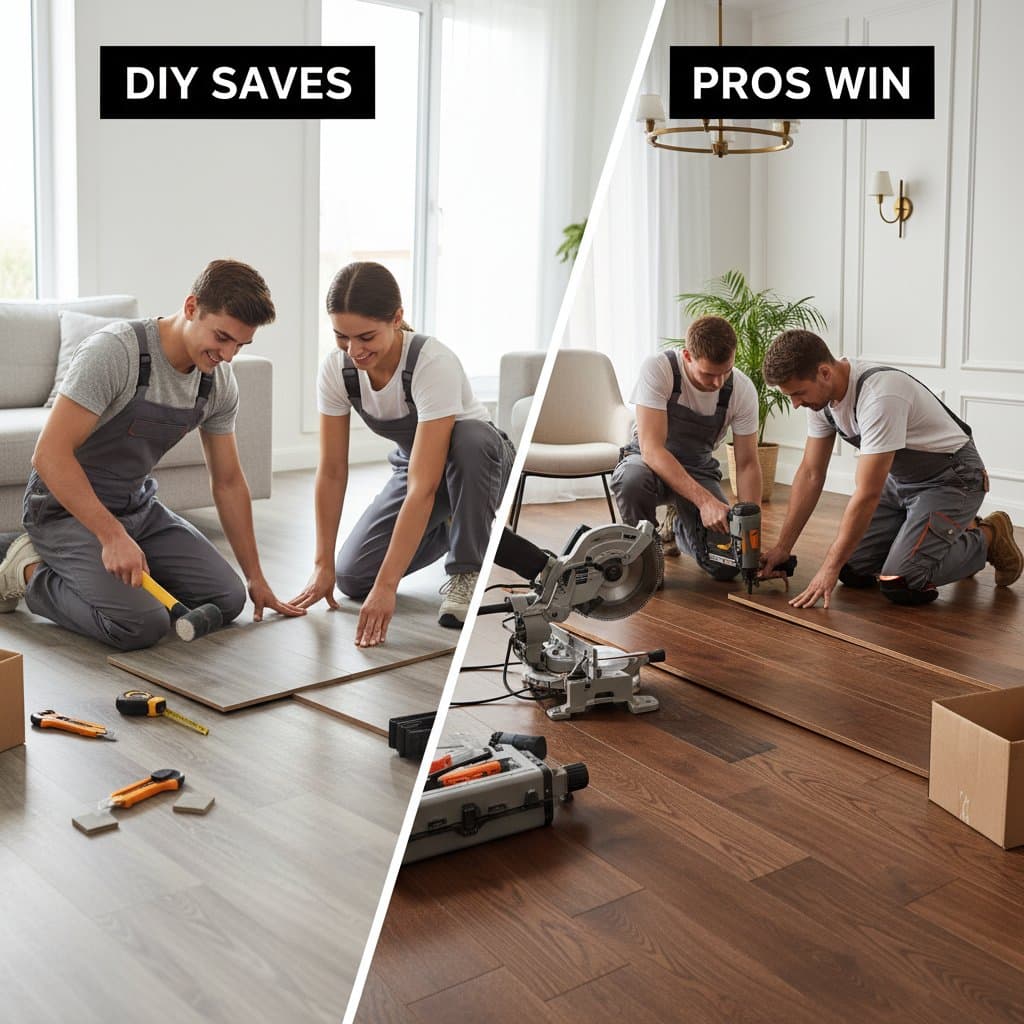
LVP vs. Hardwood: When DIY Delivers Value and When Professionals Excel
Homeowners often face a pivotal choice when upgrading floors: the enduring appeal of hardwood or the versatile convenience of luxury vinyl plank (LVP). This decision hinges on factors such as budget constraints, installation demands, and desired longevity. Understanding the strengths of each option empowers you to select the flooring that aligns with your home improvement objectives.
This article examines LVP and hardwood through essential lenses: installation complexity, material costs, durability, maintenance requirements, and resale potential. It provides a structured framework to determine whether a DIY approach suits your project or if professional expertise justifies the added expense. By evaluating these elements, you gain clarity on the flooring solution that enhances both functionality and aesthetics in your living spaces.
Installation Complexity: Assessing DIY Feasibility
The ease of installation often determines whether homeowners proceed independently or seek professional help. LVP and hardwood present distinct challenges that influence time investment and potential errors.
Installing LVP: A Straightforward Process
LVP features interlocking planks that connect without adhesives or fasteners, allowing installation directly over most existing subfloors. Cut planks using a sharp utility knife for precise fits around obstacles. This method accommodates minor subfloor imperfections, reducing preparation needs.
Essential Tools for LVP Installation:
- Utility knife or dedicated vinyl cutter
- Rubber mallet for secure connections
- Pull bar, spacers, and 100-foot tape measure
- Straightedge and framing square for alignment
Plan for one to two days to cover a standard 200-square-foot living room, including acclimation and underlayment placement. Beginners appreciate the forgiving nature of floating LVP systems.
Installing Hardwood: Demanding Technical Skill
Hardwood requires acclimating boards to room conditions for at least 72 hours to avoid future warping. Secure solid hardwood with nails or staples into the subfloor, while engineered varieties may use glue-down methods. Precise cuts demand power tools, and leveling the subfloor prevents alignment issues.
Essential Tools for Hardwood Installation:
- Pneumatic flooring nailer or compressor-driven stapler
- Circular saw, miter saw, or table saw for cuts
- Digital moisture meter and chalk line
- Tapping block, pry bar, and knee pads
Expect three to five days for the same room size, extending further if finishing or sanding follows. Novices risk costly mistakes, such as gapping or buckling, without prior experience.
Key Insight: Opt for DIY with LVP if basic handyman skills suffice. Reserve hardwood projects for professionals unless you possess carpentry proficiency and access to specialized equipment.
Material Costs: Balancing Upfront Investments
Budget plays a central role in flooring selections, with costs varying by quality, sourcing, and square footage. Consider both initial outlays and hidden expenses like underlayment or waste factors.
LVP typically ranges from $2 to $7 per square foot, offering affordable entry points for premium wood-like designs. Installation adds minimal costs for DIYers, though professional labor might total $1 to $2 per square foot. This makes LVP ideal for large areas or tight budgets.
Hardwood prices start at $5 for engineered options and climb to $15 or more for solid premium species like Brazilian cherry. Add $3 to $6 per square foot for professional installation, plus extras for acclimation materials and finishes. Over time, these investments may yield returns through enhanced home equity.
Key Insight: Choose LVP to minimize upfront spending and enable DIY savings. Select hardwood when long-term appreciation outweighs higher initial costs.
Durability: Evaluating Long-Term Performance
Durability ensures your flooring withstands daily wear, from foot traffic to spills and pet activity. Both materials offer robust options, but their resilience differs by environment.
LVP resists scratches, dents, and fading better than basic vinyl, with wear layers up to 20 mils thick in quality products. It performs well in high-traffic zones and recovers from impacts without permanent damage. Expect 15 to 25 years of service under normal conditions.
Hardwood endures for decades, often 50 years or more with proper care, though surface scratches require refinishing every 5 to 10 years. Engineered hardwood adds stability against humidity changes. Its natural density provides superior impact resistance in dry, controlled settings.
Key Insight: Prioritize LVP for busy households or moisture-exposed areas. Hardwood suits stable climates where refinishing aligns with maintenance routines.
Appearance and Sensory Appeal: Beyond Visuals
Flooring influences the ambiance of a room through sight, touch, and even sound. These sensory elements affect daily comfort and guest impressions.
LVP replicates wood grains with detailed embossing and multiple plank widths for authentic visuals. It maintains uniform color across installations, avoiding the inconsistencies of natural wood. Underfoot, it provides a softer, quieter step.
Hardwood delivers unmatched organic patterns, with each board varying in grain and tone for character. It feels warmer and more substantial, enhancing coziness especially with area rugs. Over years, it develops a patina that deepens its allure.
Key Insight: LVP excels in consistent, low-maintenance aesthetics. Hardwood captivates with natural warmth and evolving beauty.
Moisture Resistance, Safety, and Sustainability
Environmental factors like humidity, air quality, and ecological footprint shape practical choices. Address these to safeguard health and home integrity.
LVP repels water effectively, suiting kitchens, bathrooms, and basements without risk of swelling. Verify low-VOC ratings from certifications such as FloorScore to ensure safe indoor air. While petroleum-derived, advancing lines incorporate recycled plastics for greener profiles.
Hardwood demands dry conditions to prevent cupping; avoid it in damp areas. It emits few VOCs naturally, though finishes require ventilation during curing. Opt for FSC-certified sources to support sustainable forestry and reduce deforestation impacts.
Key Insight: LVP provides reliable protection in humid or pet-friendly homes. Hardwood aligns with eco-preferences when sourced responsibly.
Maintenance and Troubleshooting: Sustaining Quality
Ongoing care preserves flooring investment, while prompt fixes address wear. Establish routines tailored to each material.
For LVP, sweep daily and mop weekly with pH-neutral cleaners to avoid residue buildup. Prevent scratches by using felt pads under furniture and avoiding harsh abrasives.
Hardwood benefits from dry dusting and occasional damp mopping, with polyurethane finishes reapplied every few years. Control humidity between 35 and 55 percent to minimize expansion gaps.
Common LVP Issues and Solutions:
- Gaps from expansion: Maintain 1/4-inch perimeter spacing and use transition strips.
- Edge lifting: Secure with adhesive and ensure subfloor flatness within 3/16 inch over 10 feet.
- Fading: Select UV-protected products for sunlit rooms.
Common Hardwood Issues and Solutions:
- Squeaks: Apply talcum powder or secure loose boards from below.
- Cupping: Balance moisture with dehumidifiers and avoid wet spills.
- Dull finish: Buff lightly or hire for full refinishing.
Key Insight: Dedicate 10 minutes weekly to upkeep for either option. Consult manufacturer guidelines for product-specific advice.
Resale Value: Impact on Home Equity
Flooring upgrades influence property appeal and market value. Buyers prioritize quality and style that signal care.
LVP boosts curb appeal affordably, appealing to modern tastes with its clean lines. It recoups 70 to 80 percent of costs in resale, particularly in starter homes or rentals.
Hardwood commands premium pricing, often returning 75 to 100 percent on investment. Neutral stains and wide planks attract broad buyers, elevating perceived luxury.
Key Insight: Invest in hardwood for high-end resale potential. LVP delivers quick value in budget-conscious markets.
Decision Framework: Tailoring Choices to Your Needs
Weigh your priorities using this step-by-step guide to finalize your selection.
- Evaluate space usage: High moisture or traffic favors LVP; formal areas suit hardwood.
- Assess budget: Allocate under $5 per square foot for DIY LVP; budget $10 plus for pro-installed hardwood.
- Gauge skills: Proceed DIY with LVP if tools are basic; hire for hardwood precision.
- Consider timeline: Weekend projects align with LVP; allow weeks for hardwood pros.
- Project future: Factor resale if selling soon; prioritize durability for long-term living.
This framework ensures your flooring choice maximizes satisfaction and efficiency.
Realizing Lasting Home Improvements
Selecting between LVP and hardwood transforms not just floors but entire living experiences. LVP empowers cost-effective, hands-on upgrades with minimal disruption. Hardwood elevates spaces with timeless elegance, often warranting expert installation for optimal results.
Whichever path you choose, focus on quality materials and proper execution. Your upgraded floors will enhance comfort, durability, and home value for years ahead.