
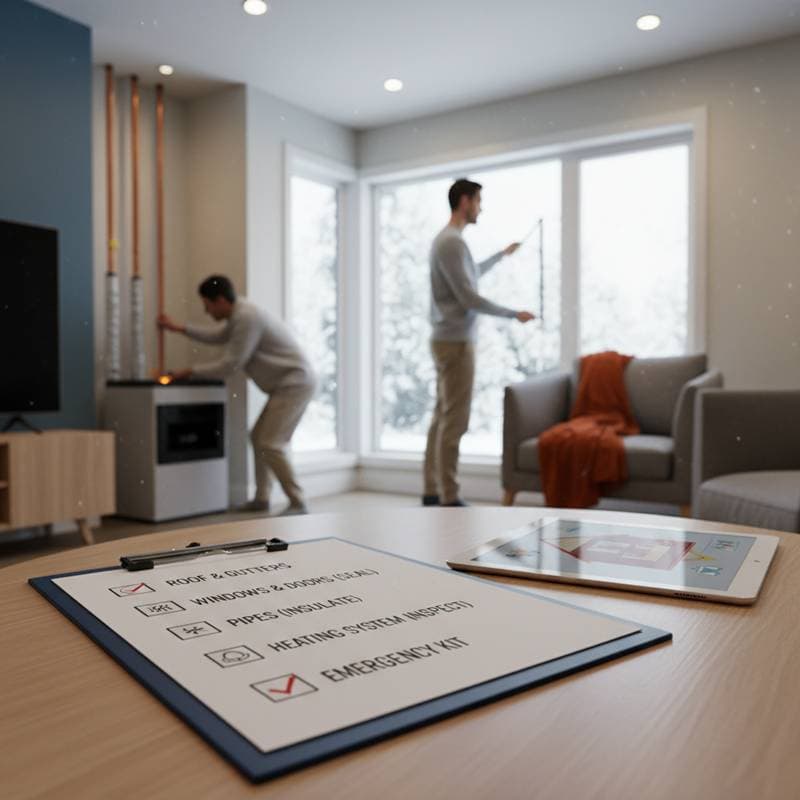
Essential Preparations to Protect Your Home from Winter Storms
Winter storms pose significant risks to residential structures, yet proactive measures can mitigate damage effectively. Homeowners often face challenges such as frozen pipes, roof failures, and structural stress from snow accumulation. This guide provides a comprehensive checklist of inspections and fortifications to ensure your property remains secure throughout the season.
The Importance of Winter Storm Preparation
Proper preparation extends beyond comfort; it preserves structural integrity and avoids substantial financial losses. Common issues include burst pipes from freezing, ice dams that lead to interior water damage, and roof collapses under heavy snow loads. Professional estimates indicate that repairing a single burst pipe averages $500 to $3,000, while roof repairs post-storm often exceed $1,200. Investing time in preventive actions now prevents these disruptions and maintains your home's value.
Exterior Inspections and Maintenance
Gutters: Cleaning and Reinforcement
Clogged gutters trap debris and ice, forcing meltwater to infiltrate siding or roofing materials, where it freezes and expands to cause cracks. Climb a stable ladder equipped with gloves and a trowel to remove leaves, twigs, and sediment. Test drainage by running a hose through the system, confirming that downspouts extend at least six feet from the foundation to avoid soil erosion.
Secure any sagging sections by tightening brackets or replacing fasteners. Gutter guards, priced at $4 to $8 per linear foot, minimize recurring clogs. In regions with heavy snowfall, install heated cables to melt ice formations and prevent dams.
Roof Assessment for Vulnerabilities
Roofs endure the primary impact of winter elements, including wind, ice, and snow weight. From ground level, use binoculars to identify missing shingles, damaged flashing, or uneven slopes. In the attic, inspect for light penetration or dampness near rafters, indicating potential breaches.
Address soft spots or leaks immediately by consulting a roofing professional, whose pre-winter evaluation costs $150 to $350. For aging roofs exhibiting extensive deterioration, obtain quotes for full replacement to avert escalation during storms.
Windows and Doors: Draft Prevention
Drafts compel heating systems to operate inefficiently, increasing energy consumption. Detect leaks by passing a lit incense stick along frames; smoke deviation signals gaps. Apply weatherstripping or silicone caulk to seal these areas, and install new door sweeps for under $20 to block bottom-edge infiltration.
For persistently drafty older windows, apply shrink film insulation kits at approximately $15 per window. These temporary barriers enhance thermal efficiency and reduce heating demands.
Siding and Paint Condition Review
Cracks in siding or flaking paint allow moisture and cold air to penetrate, potentially rotting framing or fostering mold. Circumnavigate the property to spot warped panels, fractures, or discoloration. Seal minor imperfections with exterior-grade caulk and repaint affected zones to shield underlying components.
Neglected infiltration risks insulation degradation and interior air quality issues, underscoring the need for timely exterior upkeep.
Outdoor Elements: Securing and Storage
Winter winds transform unsecured items into projectiles, endangering windows and structures. Relocate patio furniture, pots, and tools to enclosed spaces like garages or sheds. For items remaining outside, secure with weighted tarps and robust ties.
Detach and drain hoses thoroughly, then isolate exterior faucets internally to preclude freezing and rupture.
Core Systems Protection Strategies
Heating System Verification
A malfunctioning heater during frigid weather creates immediate hazards. Activate the system ahead of schedule to verify consistent airflow and operation. Exchange air filters monthly during peak usage to sustain performance.
Schedule an HVAC professional for a $100 to $200 inspection to confirm safety and efficiency. Systems over ten years old may benefit from upgrades; modern high-efficiency units lower bills by up to 25 percent.
Pipe Insulation in Exposed Locations
Freezing represents a primary cause of plumbing failures, particularly in unconditioned areas. Identify pipes in basements, garages, and crawl spaces, then encase them with foam or fiberglass insulation at $1 to $3 per linear foot. Apply heat tape to pipes adjacent to outer walls, adhering strictly to installation guidelines to mitigate fire risks.
During absences, maintain thermostat settings above 55 degrees Fahrenheit and open under-sink cabinets for air circulation.
Chimney and Fireplace Inspection
Obstructed chimneys or creosote buildup heightens fire risks during use. Engage a certified sweep for cleaning and evaluation, budgeted at $150 to $300. Verify damper functionality and cap integrity to exclude pests and debris.
For gas appliances, ignite the pilot and monitor for gas scents. Wood fireplaces require dry, seasoned logs and a three-foot clearance from combustibles.
Electrical System Safeguards
Outages from storms strain electrical components, risking surges. Inspect surge protectors and utilize grounded outlets for vital devices. A whole-home surge protector, installed for $300 to $700, defends against voltage fluctuations.
In outage-prone zones, evaluate generators: portable options begin at $500, while standby units at $4,000 to $7,000 provide seamless power restoration.
Interior Enhancements for Safety and Efficiency
Attic Insulation Upgrades
Inadequate attic insulation permits heat loss, contributing to ice dams and uneven roof thawing. Measure depth between joists; visible framing suggests insufficient coverage. Aim for regional R-value standards by adding blown-in materials at $1 to $2 per square foot, potentially reducing heating costs by 20 percent.
Ceiling Fan Direction Adjustment
Reverse ceiling fan rotation to clockwise mode via the directional switch. This motion redistributes rising warm air downward, maintaining even temperatures without excessive heating.
Detector Testing and Replacement
Sealed homes amplify risks from combustion byproducts. Test smoke and carbon monoxide alarms monthly, replacing batteries as needed. Units exceeding five years require full substitution; combination models cost $40 to $60 and install easily.
Emergency Preparedness Kit Assembly
Unforeseen events demand readiness. Assemble supplies including water, shelf-stable foods, illumination tools, batteries, bedding, and medical essentials. For heating-dependent households, include a safe indoor propane heater with proper ventilation protocols.
Outdoor Structures and Vehicle Readiness
Driveway and Pathway Maintenance
Freeze-thaw cycles widen cracks in paved surfaces. Apply sealant to fissures using a $10 tube of filler to block water entry. Stock a shovel and pet-safe de-icer, steering clear of salt to protect vegetation.
Fences, Decks, and Outbuildings Evaluation
Snow weight stresses wooden and metal elements. Fasten loose hardware, mend broken slats, and seal wood with repellents. Ensure outbuilding doors seal tightly and roofs resist leaks.
Vehicle and Garage Preparations
Outdoor vehicles suffer from salt corrosion; apply wax coatings for protection. Equip trunks with cables, brushes, and shovels. In garages, store de-icers securely and confirm door mechanisms function without gaps.
Timing Preparations by Region
Initiate inspections when temperatures decline in northern areas, allowing flexibility in temperate zones before frost. Coastal properties prioritize wind resistance, while elevated terrains emphasize snow-bearing capacity. Older residences benefit from utility-sponsored energy audits to pinpoint inefficiencies.
Practical Strategies for Effective Preparation
Commence tasks promptly to avoid seasonal rushes. Document all maintenance in a log for future reference and budgeting. Group exterior work on favorable weather days to streamline efforts. Delegate complex repairs to qualified experts. Each completed step fortifies your home against winter threats, ensuring reliability and reduced stress.
Long-Term Benefits of Proactive Maintenance
Consistent winter preparations not only avert immediate damages but also extend the lifespan of home components. Reduced repair needs translate to lower costs and preserved property equity. By integrating these practices annually, homeowners cultivate a resilient living environment suited to harsh conditions.