
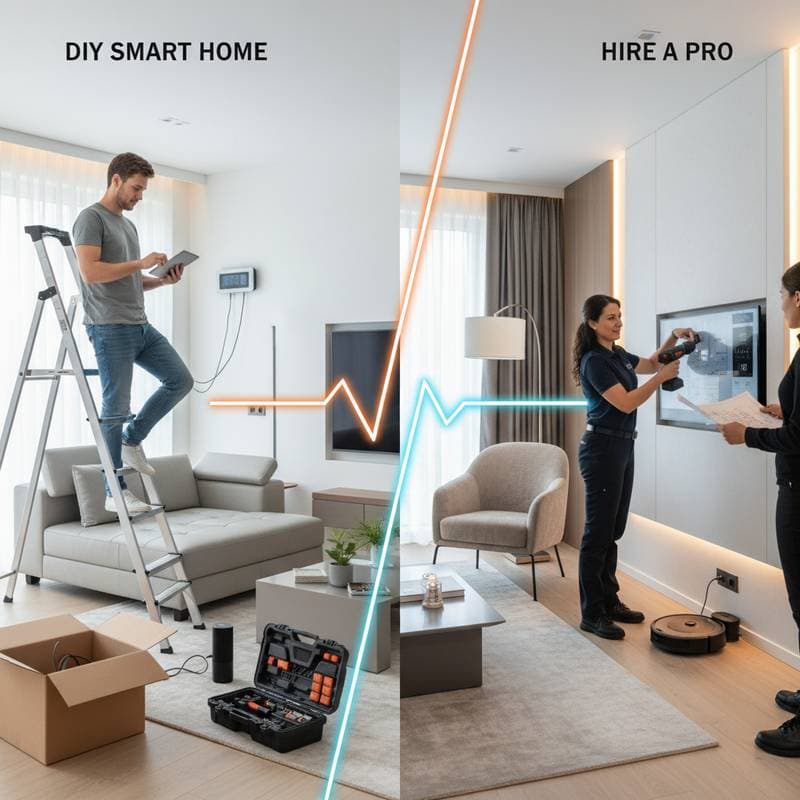
Smart Upgrades: DIY or Electrician Essential?
The decision between handling smart home installations yourself or hiring a licensed electrician depends on the project's complexity. Some tasks suit beginners with basic tools and instructions, while others demand professional expertise to ensure safety and compliance. Smart devices offer convenience, energy efficiency, and enhanced security, yet improper installation can lead to electrical hazards, code violations, or voided warranties.
This guide identifies suitable DIY projects, highlights those requiring an electrician, and provides strategies to balance costs with safety for a reliable smart home setup.
Understanding Smart Home Systems
Smart home systems link devices like lights, thermostats, cameras, and locks to a central network controlled via smartphone or voice commands. These devices connect through protocols such as Wi-Fi, Bluetooth, Zigbee, or Z-Wave, with integration levels varying by user needs.
Basic setups involve plug-in devices that require no wiring changes. In contrast, advanced configurations integrate with the home's electrical system, increasing installation risks if not executed properly. Assess your home's wiring age and layout before starting any project to gauge feasibility.
Projects Requiring a Licensed Electrician
Installations involving electrical modifications, such as rewiring or circuit adjustments, necessitate a professional's skills, specialized tools, and knowledge of local codes. These tasks prevent overloads, shorts, and fires that could arise from amateur errors.
Hardwired Smart Switches and Dimmers
Swapping a traditional switch for a smart version appears straightforward, but many require a neutral wire absent in older homes. Without proper adaptation, this leads to malfunctions or violations. Professionals charge between $100 and $250 per switch, covering assessment, materials, and testing for secure operation.
Smart Ceiling Fans or Light Fixtures
Connecting fixtures to ceiling junction boxes demands verification of load capacity and grounding. Incorrect setup risks instability or electrical faults. Electricians ensure fixtures meet safety standards during installation.
Smart Panels and Whole-Home Systems
These systems track energy across the electrical panel, requiring precise amperage settings and integration. Only certified experts handle such upgrades, with costs ranging from $800 to $2,500 based on scope. They calibrate devices to avoid imbalances that could strain the grid.
Electric Vehicle Chargers and High-Load Devices
EV chargers link to high-voltage lines, where mismatched breakers or undersized wiring create fire risks. Professionals evaluate and upgrade circuits as needed, confirming compatibility with your home's power supply.
Outdoor Smart Lighting and Security Systems
Exposed to elements, outdoor setups need sealed connections and code-approved materials to resist moisture and corrosion. Electricians install these to maintain functionality and prevent hazards like exposed live wires.
Identifying Safety and Compliance Issues
Adhering to electrical codes avoids costly fixes and protects occupants. Recognize these indicators that signal the need for expert intervention:
- Multiple unlabeled wires in a junction box
- Outdated wiring types like metallic conduit or knob-and-tube in legacy homes
- Frequent breaker trips following device addition
- Sparks, light flickering, or unexplained surges
- Absence of neutral or ground connections
Pause work immediately upon encountering these and consult a professional. Local regulations differ, so online guides alone may not suffice for your area's requirements.
Selecting a Qualified Electrician
Follow these steps to identify a reliable specialist:
- Confirm active licensing and insurance coverage through official verification.
- Inquire about prior experience with smart home technologies.
- Obtain a detailed written estimate outlining labor, parts, and any permits.
- Review online feedback and request client references for insights on reliability.
- Clarify warranty details, typically extending at least one year on workmanship.
Experienced electricians integrate devices seamlessly, enhancing network stability and brand interoperability.
Adopting a Hybrid Installation Strategy
Homeowners benefit from combining self-managed and professional efforts. Tackle simple plug-in items independently, then engage experts for wired components.
For example, install smart bulbs and outlets yourself before professional addition of dimmers and thermostats. This phased expansion controls expenses while building a cohesive system over time.
Essential Strategies for Effective Implementation
Prepare thoroughly to maximize success:
- Map out features and verify wiring compatibility prior to buying devices.
- Label breakers to identify circuits quickly during work.
- Incorporate surge protectors to shield sensitive electronics from fluctuations.
- Update device firmware regularly for optimal security and efficiency.
- Maintain records of installations, including model details and dates.
As your network expands beyond 10-15 devices, professional optimization prevents connectivity issues from router overloads.
Safeguarding and Extending Your Smart Home Setup
Regular maintenance preserves functionality and value. Inspect connections quarterly for wear, test backups during outages, and monitor app alerts for anomalies. This proactive care ensures long-term reliability, energy savings, and peace of mind in your connected living space.