
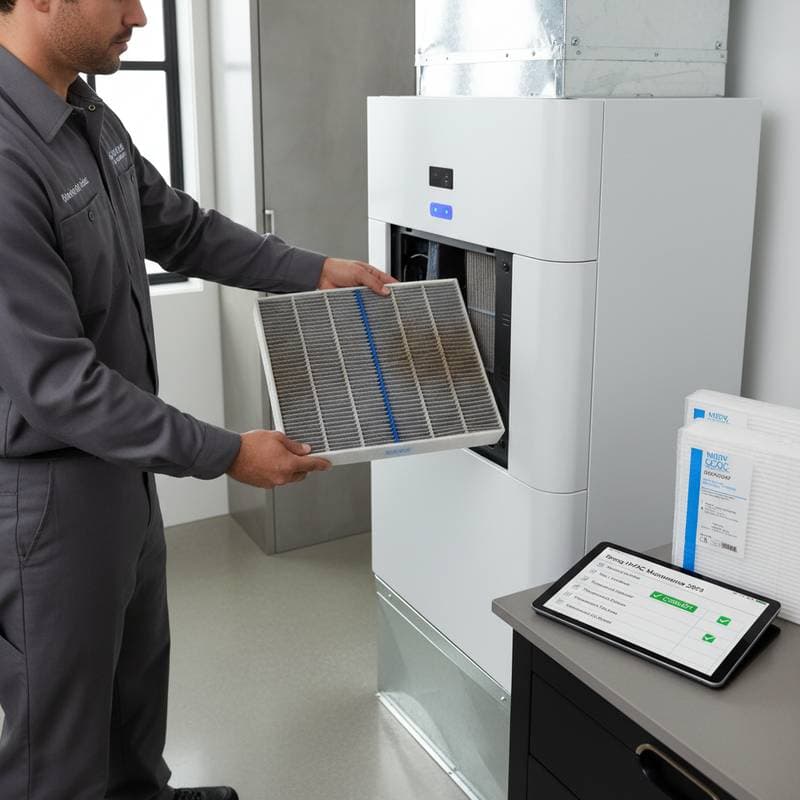
Essential Spring Preparation: Updating Your HVAC Filter in 2026
After a winter of continuous operation, your furnace has drawn in substantial dust and debris through the HVAC filter. As temperatures rise, addressing this maintenance becomes crucial. Although replacing the filter appears as a minor task, it significantly enhances air quality, optimizes system performance, and decreases energy consumption. View this action as a foundational step to ensure your home maintains fresh, efficient airflow throughout the season.
The Strategic Timing of Spring Filter Replacement
Your HVAC system operates intensively during winter to deliver heat. By spring, the filter accumulates dust, pet dander, pollen, and other particles that obstruct airflow. Restricted air movement forces the system to work harder, elevating energy demands and accelerating component wear. Installing a new filter prior to activating cooling functions establishes optimal conditions for the warmer months.
A fresh filter elevates efficiency levels by as much as 15 percent, directly resulting in reduced utility expenses. This improvement alleviates stress on the blower motor and stabilizes air distribution across your living spaces. Homeowners often observe these benefits within the first billing cycle after the change.
Selecting an Optimal Filter for Your HVAC Setup
HVAC filters vary widely in construction and performance metrics. The primary indicator of effectiveness is the MERV rating, or Minimum Efficiency Reporting Value, which quantifies particle capture capability.
- MERV 1-4: Provides fundamental filtration for legacy systems or low-usage scenarios.
- MERV 5-8: Serves as the standard choice for typical residences, offering a practical equilibrium between expense and air purification.
- MERV 9-12: Delivers enhanced protection against allergens, ideal for households with pets or sensitive occupants.
- MERV 13 and above: Targets ultrafine particulates, recommended for modern, high-performance units.
Individuals with allergies or residing in arid, dusty areas benefit from elevated MERV ratings. However, consult your equipment's documentation to confirm compatibility, as denser filters may impede airflow in certain models. If uncertainty persists, seek advice from a certified technician or match specifications against your existing filter at a supply retailer.
Detailed Guide to Replacing Your HVAC Filter
Follow this structured process to complete the replacement safely and effectively.
- Power down the HVAC system at the thermostat and breaker to halt air circulation and minimize dust dispersal.
- Identify the filter housing, typically positioned adjacent to the return air grille or within the furnace cabinet.
- Extract the used filter by sliding it out gently, holding it to contain loose particles.
- Align the new filter according to the directional arrow indicating airflow orientation toward the blower.
- Secure the housing by closing the access panel firmly.
- Restore power and monitor the system for normal operation.
- Schedule the next inspection for one to three months ahead, based on household activity and environmental factors.
Replacement filters range from ten to twenty-five dollars, influenced by dimensions and filtration grade. For advanced options, smart filters equipped with sensors cost forty to sixty dollars and notify users via app when replacement is due, promoting consistent upkeep.
Indicators for Professional HVAC Intervention
Post-replacement, persistent issues such as inconsistent temperatures, escalating costs, or peculiar smells signal deeper concerns like duct contamination or coil accumulation. Experts perform comprehensive diagnostics, including refrigerant evaluation and airflow assessments. Such services generally range from one hundred to two hundred dollars and yield long-term reliability for your investment.
Annual professional tune-ups complement filter changes by identifying inefficiencies early. These visits often include coil cleaning and electrical checks, preventing costly breakdowns during peak usage.
Practical Strategies to Enhance Filter Maintenance
Adopt these measures to streamline future replacements and maximize benefits.
- Mark the filter compartment with precise size notations for quick reordering.
- Stock an extra filter in a convenient location to eliminate delays.
- Clean surrounding vents and registers with a vacuum during the process to augment overall circulation.
- Integrate reminders into digital calendars or place visual cues near the control panel.
Consider environmental influences, such as nearby construction or high-traffic pets, which necessitate more frequent changes. Tracking usage patterns helps tailor intervals to your specific needs.
Long-Term Benefits of Consistent Filter Care
Regular filter maintenance safeguards your HVAC infrastructure while elevating indoor air standards. Cleaner filters minimize allergen exposure and support respiratory health for all occupants. This practice ensures the system delivers reliable performance, adapting seamlessly to seasonal demands.
Invest a brief period this spring in this vital update. The result includes purer air, diminished expenses, and equipment poised for enduring efficiency amid fluctuating weather.