
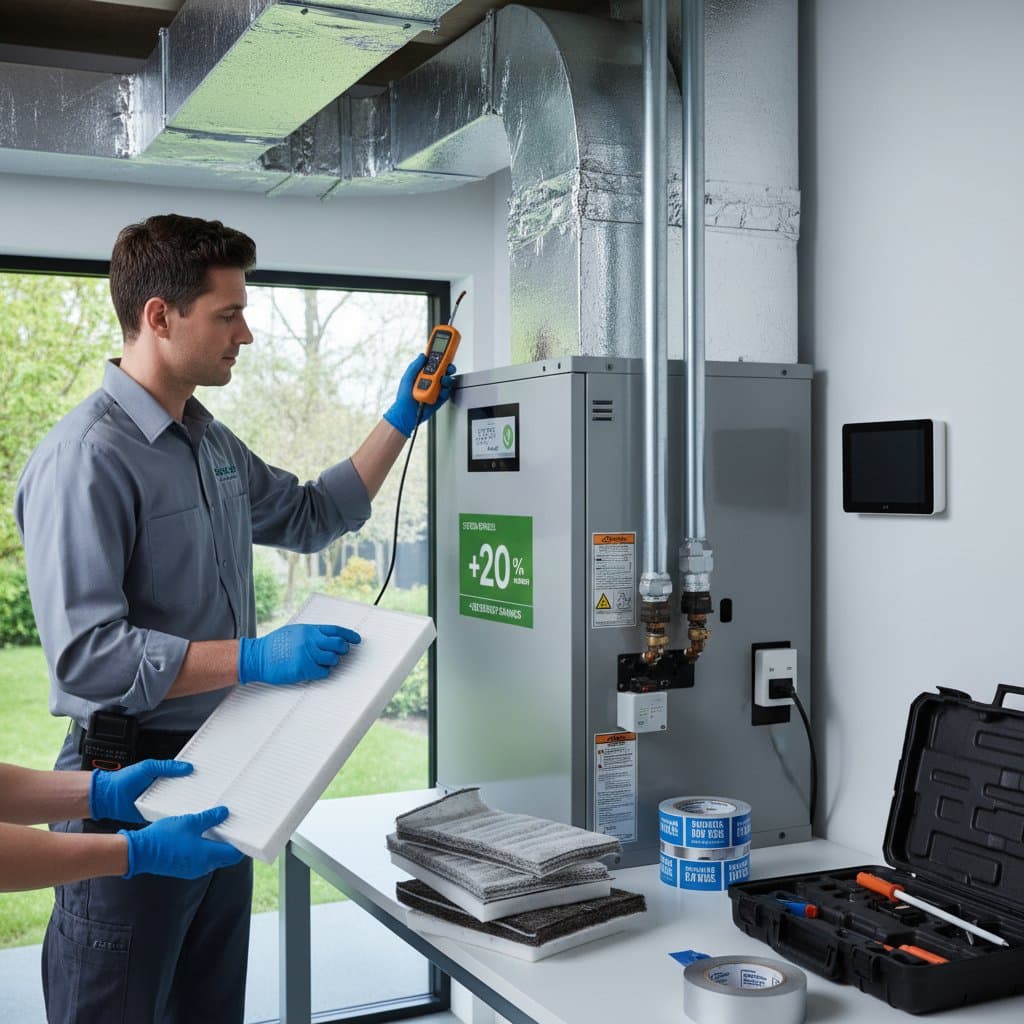
Prepare Your HVAC System for Summer Savings
Energy bills often rise sharply during summer months due to increased air conditioning use. A timely spring HVAC checkup addresses inefficiencies that contribute to higher costs. This proactive step not only prevents unexpected breakdowns but also optimizes performance to reduce cooling expenses by up to 20 percent.
Spring provides an ideal window for evaluation and maintenance. Homeowners can identify issues like accumulated dirt or minor leaks before peak demand strains the system. Professional audits ensure comprehensive coverage, setting the stage for reliable operation and lower utility payments.
Essential Reasons for Spring HVAC Maintenance
HVAC systems account for a substantial portion of household energy consumption, often up to 50 percent in warmer climates. Over time, components such as coils and filters accumulate debris, which diminishes efficiency and increases runtime. Early intervention restores optimal function and curbs escalating costs.
A detailed audit covers critical areas including refrigerant charge, blower motor condition, and duct sealing. Technicians employ specialized equipment to detect airflow restrictions or insulation gaps that evade visual inspection. Beyond efficiency, these checks mitigate risks like electrical faults or refrigerant leaks, safeguarding home safety.
Homeowners benefit from combining self-maintenance with expert services. Simple tasks build familiarity with the system, while professionals handle complex diagnostics. This balanced approach maximizes long-term reliability and comfort.
Comprehensive Spring HVAC Maintenance Guide
Follow this sequence to conduct an effective audit. Start with accessible tasks before engaging professionals for advanced assessments. Document each step to track progress and inform future servicing.
-
Replace air filters promptly. Clogged filters impede airflow and strain the system, leading to higher energy use. Select filters rated MERV 8 to 13 based on your unit's specifications, and change them every 1 to 3 months during active seasons.
-
Clear vents and registers. Dust and obstructions reduce circulation efficiency. Employ a soft brush and vacuum to clean supply and return vents, ensuring unobstructed paths for air movement. Relocate nearby items to maintain at least six inches of clearance.
-
Calibrate the thermostat. Inaccurate readings cause unnecessary cycling. Test against a separate thermometer and adjust as needed. Upgrade to a smart model for precise scheduling, potentially saving 10 percent on annual energy costs through automated adjustments.
-
Seal duct leaks. Leaky ducts waste 20 to 30 percent of conditioned air. Inspect visible sections in attics, crawlspaces, or basements for separations or holes. Apply approved sealants like mastic for durable repairs, focusing on joints and transitions.
-
Maintain the outdoor condenser. Debris hinders heat exchange, forcing the unit to overwork. Trim vegetation and remove buildup with a garden hose on low pressure. Preserve a two-foot perimeter free of obstacles to facilitate unrestricted operation.
-
Evaluate overall system function. Activate heating and cooling cycles to observe operation. Listen for unusual noises and feel for even airflow from registers. Note any irregularities, such as delayed starts or weak output, for professional review.
-
Schedule a professional inspection. Certified technicians use manometers and thermal imaging to quantify efficiency losses. They recharge refrigerants, tighten electrical connections, and lubricate components, ensuring compliance with energy standards.
Evaluating Costs and Long-Term Benefits
Professional audits range from $150 to $400, influenced by property size and location. This investment yields quick returns through efficiency gains, often recouping costs within one season via reduced bills. Explore utility incentives, such as subsidized audits or rebates up to $100, to minimize out-of-pocket expenses.
For aging systems over 10 to 15 years old, replacement merits consideration. High-efficiency units with SEER ratings above 16 deliver 20 to 30 percent better performance than older models. Initial costs of $4,000 to $9,000 depreciate over 10 to 15 years, enhanced by tax credits and improved air filtration.
Compare options using energy calculators from manufacturers to project savings. Factor in enhanced durability and quieter operation, which elevate home value during appraisals.
Prioritizing Safety in HVAC Care
Safety remains paramount during any maintenance. Disconnect power at the main breaker before accessing internal parts to prevent shocks. Refrain from tampering with high-voltage elements or pressurized refrigerants without proper certification.
Annual professional servicing verifies safe conditions, including carbon monoxide detectors and exhaust venting. Technicians test for gas leaks and ensure grounding integrity, aligning with building codes. Proper upkeep preserves warranty terms and supports insurance claims.
Integrate safety checks into routines, such as verifying drain pans to avoid water damage. These measures protect occupants and extend equipment lifespan.
Execute Your Maintenance Plan Effectively
Timing defines the success of HVAC upkeep. Complete initial tasks in early spring, followed by professional service before May. Maintain a log detailing dates, observations, and invoices to identify trends like recurring filter clogs.
Treat the HVAC as integral to home wellness. Efficient operation circulates cleaner air, reduces noise, and stabilizes temperatures. Dedicate time now to enjoy seamless performance and substantial savings through the hottest months.
With a completed audit, approach summer assured of peak efficiency. Consistent care transforms routine expenses into strategic investments for comfort and economy.