
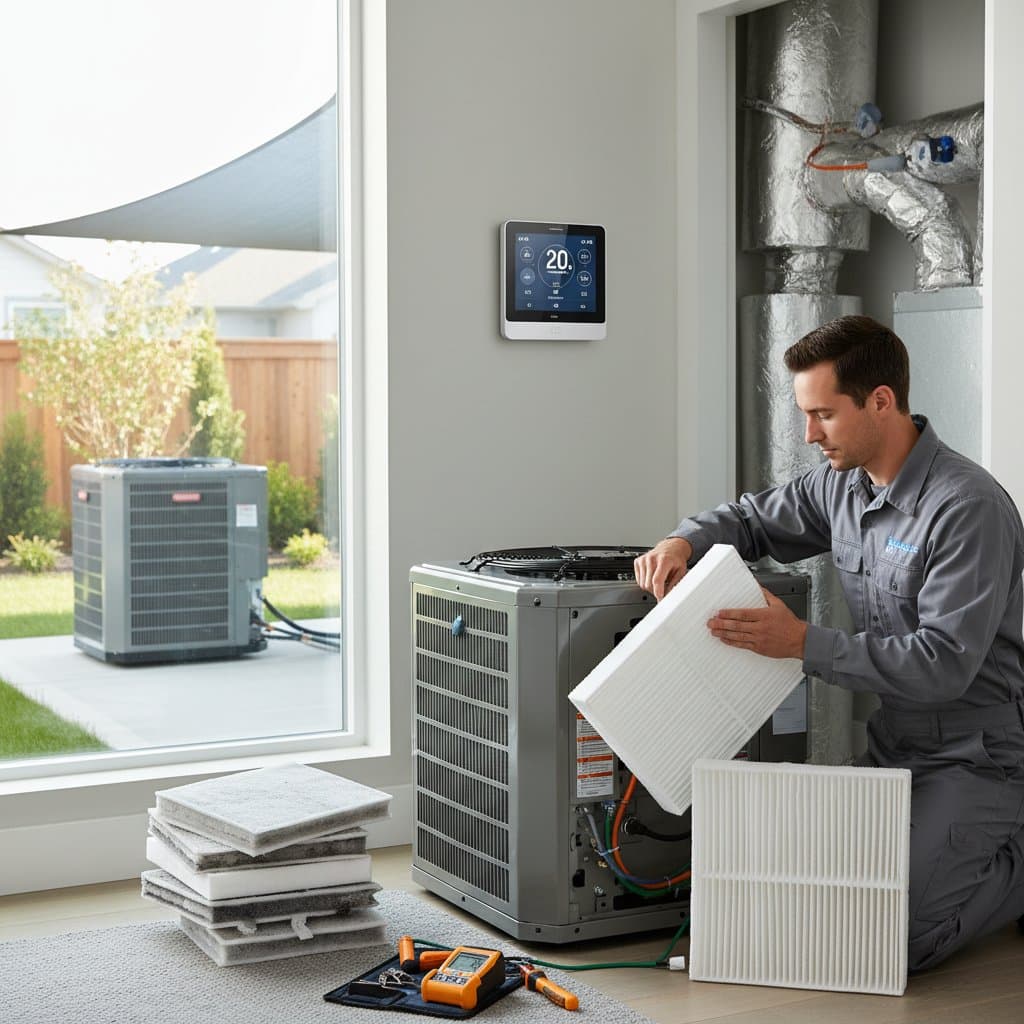
Essential Spring HVAC Checklist for Energy Savings
Homeowners often discover HVAC issues on the first warm day when the air conditioning activates with unusual noises. Spring maintenance addresses the damage accumulated over winter, preventing inefficiency and expensive repairs during peak summer use. Proactive care ensures smooth operation, lower utility bills, and enhanced home comfort throughout the season.
This guide provides a step-by-step checklist tailored for homeowners. It includes practical actions, estimated costs, and guidance on when to involve professionals. Follow these steps to optimize your system, regardless of your experience level with home maintenance.
Step 1: Replace or Clean Air Filters
Air filters represent the most critical component for maintaining HVAC efficiency. Restricted airflow from dirty filters forces the system to consume more energy and accelerates wear on internal parts.
- Frequency: Change filters every one to three months, based on household occupancy and environmental factors.
- Cost: Standard filters cost about 10 dollars; advanced options for allergens range from 20 to 40 dollars.
- Installation Tip: Align the arrow on the filter frame with the correct airflow direction in your unit.
Households with pets or high pollen exposure benefit from filters with a MERV rating of 8 or higher to capture finer particles effectively.
Step 2: Clean the Coils
Evaporator and condenser coils accumulate dirt and debris over time, reducing heat transfer and forcing the compressor to work harder. Cleaning these components restores efficiency and can lower energy use by up to 20 percent.
DIY Method:
- Turn off power to the unit at the breaker.
- Use a soft brush or coil cleaner spray to remove surface dirt from accessible coils.
- Rinse gently with a hose if outdoors, avoiding high pressure.
Professional Service: Schedule a full coil cleaning for 100 to 200 dollars if coils show heavy buildup or access proves difficult.
Step 3: Inspect Ductwork and Vents
Leaky or obstructed ducts waste significant conditioned air, with losses reaching 30 percent in some homes. Proper inspection and sealing direct cool air where it belongs, maximizing system performance.
DIY Inspection:
- Examine exposed ducts with a flashlight for separations or holes.
- Apply mastic sealant or foil tape to minor leaks.
- Clean vent covers and registers by vacuuming accumulated dust.
For extensive duct systems, professional assessment and sealing cost 300 to 700 dollars and often yield immediate savings on bills.
Step 4: Test and Calibrate the Thermostat
An inaccurate thermostat leads to uneven temperatures and unnecessary cycling of the HVAC system. Verification ensures precise control, which supports energy conservation without sacrificing comfort.
Basic Check:
- Compare the thermostat reading with a separate thermometer.
- Set the temperature and monitor response time.
- For programmable models, confirm schedules align with daily routines.
Replace batteries in battery-powered units, which cost 5 to 10 dollars. Smart thermostats, priced at 100 to 250 dollars, offer additional efficiency through remote adjustments and learning algorithms.
Step 5: Clear the Drain Line and Condensate Pump
The condensate drain removes moisture during cooling, but clogs from algae or dirt can cause overflows and system failures. Regular clearing prevents water damage and maintains uninterrupted operation.
Maintenance Steps:
- Identify the drain line outlet near the indoor evaporator coil.
- Introduce a cup of white vinegar or a diluted bleach solution to dissolve buildup.
- Flush with a gallon of warm water to clear residue.
Test condensate pumps by observing their operation; replacements range from 80 to 150 dollars and last five to seven years under normal conditions.
Step 6: Examine the Outdoor Unit
The outdoor condenser unit faces exposure to weather and debris, which can impede airflow and strain the system. A clean, level unit operates more efficiently and extends overall lifespan.
Preparation Tasks:
- Clear vegetation, leaves, and dirt from around the unit, maintaining 2 feet of clearance.
- Straighten bent fins on the coils using a fin comb tool, available for 10 dollars.
- Verify the unit sits level on its pad to avoid vibration issues.
Professional tune-ups, including refrigerant checks, cost 75 to 150 dollars and detect problems like low refrigerant levels early.
Step 7: Evaluate Home Insulation and Air Sealing
Poor insulation allows cooled air to escape, compelling the HVAC system to run longer. Addressing gaps and adding insulation enhances retention of conditioned air, potentially cutting cooling expenses by 10 percent.
Simple Fixes:
- Inspect windows, doors, and outlets for drafts using your hand or incense smoke.
- Apply caulk to cracks, costing 5 dollars per tube.
- Install weatherstripping kits for 10 to 25 dollars.
Consider attic insulation upgrades with materials rated R-30 or higher; DIY projects require one afternoon for most homes.
Step 8: Verify Refrigerant Levels and Electrical Connections
Low refrigerant reduces cooling capacity and increases energy demands, while loose wires pose safety risks. These checks ensure the system runs at peak performance without hidden inefficiencies.
Homeowner Limits: Visual inspection of connections requires caution; avoid handling refrigerant, a task reserved for certified technicians.
Expert Recommendation: Annual professional inspection, at 100 to 200 dollars, includes pressure tests and recharging if needed. Early detection prevents compressor failure, which can exceed 1,000 dollars in repairs.
Step 9: Enhance Indoor Airflow
Effective air distribution prevents hot spots and allows higher thermostat settings without discomfort. Optimizing vents and fans promotes even cooling and reduces runtime.
Practical Adjustments:
- Ensure all supply vents remain open and free from blockages like furniture.
- Set ceiling fans to counterclockwise rotation for downward airflow.
- Adjust dampers in duct systems if accessible to balance room temperatures.
These changes create a cooling effect equivalent to lowering the thermostat by 4 degrees, saving energy without added cost.
Advanced Strategies for Long-Term Efficiency
Combine checklist tasks with smart habits, such as scheduling annual professional tune-ups for 150 to 300 dollars. Monitor energy bills post-maintenance to track savings, and consider programmable thermostats for automated adjustments. These measures not only cut cooling costs by 15 percent but also improve air quality and system reliability.
Sustaining Comfort Through Seasonal Care
Implementing this spring HVAC checklist positions your home for efficient, reliable cooling. Regular attention to these details minimizes surprises, controls expenses, and fosters a healthier living environment. Start today to enjoy the benefits all summer long.