
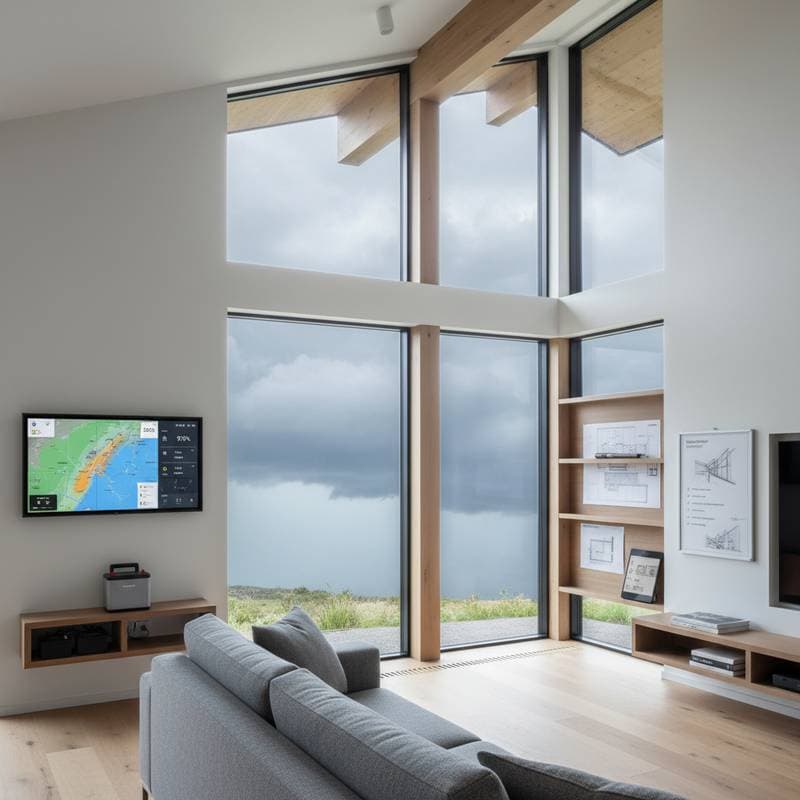
Secure Your Home Against 2026 Climate Storms
Recent weather patterns indicate increased unpredictability. Stronger storms, heavier rains, and prolonged heat waves now define the norm. Homeowners must consider measures to protect their properties from impending extreme weather. Proactive steps enable resilience without requiring extensive renovations or large expenditures.
This guide details practical upgrades, estimated costs, and maintenance strategies to shield homes from high winds, flooding, and temperature fluctuations. Residents in coastal areas, floodplains, or regions with variable climates benefit from these enhancements. Such improvements promote safety and comfort amid nature's challenges.
Protecting Against Flooding and Water Damage
Landscaping for Drainage
Yard design influences storm performance significantly. Grade soil to slope away from the foundation, directing water flow effectively. This regrading typically ranges from $1,000 to $3,000 based on yard dimensions.
Install a French drain or dry well for advanced protection against water accumulation. Professional installation costs $2,000 to $6,000. For budget-conscious options, incorporate gravel beds and native plants to manage runoff naturally. These features enhance aesthetics while controlling excess water.
Rain gardens serve as an effective, dual-purpose solution. Construction costs $500 to $2,000. Select plants suited to local conditions, such as deep-rooted perennials, to maximize absorption and minimize erosion.
Basement and Crawl Space Protection
Moisture in basements leads to mold and structural issues rapidly. Install a sump pump system, priced at $1,200 to $3,000 including setup. Equip it with battery backup to ensure functionality during outages.
Apply waterproof sealant to basement walls for $500 to $1,000. For comprehensive defense, opt for professional encapsulation at around $10,000, which seals the space entirely and offers long-term durability.
Heavy rains can cause sewer backups. A backflow valve, installed for $600 to $1,500, prevents contaminated water entry. This device activates automatically, averting costly remediation.
Maintaining Power and Comfort During Outages
Backup Power and Energy Resilience
Power disruptions during storms compromise safety and livability. Portable generators provide basic needs at $500 to $2,000. Whole-house units, starting at $7,000 with installation, offer complete coverage.
Solar panels combined with battery storage present a sustainable alternative. Initial investment spans $15,000 to $25,000, but energy bill reductions recoup costs over time. Assess sunlight exposure and energy usage to determine system size.
Surge protection safeguards electronics from post-outage spikes. Whole-home protectors cost $400 to $800 installed. Position them at the main electrical panel for optimal coverage.
Insulation and Ventilation
Insulation withstands extreme temperatures better with upgrades. Attic additions run $1.50 to $3.50 per square foot, stabilizing indoor climates during heat or cold.
Ventilation curbs moisture that fosters mold growth. Ridge vents or solar attic fans, at $300 to $1,000, enhance air circulation. Regularly clean vents to sustain efficiency.
Fire and Wind Preparedness in Dry Regions
Dry areas face fire risks from winds. Establish defensible space by clearing debris within 30 feet of the home. Trim branches and relocate firewood to reduce ignition sources.
Ember-resistant vents, priced $200 to $400 each, block invasive sparks. Fire-rated roofing materials provide additional barriers against flames.
High winds target vulnerabilities like garage doors. Wind-rated reinforcements cost $1,500 to $3,000. These doors resist pressure, preserving roof and wall integrity.
Smart Home Technology for Early Warnings
Technology enables proactive responses to weather threats. Smart leak detectors, starting at $50 per unit, notify via smartphone of unauthorized water presence.
Wind and temperature sensors detect escalating conditions early. They prompt actions like securing items or activating shutters. Integrate with home apps for remote monitoring and automated alerts.
Select devices compatible with existing systems for seamless operation. Test integrations periodically to confirm reliability during crises.
Safety and Professional Assistance
Storm preparation involves hazards, particularly with roofs or electrical work. Engage licensed professionals to mitigate risks. Electricians charge $50 to $100 hourly; weatherproofing contractors offer project-based fees.
Verify credentials, insurance, and code adherence before hiring. Compliant upgrades may qualify for insurance reductions, enhancing value.
Sustaining Climate Resilience
Upkeep preserves investments in home fortifications. Conduct biannual inspections of roofs, gutters, and drainage. Remove vent debris, examine window seals, and test sump pumps ahead of rainy periods.
Refresh emergency kits quarterly, checking batteries, lights, and medical supplies. Document maintenance to track effectiveness and plan future needs.
Building Lasting Home Security
Initiate with simple tasks like window sealing or drainage checks. Progress to larger installations such as generators or reinforced doors as budgets allow. Each enhancement fortifies your home, ensuring enduring protection and peace of mind through 2026 and beyond.