
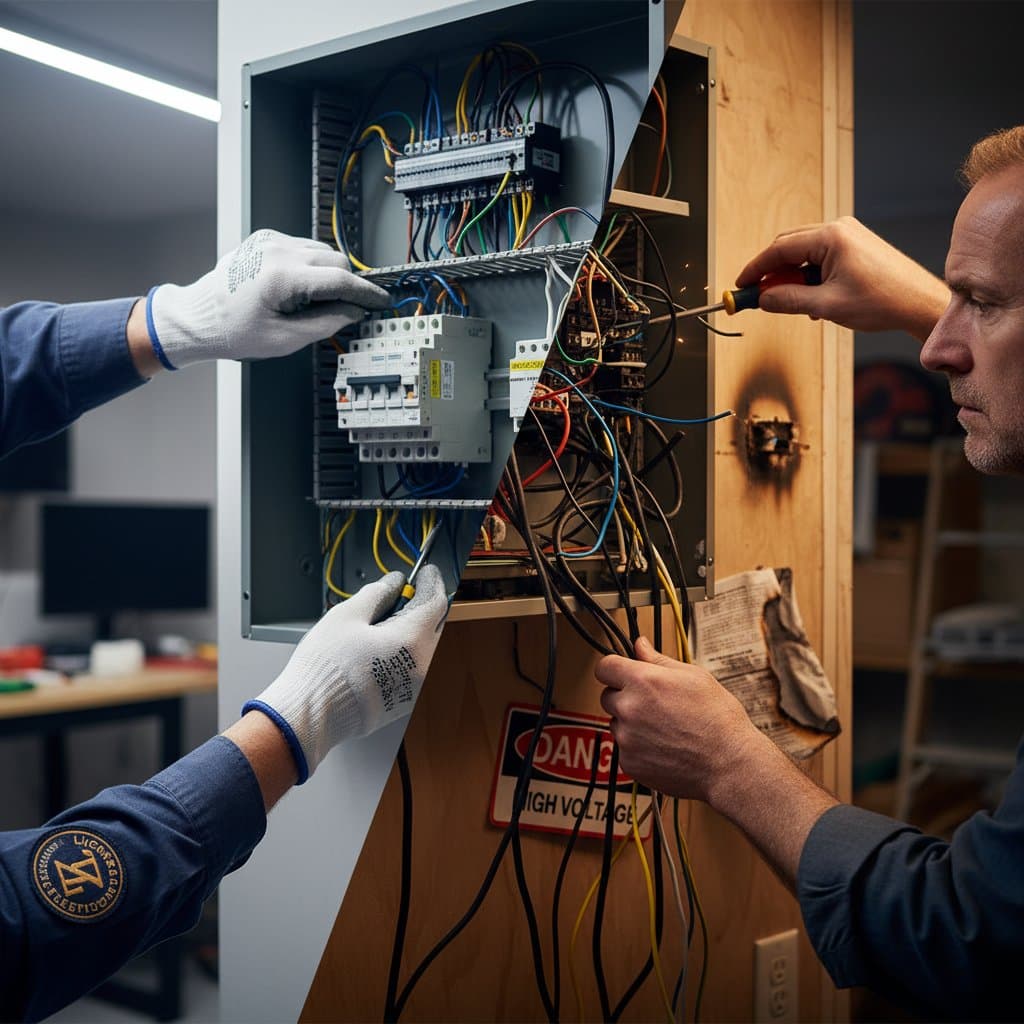
Understanding the Risks of DIY Electrical Panel Upgrades
Homeowners often tackle minor electrical tasks with confidence, such as replacing outlets or adding fixtures. However, upgrading an electrical panel represents a far more complex endeavor. This central hub manages the flow of electricity throughout the home, and any error during modification can result in immediate and severe consequences.
Professional guidance emphasizes that electrical systems demand specialized knowledge. This article examines the specific hazards associated with DIY panel upgrades, compares costs between self-installation and expert service, outlines legal requirements, and highlights the advantages of hiring qualified professionals. Readers gain practical insights to make informed decisions about their home's electrical infrastructure.
Key Hazards in DIY Electrical Panel Work
Electricity poses immediate threats when handled incorrectly. A momentary lapse can lead to electrocution, where current passes through the body, causing burns, cardiac arrest, or fatalities. Arc flashes, triggered by short circuits, produce temperatures exceeding 10,000 degrees Fahrenheit, capable of igniting clothing and causing blindness from intense light.
Beyond immediate personal dangers, faulty installations affect the entire home. Overloaded circuits may damage sensitive electronics, while undetected faults contribute to gradual deterioration of wiring. Homeowners insurance policies frequently exclude coverage for unprofessional work, leaving individuals financially exposed after an incident.
Consider these primary risks in detail:
-
Electrocution from Live Wires: Shutting off the main breaker does not de-energize the incoming service conductors. Accidental contact with these high-voltage lines delivers lethal shocks, even to experienced amateurs.
-
Fire Ignition Points: Inadequate wire sizing or poor connections generate excessive heat, melting insulation and sparking fires within walls or ceilings. Such blazes spread rapidly, endangering lives and property.
-
Non-Compliance with Electrical Codes: Local regulations, such as the National Electrical Code (NEC), dictate precise installation standards. DIY efforts often overlook grounding requirements or breaker ratings, leading to inspection failures and mandatory corrections.
-
Insurance and Liability Issues: Claims arising from DIY modifications face denial if permits lack approval. In legal disputes, homeowners bear full responsibility for injuries or damages stemming from substandard work.
-
Undetected System Flaws: Basic tools fail to identify issues like neutral-ground bonds or voltage imbalances. These problems surface later, causing intermittent outages or complete system breakdowns during peak usage.
Financial Analysis: DIY Costs Versus Professional Expertise
Initial expenses tempt many toward DIY approaches. A standard 200-amp panel unit retails for $250 to $500, with supplementary materials like conduits and breakers adding $200 to $400. Labor remains absent in this calculation, yet the true price includes potential rework and emergencies.
Professional installations, while costing $1,800 to $3,500 based on factors like panel capacity and location, incorporate comprehensive assessments. Electricians perform load calculations to ensure the system supports modern demands, such as electric vehicle chargers or home offices. This foresight prevents future upgrades, amortizing costs over years.
Examine the broader implications through this comparison:
| Aspect | DIY Approach | Professional Service |
|---|---|---|
| Initial Expense | $450 to $900 | $1,800 to $3,500 |
| Permitting Process | Frequently overlooked | Fully managed and compliant |
| Personal Safety | Elevated exposure to hazards | Protected by expertise |
| Regulatory Adherence | Variable and often deficient | Assured through certification |
| Long-Term Viability | Prone to failures | Built for durability |
| Insurance Protection | Typically invalidated | Preserved and reliable |
A minor error, such as an improper torque on terminals, might necessitate $5,000 in repairs following a fire. Professional work mitigates these scenarios, offering peace of mind alongside tangible savings.
Navigating Permits and Legal Standards
Electrical upgrades fall under strict jurisdictional oversight. Permits ensure work aligns with safety protocols, requiring submission of plans detailing panel specifications and wiring diagrams. Failure to obtain approval invites fines ranging from $500 to several thousand dollars, depending on the violation's severity.
Utility providers mandate licensed involvement for service reconnections, verifying that installations prevent overloads on the grid. In regions with historic homes, additional rules address compatibility with older infrastructures, such as fusing antique knob-and-tube wiring. Homeowners selling properties encounter appraisals that flag unpermitted alterations, potentially reducing sale prices by 5 to 10 percent.
Consult local building departments early to understand requirements. Professionals streamline this process, handling paperwork and scheduling inspections to avoid delays.
Safeguarding Your Home's Electrical Future
Investing in a professional panel upgrade extends beyond immediate safety. Certified electricians integrate energy-efficient features, like surge protection and smart metering, reducing utility bills over time. Regular maintenance, including annual inspections, identifies wear before it escalates into hazards.
Homeowners benefit from warranties on both materials and labor, typically spanning 1 to 5 years. This coverage addresses any post-installation issues without additional costs. Ultimately, prioritizing expert installation protects family, property, and finances, transforming a potential liability into a reliable asset.
For any electrical needs, seek licensed professionals through verified directories or recommendations. This choice underscores commitment to a secure and compliant home environment.