
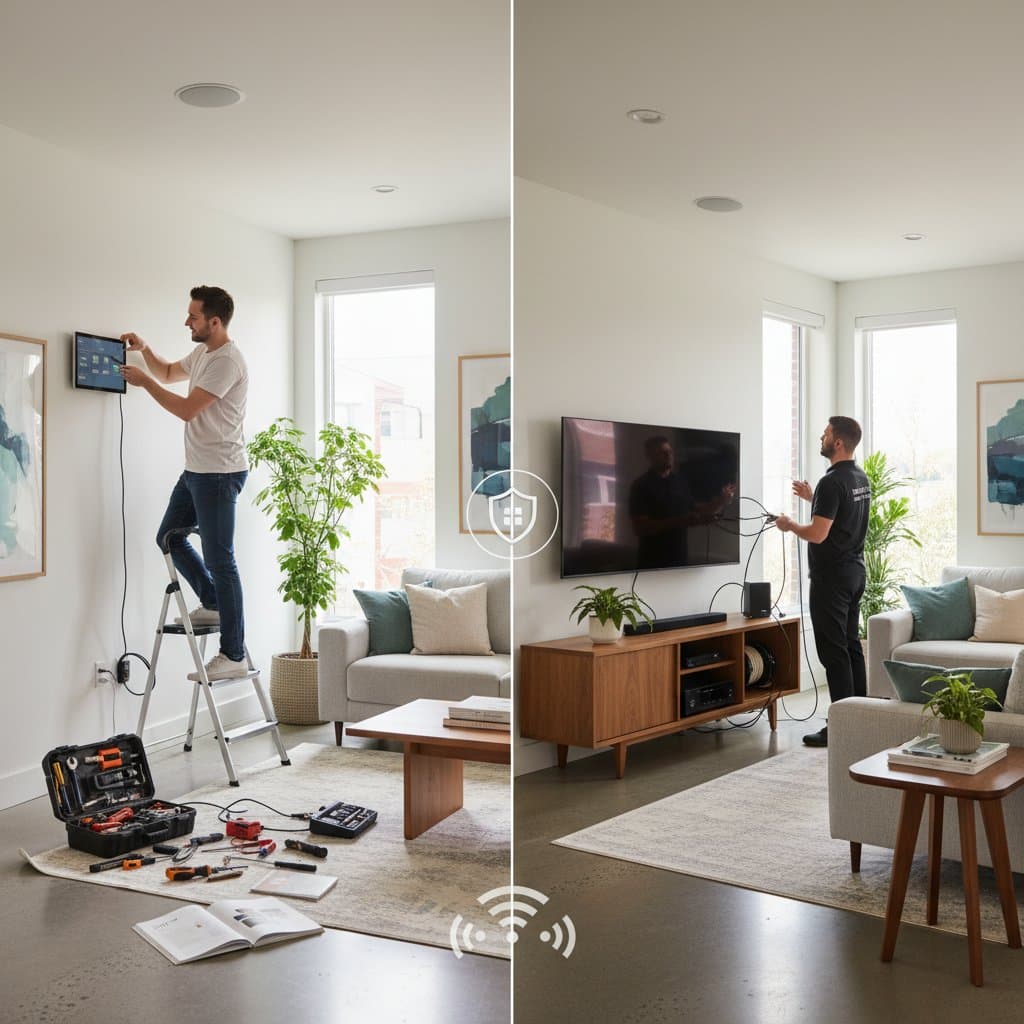
DIY Smart Home Setup: Triumph or Costly Contractor Call?
Many individuals encounter a collection of unpacked smart bulbs, motion detectors, and Wi-Fi hubs that appear daunting. The prospect of creating a voice-controlled, energy-saving residence excites, but choosing between personal installation or professional assistance resembles a risk. Success in smart home projects hinges more on proper setup and integration than on the devices alone.
The Allure of the DIY Smart Home
Assembling a personal smart home system delivers profound satisfaction through complete oversight, reduced labor expenses, and practical knowledge of operations. Basic tasks, such as placing smart plugs, swapping in light bulbs, or mounting a video doorbell, often require only one to two hours and basic implements.
Average costs for these DIY elements include:
- Smart bulbs: $10 to $30 per unit
- Smart plugs: $15 to $40 per unit
- Video doorbells: $80 to $250 per device
- Basic smart thermostats: $120 to $250 per unit
Such initial enhancements demand merely a mobile device, stable internet access, and persistence. Individuals also experience the pride of independent achievement.
When DIY Becomes a Headache
Challenges arise with intricate configurations. Comprehensive automation across the residence, unified security setups, or lighting arrays involving electrical modifications swiftly enter the domain of specialists. For instance, an error in thermostat wiring might damage the control unit or invalidate the heating, ventilation, and air conditioning warranty.
Frequent DIY errors encompass:
- Inadequate Wi-Fi range resulting in intermittent device links
- Incompatibilities among different manufacturers' products
- Overlooked precautions near live electrical lines
- Suboptimal automation settings that trigger erroneous alerts or excessive power use
Experiences like unresponsive smart speakers amid erratic light flashing illustrate the irritation involved.
The Case for Hiring a Contractor
Engaging a certified home automation specialist preserves time and alleviates pressure, particularly for integrations with electrical, heating, or security components. Experts manage complexities including cable routing through structures, breaker panel linkages, and adherence to regulatory standards.
Standard professional fees cover:
- Whole-home lighting automation: $1,000 to $4,000
- Smart thermostat installation featuring zoning: $250 to $600
- Security system cabling and configuration: $500 to $2,000
- Complete smart home unification (lighting, audio, climate control): $3,000 to $10,000
These investments secure dependability, enhanced performance, and safeguard coverage. Numerous specialists provide ongoing services encompassing software revisions, issue resolution, and hardware substitutions.
Blending DIY and Professional Installation
Most residents discover equilibrium in a combined strategy. Individuals manage straightforward, no-wiring devices personally while summoning experts for electrical or integrative demands.
A structured hybrid plan proceeds as follows:
- Initiate modestly by placing smart plugs, voice interfaces, or bulbs independently.
- Design the connectivity framework by selecting compatible products within one platform, like Google Home, Amazon Alexa, or Apple HomeKit, to prevent integration problems.
- Enhance foundational systems; address delays or failures by acquiring a mesh Wi-Fi network prior to expanding devices.
- Employ professionals for demanding elements such as thermostats, automated window treatments, or control interfaces.
- Prioritize safety by disconnecting power at the main panel before approaching electrical areas and adhering precisely to guidelines from producers.
This integrated tactic controls expenditures effectively and guarantees accuracy in advanced segments.
Safety and Warranty Considerations
Smart devices interface with essential infrastructure, including power lines and climate systems. Errors risk equipment harm or ignition dangers. Producers frequently mandate certified technicians for select installations to uphold coverage terms; a faulty independent thermostat effort could incur losses for the unit plus service calls.
Consult product documentation for setup limitations when uncertain. Certain companies compile directories of qualified technicians versed in proprietary equipment.
Long-Term Benefits of a Smart Setup
An effectively designed smart residence lowers utility expenses by as much as 20 percent via programmed illumination, targeted temperature management, and timed appliance cycles. Such advancements elevate real estate appeal, as prospective purchasers favor contemporary technological features. Smooth operation yields unmatched ease, from self-adjusting entry lights upon return to schedule-aware climate regulation.
Pro Tips for Success
Verify functionality incrementally; introduce one device, ensure seamless operation, then proceed to the next. Label connections clearly to identify controlling circuits or outlets. Capture images of arrangements for future diagnostics. Monitor for application or firmware enhancements to maintain security and efficiency. Allocate funds generously to accommodate unforeseen items like central units, fixtures, or specialized toggles.
Enjoying the Rewards of Your Smart Home
With a reliable system in place, daily routines transform through intuitive controls and predictive adjustments. Energy conservation translates to tangible savings, while enhanced security fosters peace of mind. Over time, the investment in thoughtful installation pays dividends in convenience, value, and simplified living.