
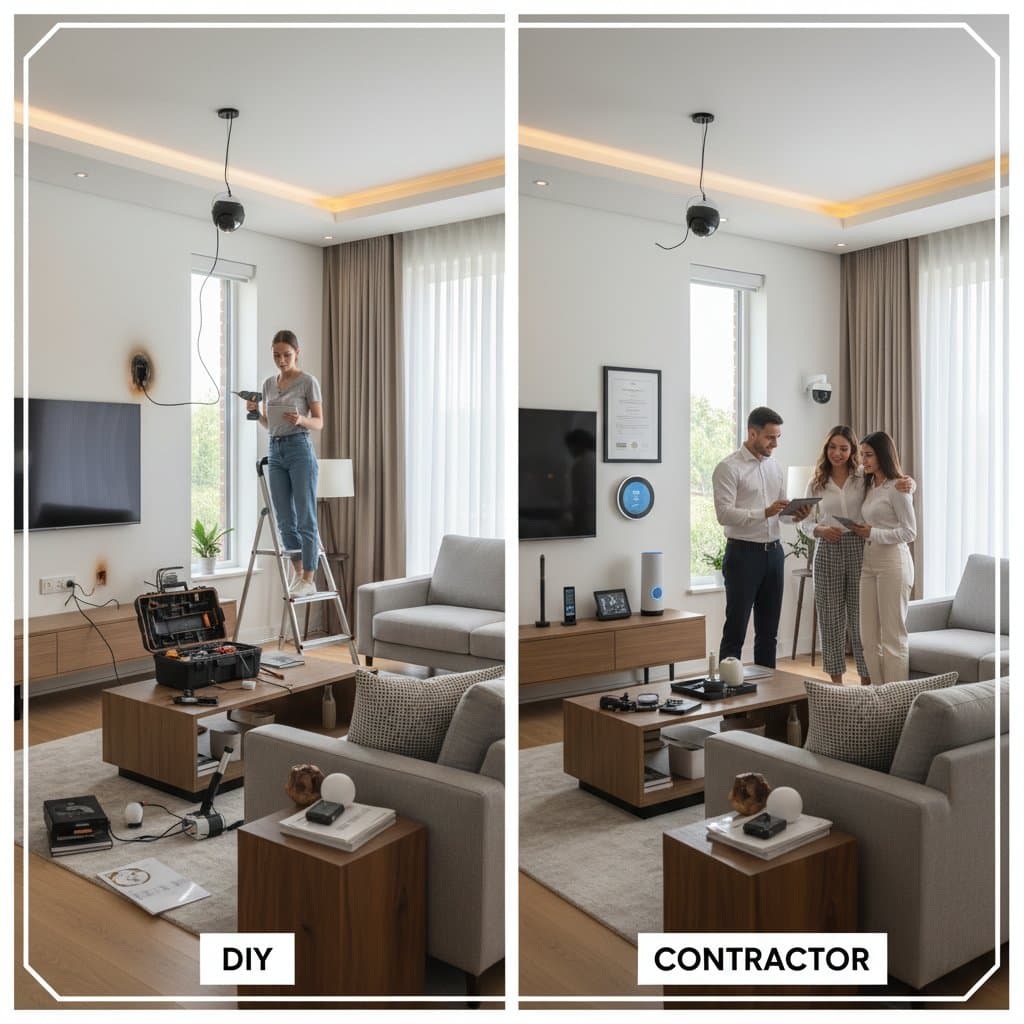
Smart Home DIY vs Professional Installation: Costs, Risks, and Benefits
Most smart home devices allow for self-installation, yet this option suits not every project. Smart thermostats, security systems, lighting controls, and voice assistants form part of the growing home automation landscape. A do-it-yourself method appeals through its accessibility, but distinguishing between suitable DIY tasks and those requiring expert intervention prevents errors that could escalate expenses or compromise safety.
This guide examines the actual expenses, potential hazards, and advantages of DIY and professional routes. Readers gain tools to select the optimal path based on their home setup, financial plan, and future objectives.
Evaluating the Value of DIY and Professional Methods
Advantages of the DIY Approach
DIY installation reduces initial outlays significantly. Individuals purchase and add devices incrementally, aligning additions with available funds. For instance, start with affordable plug-in smart bulbs before advancing to more involved components.
Customization stands as a key benefit. Users tailor device configurations to personal preferences, acquire technical knowledge, and perform tweaks independently. This autonomy eliminates reliance on external support for routine modifications.
Accomplishment derives from personal effort. Witnessing a home respond to voice commands or mobile app inputs, achieved through one's own installation, fosters a sense of achievement and deeper connection to the technology.
Benefits of Professional Installation
Compliance with building codes and insurance policies requires attention. Local laws often mandate licensed electricians for hardwired installations. Faulty setups risk nullifying manufacturer warranties or exposing owners to insurance denials during claims.
Security forms a critical concern in connected environments. Professionals implement robust measures, such as advanced firewalls and encryption protocols, to safeguard devices against unauthorized access and cyber threats.
Reliability emerges from expert integration. Installers ensure compatibility across platforms, minimizing technical failures like intermittent connections or device incompatibilities. This seamless operation supports consistent performance over time.
Property value benefits from professional documentation. Verified installations reassure potential buyers, potentially increasing home appraisals by demonstrating quality and adherence to standards.
Framework for Choosing Between DIY and Professional Installation
This table outlines project categories and recommendations:
| Project Type | Suitable for DIY | Professional Recommended |
|---|---|---|
| Plug-in smart plugs, bulbs, or speakers | Yes | No |
| Battery-powered security cameras | Yes | No |
| Wired thermostats and light switches | Sometimes | Yes |
| Smart locks integrated with alarms | Sometimes | Yes |
| Whole-home automation with panels or hubs | No | Yes |
| Integrated security or HVAC systems | No | Yes |
Apply the three-rule assessment for clarity:
- Safety Evaluation: Involves the project electrical wiring or gas connections? Engage a professional to avoid hazards.
- Complexity Assessment: Requires the task structural alterations or integration of multiple systems? Opt for expert handling to ensure functionality.
- Confidence Check: Comprehend fully the setup instructions and associated risks? Proceed with DIY only if assured; otherwise, seek professional assistance.
Key Safety and Regulatory Factors
Smart home projects intersect with electrical standards, data privacy rules, and construction guidelines. Neglect of these elements invites fines, legal issues, or coverage gaps. Verify local ordinances prior to commencement, particularly for:
- Electrical alterations, including circuit expansions or fixture replacements
- Outdoor setups, such as video doorbells or surveillance units involving wall penetrations
- Alarm configurations that demand local authority notifications for rapid emergency services
Professionals navigate these requirements efficiently, often securing necessary permits and conducting inspections. For DIY efforts, consult manufacturer guidelines and community resources to align with codes.
Strategies for System Maintenance and Expansion
Sustain investment value through consistent device ecosystems. Select components from the same brand or compatible networks to avoid interoperability issues. This approach streamlines updates and expansions, preserving overall efficiency.
Prepare for property transitions by organizing records. Retain purchase invoices, installation manuals, and any obtained permits in a dedicated file. Such documentation verifies quality to appraisers or buyers, enhancing market appeal.
Achieving Optimal Smart Home Performance
Select installation methods that prioritize functionality and security. Balance financial considerations with expert input where complexity arises. Through deliberate choices, detailed planning, and adherence to safety protocols, transform home automation into a reliable asset that enhances daily life and property worth.