
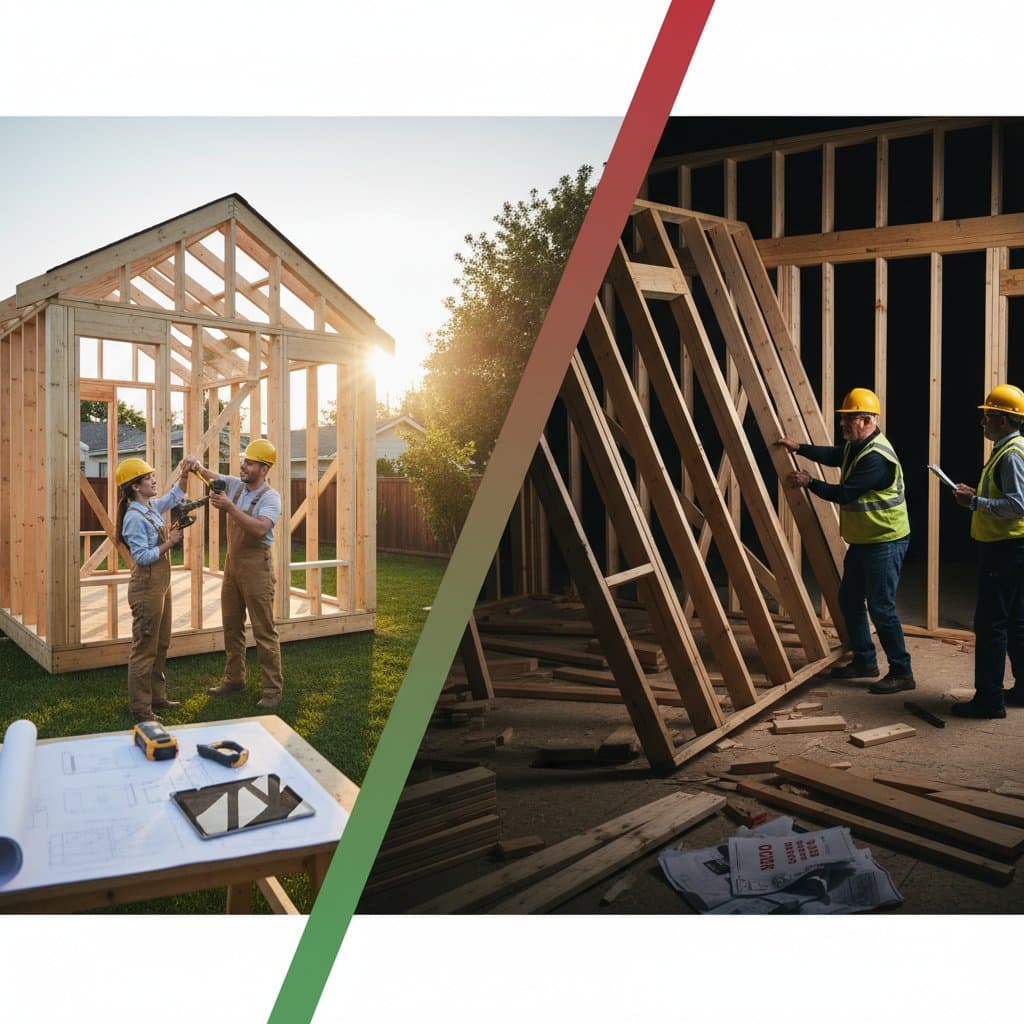
DIY ADU Framing: Weighing Savings Against Potential Pitfalls
Homeowners often consider adding an accessory dwelling unit to their property as a way to increase living space or generate rental income. The prospect of handling the framing phase personally appeals to those seeking to reduce expenses. However, framing requires precise measurements, adherence to building codes, and an understanding of load-bearing elements that support the entire structure.
This article provides a comprehensive analysis to help you determine if DIY framing aligns with your goals. Readers will gain insights into expected savings, unforeseen expenses, and critical safety considerations. By the end, you will possess the knowledge to make an informed choice that prioritizes both budget and structural integrity.
Assessing the Benefits of DIY Framing
Cost Breakdown and Savings Opportunities
Materials for framing an ADU typically range from $8 to $12 per square foot, covering lumber, nails, hardware, and sheathing. Professional labor adds $10 to $20 per square foot, varying by project complexity and regional rates. For a 500-square-foot ADU, hiring experts could total $15,000 or higher, while self-framing might limit expenses to $6,000 through $8,000 in materials alone.
These figures assume prior experience with basic construction tasks. Beginners should account for additional tools, such as a circular saw or framing square, which may cost $200 to $500 if not already owned. Savings become more pronounced in areas with high labor costs, but only if the project proceeds without delays or rework.
Advantages in Timeline and Customization
One key benefit of DIY framing lies in the ability to set your own schedule. This flexibility suits homeowners juggling full-time employment or other commitments, allowing work to progress in stages over weekends or evenings. Nevertheless, extended timelines risk material exposure to weather, potentially incurring replacement costs, or postponing inspections that hold up subsequent phases like electrical or plumbing.
Personal involvement also enables tailored designs. You can adjust stud placements to accommodate unique features, such as oversized windows for natural light or custom door configurations that match your property's aesthetic. This level of control fosters a deeper connection to the finished ADU, enhancing its personal value beyond mere financial savings.
Gaining Skills and Oversight
Undertaking framing builds practical skills applicable to future home projects. You maintain direct oversight of every element, from selecting sustainable lumber options to ensuring alignments meet your vision. For experienced DIYers, this process reinforces confidence in handling complex builds, while novices gain foundational knowledge through hands-on application.
Prioritizing Safety and Structural Integrity
Framing demands caution due to the physical demands of lifting heavy timbers, operating power tools, and working at heights. Essential protective equipment includes sturdy gloves to prevent splinters, safety goggles to shield against debris, and a hard hat to guard against falling objects. Beyond gear, understanding how to secure ladders and scaffolds prevents accidents that could derail the project.
Structural accuracy proves even more vital. Load paths direct weight from the roof through walls to the foundation, and miscalculations here invite sagging floors or cracking walls years later. Designs with lofts, expansive openings, or multi-story elements require input from a structural engineer, with consultations costing $300 to $800. This upfront investment averts repairs that could exceed $10,000.
Local climate factors influence safety as well. In seismic zones, reinforced framing with metal straps becomes mandatory, while hurricane-prone areas demand wind-resistant bracing. Reviewing these requirements early ensures compliance and longevity.
Identifying and Sidestepping Frequent Errors
Many DIY framers encounter issues that compromise the build. The following outlines common pitfalls and preventive measures.
-
Overlooking Engineered Drawings: Proceed only with detailed plans stamped by an engineer. Estimating beam dimensions or stud intervals risks inspection rejections, leading to demolition and redesign fees.
-
Neglecting Protection Against Moisture: Lumber in contact with concrete must be pressure-treated to resist rot. Apply sealants to exposed ends and ensure proper ventilation to mitigate dampness from ground level.
-
Incorrect Fastening Techniques: Nails driven too deeply or shallowly fail to secure joints adequately. Adhere to code-specified patterns, such as 16d nails at 6-inch centers for wall plates, to maintain strength.
-
Measurement Inaccuracies: Employ a laser level for precision and verify each wall's plumb status multiple times before installing sheathing. Even minor deviations accumulate, causing doors to bind or roofs to leak.
-
Omitting Support Elements: Install blocking between studs at mid-height for wiring runs and bracing for lateral stability. These additions prevent racking during construction and drywall fissures post-completion.
-
Underestimating Waste and Cuts: Plan for 10 to 15 percent material overage to account for errors or offcuts. Precise pre-cutting based on plans minimizes excess and keeps costs in check.
Strategies for Effective DIY Execution
Success in DIY framing hinges on preparation and incremental progress. Begin with smaller projects, like erecting a garden shed, to practice techniques such as squaring frames or installing headers. This trial run identifies personal skill gaps without high stakes.
Organize materials methodically by labeling plates, studs, and assemblies with chalk markers. This system streamlines on-site assembly, reducing confusion during lifts. Partnering with a second person enhances safety for raising walls and aligning trusses, while distributing the workload.
Compliance forms the cornerstone of any build. Consult your municipality's building department for span tables dictating joist lengths and fastening schedules. If uncertainties arise regarding load-bearing configurations or roof integration, schedule a professional consultation early, often available for $100 to $200 per hour.
Document progress with photographs at each stage, aiding inspections and future reference. Tools like a chalk line for straight edges and a speed square for angles prove indispensable for professional-grade results.
Securing Lasting Performance from Your ADU
A well-framed ADU not only meets immediate needs but also preserves property value over decades. Regular inspections during and after construction catch issues like uneven settling or fastener corrosion promptly. Integrating energy-efficient elements, such as insulated headers, during framing boosts long-term efficiency and comfort.
Ultimately, the choice between DIY and professional services depends on your expertise, time availability, and risk tolerance. For straightforward designs, DIY framing delivers substantial savings and satisfaction. Complex projects benefit from expert hands to guarantee safety, code adherence, and durability. Whichever path you choose, informed planning ensures your ADU stands as a reliable asset to your home.