
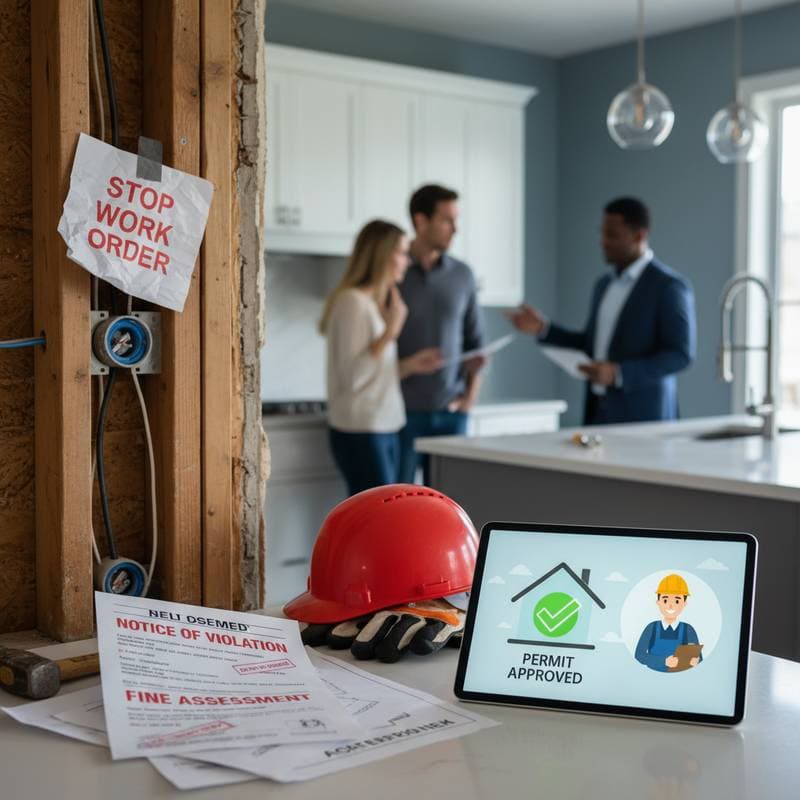
Understanding Permit Risks in DIY Home Projects
Homeowners frequently undertake projects to reduce expenses, reviewing online tutorials and material costs before proceeding. Permits, however, introduce essential regulatory steps that protect safety and compliance. Overlooking these requirements transforms a cost-saving initiative into a source of significant financial and legal challenges.
Many individuals underestimate the impact of permits on projects like deck construction or bathroom updates. Without proper authorization, authorities may impose fines, mandate work removal, or halt progress entirely. Recognizing these permit risks enables informed decisions that preserve both time and resources.
Why Homeowners Pursue Self-Permitting and Its Pitfalls
Homeowners often seek permits independently to minimize fees and avoid contractor surcharges, relying on accessible online resources for code details. This approach fosters a sense of accomplishment in managing the process solo. Permits extend beyond administrative tasks, embodying accountability for project integrity and adherence to standards.
Submitting a permit application as a homeowner establishes you as the responsible party under local regulations. You affirm knowledge of building codes and commitment to inspection success. Challenges arise when demands for technical elements, such as load-bearing assessments or certification documents, exceed initial preparations, extending simple tasks into prolonged administrative efforts.
Legal Implications of Acting as Your Own Contractor
Homeowners who secure permits personally assume the role of contractor, bearing full responsibility for any incidents, damages, or infractions. Standard homeowner insurance policies may exclude coverage for such scenarios, particularly if unlicensed work leads to accidents like electrical mishaps during volunteer assistance. This exposure heightens personal financial vulnerability.
Post-completion, unauthorized alterations complicate property transactions. Professional inspectors identify discrepancies, prompting buyers to request corrective measures or price reductions. Certain municipalities withhold occupancy approvals until resolutions occur, delaying sales and incurring additional expenses.
Advantages of Professional Permit Management
Licensed contractors navigate building departments routinely, familiar with application procedures, inspection coordination, and common obstacles. Established connections with officials facilitate efficient resolutions and expedited reviews. Their expertise minimizes procedural errors that delay projects.
Contractors maintain required liability insurance and bonds, shielding clients from potential claims related to errors or accidents. Mandatory code compliance and ongoing supervision ensure reliable outcomes. Understanding project timelines, such as conducting electrical reviews prior to enclosing walls or verifying plumbing integrity before final coverings, prevents setbacks.
Engaging a professional for permit oversight serves as a safeguard, reducing the likelihood of unforeseen costs and enhancing overall project success.
Navigating Local Regulations and Credentials
Building permit policies differ across jurisdictions, with some permitting homeowner applications for minor, non-load-bearing tasks and others imposing stricter limits. Consult your area's building department website or contact them directly to clarify applicable rules before commencing work.
When selecting a contractor, confirm active licensing and insurance through state verification systems. Request a detailed agreement specifying permit handling, inspection schedules, and guarantees. In select locations, permit expediters specialize in submissions and follow-ups, typically for a fee of several hundred dollars, streamlining the process and avoiding extended waits.
Practical Strategies for Permit Compliance
Contact your local permitting authority early to determine necessary approvals, processing durations, and supporting paperwork. This initial inquiry prevents mid-project surprises.
Retain all purchase records and inspection outcomes as documentation for claims or future evaluations.
Arrange inspections promptly, as availability may span days, to maintain workflow continuity.
Allocate an additional 10 percent of your budget for unforeseen regulatory or adjustment expenses.
Approach department staff courteously; positive interactions often yield helpful guidance and quicker assistance.
Implementing these measures simplifies navigation of permit requirements, even for novices.
Safeguarding Your Home's Long-Term Value
After obtaining approvals, store permit files securely for reference during sales or loans, verifying code conformity. Review these documents for upcoming modifications to ensure compatibility.
Conduct routine evaluations on installed systems, such as checking electrical fixtures or plumbing joints yearly for deterioration. Proactive care averts major overhauls and upholds safety standards.
During property marketing, share permit records with prospects to demonstrate diligence, fostering trust and potentially accelerating closings.