
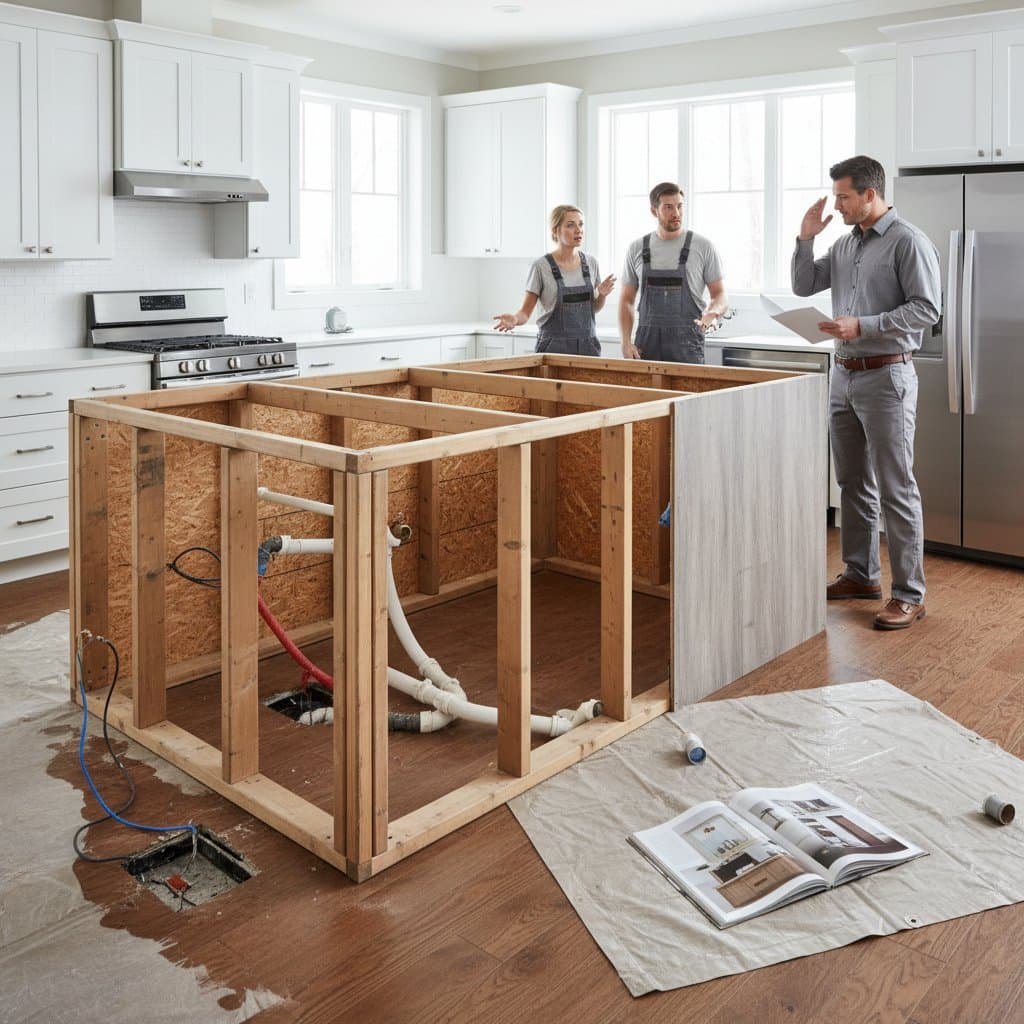
DIY Kitchen Island: Risks That Ruin Your Remodel
The first time individuals envision their ideal kitchen, the island occupies the central position. People picture friends assembled nearby, sipping morning coffee, perhaps with fresh herbs nearby. The kitchen island serves as the core of the home, combining utility and aesthetics to convert cooking into a social activity. However, for numerous DIY participants, this ideal diminishes rapidly as installation obstacles emerge. The boundary between an impressive focal point and a construction issue proves narrower than anticipated.
When Inspiration Meets Reality
Projects frequently commence with assurance. Individuals view online tutorials, measure the area carefully, and conclude that the task appears straightforward. Then the initial error occurs. The floor lacks perfect levelness, or the electrical conduit sits slightly beyond reach. A kitchen island resembles a standalone furniture item, yet it demands intricate incorporation of plumbing, wiring, and cabinetry. Neglecting a single vital procedure transforms a brief endeavor into an expensive correction.
The Foundation Problem
Stability for a kitchen island relies completely on the underlying surface. Numerous homeowners disregard subfloor conditions, presuming that any even area suffices. Nevertheless, minor irregularities cause cabinets to move and countertops to fracture. Prior to beginning installation, individuals should check for depressions or elevations with a straightedge and level. If variations exceed one-quarter inch over the island's base area, application of self-leveling compound or underlayment modifications becomes essential.
For islands featuring substantial stone countertops, reinforcement of the floor may prove necessary. Granite or quartz weighs several hundred pounds, and inadequate support leads to joist sagging with time. A specialist evaluation for load capacity ranges from one hundred to two hundred dollars, yet it averts thousands in subsequent structural repairs. Homeowners benefit from consulting building codes early to identify required reinforcements, such as additional joists or plywood sheathing, ensuring long-term integrity.
Electrical and Plumbing Pitfalls
Incorporating outlets appears uncomplicated until code specifications for kitchen islands come into focus. Most islands require at least one GFCI-protected outlet, and faulty placement creates safety risks alongside inspection failures. Extending wiring through completed flooring necessitates a junction box and conduit suitable for floor applications. At this stage, many DIY efforts reach their boundary. Engaging a licensed electrician incurs three to five hundred dollars, but guarantees adherence to standards and enduring performance.
When an island incorporates a sink or dishwasher, plumbing adds further intricacy. Flexible hoses and drain extensions offer apparent ease, yet they seldom comply with regulations and invite leaks under the floor. A qualified plumber manages venting and drainage linkages to avoid sluggish drainage or accumulations. Correct installation of water lines costs approximately two to three hundred dollars, a fraction of the expense for remedying concealed water harm. Individuals should map out pipe routes in advance, verifying distances from main lines to minimize disruptions.
Misjudging Space and Scale
Design professionals emphasize kitchen "flow," which translates to adequate space for effortless navigation around the island. Standard walkway clearance measures at least 36 inches, increasing to 42 inches for households with several cooks. Insufficient width results in frequent collisions with edges. Excessive breadth diminishes the island's integration with surrounding areas.
A frequent error involves selecting an oversized island motivated by needs for additional storage or seating. Rather than estimating, apply painter's tape to the floor to mark the proposed outline. Experience the layout over several days to assess impacts on traffic patterns. This straightforward method frequently averts regrets after cabinet installation, allowing adjustments without material waste.
Material Choices That Backfire
Homeowners often succumb to the appeal of reclaimed wood or inexpensive laminate, only to discover that exposure to moisture and abrasion rapidly degrades the surface. Kitchen islands withstand spills, cuts from knives, and heat consistently. Hardwoods finished with food-safe sealants or protected stone provide superior longevity. Budget fifty to one hundred dollars per square foot for resilient coverings that preserve aesthetics amid routine demands.
Selection extends beyond countertops to cabinetry and bases. Opt for moisture-resistant plywood or MDF cores sealed against humidity, particularly in sink-adjacent zones. Avoid untreated metals that corrode; instead, choose stainless steel accents for hardware. Testing samples in simulated conditions, such as applying water and heat, helps predict performance before full commitment.
When DIY Becomes Too Risky
A threshold exists where expert assistance shifts from advisable to imperative. Electrical or plumbing tasks exceeding basic connections demand licensed professionals. Structural alterations, including floor strengthening or joist modifications, require permits across most locales. Even with personal handling of woodworking, obtaining a contractor's project blueprint prevents oversights in design and safety.
Homeowners should evaluate their skills honestly. If unfamiliar with tools like circular saws or voltage testers, introductory workshops or tool rentals build confidence safely. Document all steps with photographs for reference during inspections, facilitating smoother approvals and future maintenance.
Pro Tips for Success
- Plan outlets during initial design phases, positioning them for convenient access without compromising aesthetics.
- Select materials that withstand moisture and abrasions, such as sealed quartz or butcher block.
- Maintain minimum clearances of three feet on all sides to support comfortable movement and wheelchair accessibility where applicable.
- Establish a realistic budget, anticipating one thousand to three thousand dollars for a standard DIY island inclusive of utilities.
- Conduct tests on electrical and plumbing prior to enclosing components or affixing counters, identifying issues early.
Ensuring Long-Term Functionality
Upon completion, regular upkeep integrates into household routines. Apply resealant to stone surfaces biennially, secure loose fittings monthly, and examine outlets for deterioration annually. A properly constructed island enhances the kitchen's utility and ambiance persistently.
Executed thoughtfully, the island improves daily interactions within the space. Rushed efforts serve as ongoing indicators of errors. Proceed with deliberation, honor technical requirements, and allocate resources strategically for optimal results.