
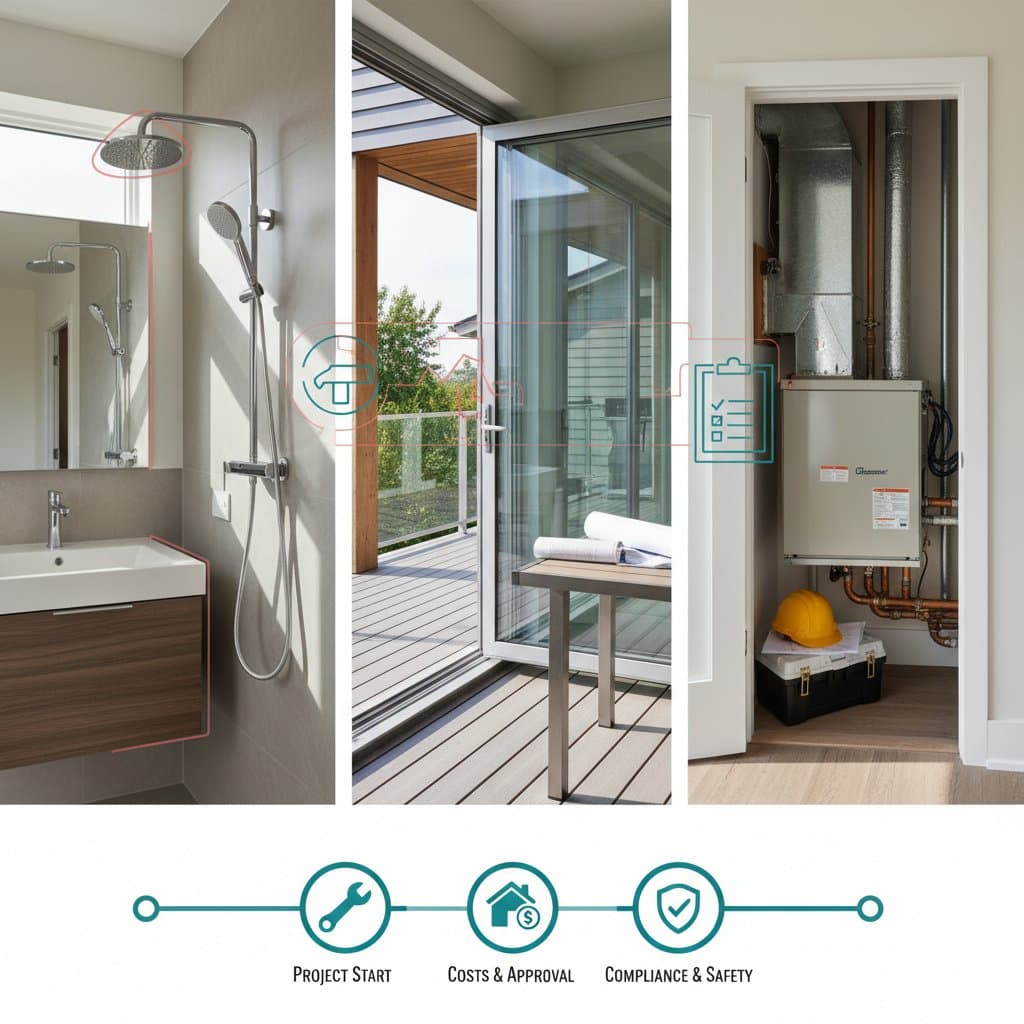
Home Projects That Surprisingly Require Permits
Homeowners frequently undertake small-scale improvements without considering regulatory requirements. Permits ensure compliance with safety standards and building codes, preventing hazards such as structural failures or electrical fires. Neglecting these approvals can result in fines, project halts, or diminished property value during resale.
This guide examines common projects that necessitate permits and licensed professionals. Each section details triggers for approvals, estimated costs, and strategies to proceed correctly. By planning ahead, individuals can complete renovations efficiently and securely.
1. Replacing or Relocating Plumbing Fixtures
Updating a bathroom sink or toilet appears straightforward, yet alterations to piping often invoke plumbing codes. These regulations safeguard against water contamination, leaks, and system overloads that might harm the property or municipal infrastructure.
Permit triggers:
- Relocating fixtures beyond a minimal distance from their initial positions
- Introducing additional bathrooms, laundry rooms, or wet bars
- Incorporating water heaters, backflow preventers, or advanced filtration units
Plumbing permits typically cost between $50 and $300, varying by jurisdiction. Licensed plumbers charge $75 to $150 hourly, with fixed prices for standard installations ranging from $300 to $800. Consult local codes early to determine if a simple replacement qualifies as exempt.
2. Electrical Upgrades and Wiring Changes
Installing new outlets or lighting fixtures seems minor, but modifications to circuits or panels demand oversight to avoid fire risks and ensure compatibility with modern standards. Electrical permits verify that work adheres to the National Electrical Code.
Permit triggers:
- Adding circuits, subpanels, or service upgrades
- Rewiring rooms or installing whole-home systems like surge protectors
- Extending wiring for outdoor features, such as landscape lighting
Expect electrical permits to range from $50 to $250. Licensed electricians bill $80 to $130 per hour, with projects like outlet additions costing $150 to $400 total. Always verify contractor licensing through state boards to guarantee quality and insurance coverage.
3. Building Decks and Patios
Constructing a deck enhances outdoor living, yet attached or elevated structures fall under building codes for stability and egress safety. Inspectors evaluate footings, joists, and railings to prevent collapses.
Permit triggers:
- Decks exceeding 30 inches in height from ground level
- Platforms connected to the house or including stairs and enclosures
- Additions of electrical outlets, lighting, or coverings
Deck permits generally cost $100 to $500, influenced by size and location. Professional contractors charge $25 to $50 per square foot for materials and labor, totaling $4,000 to $10,000 for a 200-square-foot deck. Submit detailed plans, including load calculations, to expedite approval.
4. Window and Door Replacements
Replacing windows or doors improves energy efficiency, but changes affecting structural integrity or egress require review. Codes focus on emergency escape paths and weatherproofing.
Permit triggers:
- Altering window sizes or positions in bedrooms and basements
- Installing larger doors that impact framing or load-bearing walls
- Upgrading to impact-resistant units in high-wind zones
Permits for windows and doors cost $50 to $200. Installation by licensed specialists runs $300 to $1,200 per unit, depending on type and complexity. Measure openings precisely and select energy-star rated products to meet code while reducing utility bills.
5. Installing Fences and Retaining Walls
Fences define boundaries, while retaining walls manage slopes, both subject to zoning for aesthetics and safety. Improper installations can cause erosion or boundary conflicts.
Permit triggers:
- Fences taller than six feet or in front yard setbacks
- Retaining walls over three feet, requiring engineering for soil pressure
- Structures along easements or near utilities
Fees range from $25 to $150 for these permits. Fencing contractors charge $15 to $30 per linear foot, and retaining walls cost $20 to $50 per square foot. Obtain neighbor approvals if shared boundaries are involved, and incorporate proper drainage to extend longevity.
6. Upgrading HVAC Systems
Modernizing heating, ventilation, and air conditioning boosts comfort, yet system changes impact energy codes and indoor air quality. Permits confirm proper sizing and venting.
Permit triggers:
- Replacing furnaces, boilers, or central air units
- Extending ductwork or adding zones to existing systems
- Installing ductless mini-splits or whole-home ventilation
HVAC permits cost $75 to $400. Licensed technicians charge $100 to $200 per hour, with full system replacements averaging $5,000 to $12,000. Perform energy audits beforehand to select efficient models that qualify for rebates.
7. Roofing and Structural Repairs
Routine shingle replacement may bypass permits, but deeper interventions ensure the roof withstands weather and supports additional loads like solar panels.
Permit triggers:
- Modifying roof structure, such as adding dormers or skylights
- Replacing over 25 percent of the roofing material
- Altering pitch or installing new underlayment systems
Roofing permits range from $100 to $400. Contractors bill $4 to $8 per square foot for asphalt shingles, totaling $5,000 to $12,000 for an average home. Schedule inspections at key stages to address issues promptly.
Essential Steps for Compliant Renovations
Contact the local building department at the outset to review specific requirements. This consultation often reveals exemptions or streamlined processes.
Maintain comprehensive records of all approvals, inspections, and professional credentials. These documents prove compliance during home sales or claims.
Select contractors with verifiable licenses and bonding. Request references and review past projects to ensure reliability.
Incorporate permit expenses into initial budgets, allocating 5 to 10 percent for unforeseen fees. Factor in potential delays from inspections.
Adhere to inspection schedules without exception. They validate workmanship and enhance property appeal to future buyers.
Protect Your Property Value Through Compliance
Adhering to permit processes minimizes legal risks and upholds safety standards. Compliant renovations not only avoid penalties but also increase marketability. Invest time in due diligence to enjoy lasting benefits from every project.