
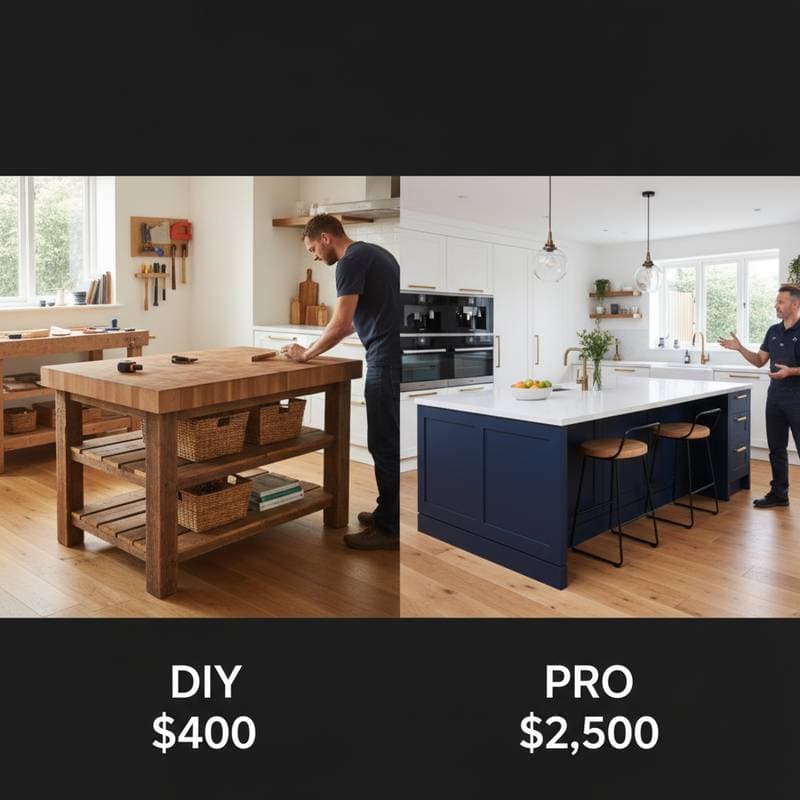
DIY Kitchen Island: Substantial Savings or Professional Expertise?
A kitchen island serves as a versatile centerpiece that improves workflow, fosters social interaction, and provides essential storage. It transforms cramped layouts into efficient, inviting spaces. Homeowners face a pivotal choice: undertake the project independently to minimize expenses or engage experts for seamless execution. This decision extends beyond finances to encompass skills, safety, materials, and enduring performance.
The following analysis details cost breakdowns, procedural steps, and evaluation criteria to guide informed choices. Readers gain insights into accurate budgeting, potential obstacles, and strategies that optimize functionality while elevating property worth.
Planning and Design: Essential Foundations
Effective planning forms the cornerstone of any kitchen island endeavor. Begin by assessing spatial dynamics to ensure harmony with existing elements. Three critical measurements guide this phase:
- Clearance: Maintain a minimum of 36 inches around the island for safe passage. In high-traffic areas or kitchens accommodating multiple users, extend this to 42 inches.
- Proportion: Limit the island to one-third of the kitchen's floor space to preserve openness.
- Height: Adopt 36 inches for standard work surfaces; elevate to 42 inches for bar-style seating.
Create a preliminary sketch and simulate the layout using painter's tape or cardboard prototypes. This visualization reveals interactions with appliances like refrigerators, ovens, and dishwashers, highlighting any circulation issues.
Incorporate features such as electrical outlets or sinks only after reviewing local codes, which often mandate professional oversight for utilities. Municipal requirements vary, so consult authorities early to avoid revisions.
Step-by-Step Guide to DIY Installation
Step 1: Site Preparation
Evacuate the workspace and verify floor evenness with a level tool. For cabinet-anchored designs, outline the footprint using a chalk line. Double-check dimensions to prevent misalignment during assembly.
Step 2: Constructing the Base
Opt for prefabricated cabinets joined with screws and adhesive for straightforward projects. Custom frames benefit from plywood sheets braced at corners for stability. Secure the assembly to the subfloor with lag bolts for fixed installations, ensuring load-bearing capacity.
Step 3: Installing the Countertop
Position the countertop without adhesive initially to confirm fit. Spread construction adhesive uniformly on the base and secure from underneath to conceal fasteners. Provide a one-inch overhang on accessible edges to accommodate seated or standing users comfortably.
Step 4: Surface Finishing
Smooth imperfections with sandpaper and apply protective coatings like paint, stain, or sealant. Select primers formulated for high-humidity areas to withstand cooking vapors and spills. Affix trim or molding post-drying to achieve clean lines.
Step 5: Integrating Utilities
For basic electrical additions, utilize pre-assembled outlet kits wired to compliant circuits, adhering strictly to regulations. Plumbing tasks, particularly sink installations, necessitate certified plumbers to mitigate risks of water damage or liability issues.
Step 6: Incorporating Accessories
Mount practical elements such as towel racks, hooks, or stools. Enhance with soft-closing mechanisms for drawers and LED strips beneath cabinets to improve illumination and sophistication.
Evaluating Options: DIY Suitability and Professional Necessity
Assess project specifics using this framework to determine the optimal route:
| Scenario | Suggested Method | Justification |
|---|---|---|
| Possession of carpentry tools and prior experience | DIY | Reduces labor fees while allowing personalization |
| Preference for a portable, uncomplicated island | DIY | Fewer regulatory hurdles |
| Inclusion of plumbing or gas elements | Professional | Demands certified expertise |
| Selection of heavy quartz or stone surfaces | Professional | Requires equipment for safe manipulation |
| Desire for completion over a single weekend | DIY (basic design) | Achievable with ready components |
| Focus on resale appeal or robust construction | Professional | Guarantees adherence to standards and durability |
Consider a combined strategy where individuals construct the framework and delegate specialized tasks like countertop fitting or wiring. This hybrid model delivers cost efficiencies alongside professional reliability.
Avoiding Frequent DIY Challenges
Seasoned enthusiasts must remain vigilant against common errors that compromise results.
- Floor Irregularities: Employ shims at base points and re-level frequently; minor deviations may lead to surface fractures over time.
- Inadequate Securing: Choose heavy-duty floor fasteners compatible with countertop weights, vital for solid materials.
- Code Noncompliance for Electricity: Mandate GFCI outlets proximate to water sources; omissions may invalidate warranties or coverage.
- Space Miscalculation: Oversized islands restrict navigation in compact areas; validate mockups thoroughly.
- Premature Usage of Finishes: Permit full curing of coatings to avert discoloration or adhesion failures.
Expert Recommendations for Optimal Results
- Seating Considerations: Allocate 24 inches per stool to support ergonomic positioning.
- Lighting Integration: Suspend pendants 30 to 36 inches over the surface for balanced task lighting.
- Storage Solutions: Incorporate retractable bins, organizational racks, and expansive drawers to streamline access.
- Material Harmony: Align quartz with contemporary aesthetics; select butcher block for traditional warmth.
- Flow Assessment: Simulate daily activities around the provisional outline to confirm the island facilitates rather than hinders operations.
Enhancing Daily Kitchen Performance
Once installed, a well-executed island integrates seamlessly into routines, boosting efficiency and enjoyment. Regular maintenance, such as sealing surfaces annually and inspecting anchors, preserves its condition. This addition not only refines aesthetics but also contributes to a more functional home environment, potentially increasing market value through thoughtful upgrades.